The man I keep returning to
I keep returning to the figure of Wenceslaus Iv Of Bohemia because he is a study in contrast. Born on 26 February 1361 in Nuremberg, crowned a child king on 15 June 1363, and crowned King of the Romans on 6 July 1376, he lived in an age that glittered with manuscripts and crumbled under financial strain. He inherited prestige and a fractured inheritance. His life reads like a richly illuminated manuscript with smudged margins: startling artistic achievement on one page, political pawns and pledged estates on the next.
He assumed the Bohemian crown when his father Charles IV died on 29 November 1378. Wenceslaus reigned as King of Bohemia from 1378 to 1419 and as King of the Romans from 1376 until his deposition by electors in 1400. He died on 16 August 1419 at Kunratice, Prague. In those 58 years I see a ruler who could summon beauty and yet struggled to hold the center.
Family roots and household dynamics
He was as defined by his family as by the crown and the court. His father, Holy Roman Emperor Charles IV (1316–1378), left behind a complex legacy of institutions and a divided patrimony. His mother, Anna von Schweidnitz (c. 1339–1362), was the daughter of Catherine of Hungary and Henry II of Swidnica. Luxembourg and Piast ties were woven into Wenceslaus’s persona by these bloodlines.
His political universe was formed by the influential half-siblings in his family network. From 1366 until 1394, Anne of Bohemia married into the English royal family. Sigismund (1368–1437) became a major adversary and then a crucial European ruler. Due to the occupation of duchies and marches by John of Goritz (1370–1396) and other family members, any one monarch of the Luxembourg dynasty had to rely on diplomacy.
He had two marriages. He married Joanna of Bavaria (born 1356 or 1362; died 1386) on September 29, 1370. There were no surviving heirs from that marriage. He wed Sophia of Bavaria (1376–1428) on May 2, 1389. Once more, no real offspring survived. His throne was vulnerable because to the lack of a direct heir, hence familial ties were essential.
Table of principal relatives
| Name | Relation to Wenceslaus Iv Of Bohemia | Dates (where known) |
|---|---|---|
| Charles IV | Father | 1316 to 1378 |
| Anna von Schweidnitz | Mother | c. 1339 to 1362 |
| John of Bohemia | Paternal grandfather | 1296 to 1346 |
| Elisabeth of Bohemia | Paternal grandmother | dates varied |
| Henry II of Swidnica | Maternal grandfather | dates varied |
| Catherine of Hungary | Maternal grandmother | dates varied |
| Anne of Bohemia | Half-sister | 1366 to 1394 |
| Sigismund | Half-brother | 1368 to 1437 |
| John of Goritz | Half-brother | 1370 to 1396 |
| Joanna of Bavaria | First wife | d. 1386 |
| Sophia of Bavaria | Second wife | 1376 to 1428 |
Politics, custody of power, and the slow leaking purse
I would visualize a gold-carved throne with a hollow underneath if I had to describe his political life in one picture. Wenceslaus did not inherit his father’s consolidated revenues, but he did inherit the accoutrements of imperial kingship. Charles IV had distributed privileges and territories to family members. That approach divided the fiscal base while ensuring loyalty.
This fact necessitated an economy of favors, the selling or mortgaging of rights, and the frequent pledging of estates. The royal finances turned into a ledger of long-term expenses and short-term loans. He faced an aggressive city and a strengthened nobility, and was occasionally imprisoned in domestic disputes. He was officially deposed as Roman king in August 1400 by a number of electors. The imperial power he once possessed was never regained.
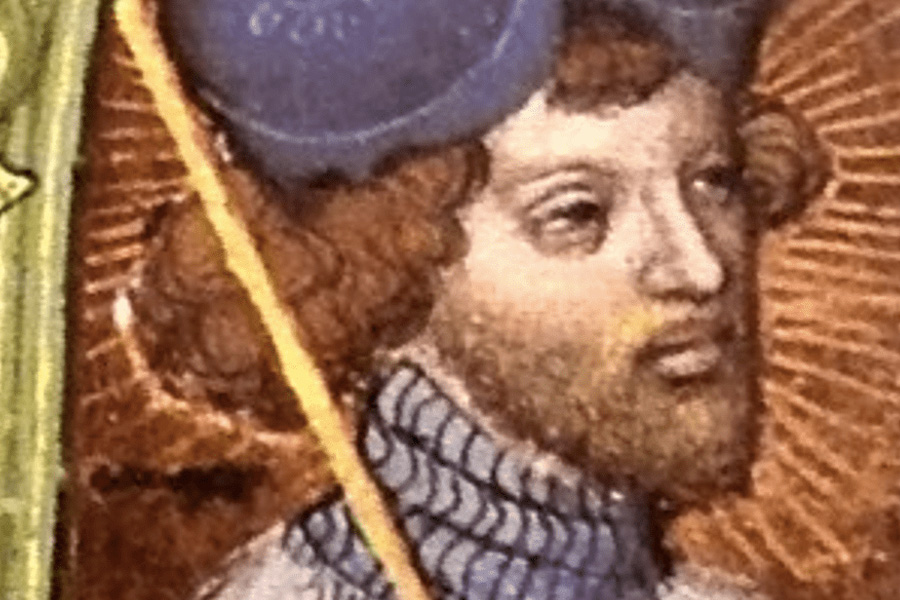
He is, nonetheless, an unexpected customer in my opinion. The Prague court turned into a breeding ground for manuscripts and art. Visual evidence of an aesthetic taste that persisted despite financial difficulties may be found in the Wenceslas Bible and other illuminated works from his court. Although patronage may appear luxurious, it can also be an investment in cultural memory and prestige.
Culture, patronage, and the court workshop
I like to imagine the Prague workshop as a small factory of light. Scribes and illuminators worked in clustered rooms, mixing pigments, gilding initials, and painting biblical kings who might have, in some faces, borne the countenance of the court they served. These commissions were not mere vanity. They were deliberate acts of statecraft, using art to assert legitimacy and to project continuity with Charles IV’s golden age.
The court supported the university and attracted intellectual life. Manuscripts commissioned under Wenceslaus have become the artifacts by which modern scholars read his aesthetic priorities. They are also the places where the era’s contradictions are clearest: beauty and instability mingling on the same folio.
A timeline I keep in my head
- 26 February 1361: Birth in Nuremberg.
- 15 June 1363: Crowned King of Bohemia as a child.
- 6 July 1376: Crowned King of the Romans.
- 29 September 1370: Married Joanna of Bavaria.
- 29 November 1378: Inherits the Bohemian crown after Charles IV dies.
- 2 May 1389: Marries Sophia of Bavaria.
- 20 August 1400: Deposed as King of the Romans by electors.
- 16 August 1419: Death at Kunratice, Prague.
Personal notes on character and legacy
I encounter Wenceslaus as a complex personality rather than a cartoon of failure. He has been called idle by some chroniclers, but that word can flatten nuance. He navigated a political order that had deliberately decentralized power. He produced culture of rare richness. He failed to produce heirs. He faced revolts and deposition. His death in 1419 opened a door into the Hussite era, which altered Central Europe in ways that would echo for decades.
FAQ
Who were the parents of Wenceslaus Iv Of Bohemia?
His father was Charles IV, Holy Roman Emperor (1316 to 1378). His mother was Anna von Schweidnitz (c. 1339 to 1362).
Did Wenceslaus Iv Of Bohemia have children?
No. Both marriages, to Joanna of Bavaria and to Sophia of Bavaria, produced no legitimate surviving heirs.
Why was Wenceslaus Iv Of Bohemia deposed as King of the Romans?
Electors accused him of neglecting imperial duties and failing to keep the peace. In August 1400 they chose another king, effectively ending his imperial authority.
What cultural achievements are associated with Wenceslaus Iv Of Bohemia?
His court in Prague sponsored lavish manuscript production, most famously the Wenceslas Bible, and supported the university and a vibrant artistic workshop.
When did Wenceslaus Iv Of Bohemia die?
He died on 16 August 1419 at Kunratice, Prague.