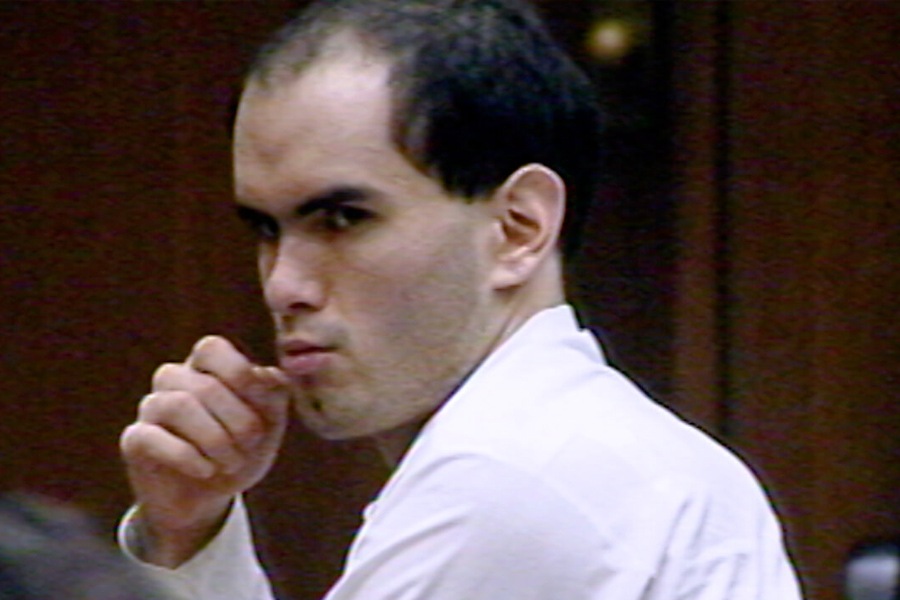
Basic Information
| Field | Detail |
|---|---|
| Full Name | Robert John Bardo |
| Date of Birth | January 2, 1970 |
| Nationality | American |
| Known For | Convicted of the 1989 murder of actress Rebecca Schaeffer |
| Conviction | First-degree murder with special circumstances |
| Sentence | Life imprisonment without the possibility of parole (1991) |
| Incarceration Status | Incarcerated in the California state prison system |
| Family Background | Youngest of seven children; father served in the U.S. Air Force |
| Notable Events | Stalking led to high-profile killing; prompted major anti-stalking and privacy reforms |
| Prior History | Documented behavioral and mental-health issues; institutional treatment during adolescence |
| Marital/Relationship Status | Not publicly documented |
| Employment Before Crime | Intermittent, low-wage or unemployed |
Early Life in a Restless Household
Robert John Bardo’s childhood unfolded against the backdrop of a military family’s perpetual motion. His father’s career in the U.S. Air Force meant relocations before the family settled in Arizona, and accounts from the period depict a boy at the fringes: the youngest of seven, struggling at school, drifting in and out of institutional settings as a teenager. By the late 1980s, he had dropped out, with sporadic low-wage work and a growing inwardness that would curdle into fixation.
The portrait that emerges is not of steady progression but of a young man in free fall. Teachers, neighbors, and later reporters described behaviors that raised alarms. The signals were there—scattered, uncoordinated, and ultimately insufficient to prevent a tragedy that would reverberate far beyond a single apartment doorway in West Hollywood.
Family Members and Roles Documented in the Public Record
- Philip Bardo (father): A non-commissioned officer in the U.S. Air Force. Trial coverage placed him on the witness stand and within the narrative of a family grappling with a son in crisis.
- June Bardo (mother): Reported to have testified in connection with the proceedings. Public summaries describe a turbulent home life and a household coping with complex mental-health issues.
- Edward Bardo (older brother): Testified that he purchased a .357 handgun later used in the crime, a consequential act that loomed large in courtroom testimony.
- Other siblings: Multiple sources consistently note that Robert was the youngest of seven, but the names and private details of the other siblings are not broadly documented in publicly accessible, reliable records.
Public reporting on the case has focused on the crime and its legal aftermath, not on the private lives of family members. What is known comes from courtroom testimony and contemporaneous news coverage; beyond that, the family has largely remained outside the spotlight.
From Fixation to Fatal Encounter: July 18, 1989
Obsession rarely erupts without a history. In the years leading up to 1989, Bardo’s interest in actress Rebecca Schaeffer intensified, a parasocial attachment morphing into stalking. He attempted in-person approaches, sent letters, and, crucially, obtained her home address through channels that were then lamentably porous. The gateway was open; the oversight was systemic.
On July 18, 1989, he arrived at Schaeffer’s West Hollywood apartment. The first interaction at her door did not turn violent. The second did. He returned to the building, she answered again, and he shot her with a .357 handgun. She died at 21. Police arrested him soon after. The city recoiled, and the country took notice. Within hours, the case was not just a crime but a symbol—proof that personal data could be weaponized and that stalking, long dismissed as nuisance behavior, could be lethal.
Investigation, Trial, and Sentence
The investigation unfolded quickly, aided by eyewitness accounts, physical evidence, and a trail connecting the firearm to Bardo’s brother’s purchase. Prosecutors emphasized premeditation: the stalking, the procurement of a weapon, the travel to the victim’s home. The defense foregrounded his mental-health history, drawing a picture of profound disturbance rather than cold calculus. Ultimately, the jury’s verdict in 1991 was first-degree murder with special circumstances.
The court imposed life imprisonment without the possibility of parole. Bardo entered the California Department of Corrections and Rehabilitation system and has remained there since, a static endpoint to a chain of decisions that garnered national attention.
Key Dates and Milestones
| Date | Event |
|---|---|
| January 2, 1970 | Birth of Robert John Bardo |
| July 18, 1989 | Murder of Rebecca Schaeffer in West Hollywood |
| 1991 | Conviction for first-degree murder; sentenced to life without parole |
| 1990–1991 | State and national reforms on stalking and data privacy begin to take shape |
| 2007 | Attack on Bardo in prison; he survives |
Inside the Walls: Incarceration and Later Incidents
Prison did not erase Bardo’s notoriety. In 2007, he was stabbed by another inmate and survived the attack. Such incidents underscore the volatility of prison life, where high-profile offenders remain vulnerable. Over the years, public records and reporting have listed his placement in different California facilities; inmate locations can change for administrative or security reasons. What has not changed is his sentence: life without parole, the judicial equivalent of a door locked from the outside forever.
Legal and Cultural Impact
The killing of Rebecca Schaeffer became a catalyst for reform. California moved to enact one of the nation’s first comprehensive anti-stalking statutes, codifying that persistent harassment, surveillance, and threats are crimes, not quirks. Equally significant were the changes to how personal data—especially DMV records—could be accessed. Where records had once been an open book, they became a controlled ledger. Federal and state efforts tightened privacy protections, limiting the casual flow of information that could place private lives in the crosshairs.
Law enforcement practices evolved too. Threat-assessment protocols grew more sophisticated. Entertainment studios and security teams began to treat obsessive fan behavior as a continuum that, in some cases, could escalate toward violence. The case turned “stalking” from a footnote into a headline, refocusing public understanding on the danger posed by fixations that attach themselves to the lives of public figures and private citizens alike.
Media and Ongoing Public Attention
Decades later, the case still draws attention. True-crime documentaries revisit the investigation and trial. Feature articles trace the legacy of the reforms that followed. On social platforms, short videos and threads retell the events with a mix of archival footage and contemporary commentary. Bardo himself has no public-facing presence; his life is circumscribed by a sentence that forecloses the possibility of parole. In that absence, the narrative centers on the victim, the systemic failures that enabled the crime, and the legal architecture built in its wake.
Gaps and Limits in the Record
Some details remain incomplete or deliberately private. Beyond the parents and brother who appeared in court, the names and lives of other siblings are not broadly published in reliable, accessible records. Early-life accounts cite mental-health interventions and school difficulties but lack granular clinical detail due to privacy and the passage of time. Prison assignments can shift, and while reports have listed particular facilities at various times, those placements are administrative snapshots rather than permanent fixtures. What is firm are the foundational facts: the crime, the conviction, the sentence, and the enduring legal consequences that followed.
FAQ
Who is Robert John Bardo?
He is the man convicted of the 1989 murder of actress Rebecca Schaeffer. He received a life sentence without parole.
When was he born?
January 2, 1970.
What was he convicted of?
First-degree murder with special circumstances.
What was his sentence?
Life imprisonment without the possibility of parole, imposed in 1991.
Where is he incarcerated?
He remains in the California state prison system; inmate placements can change over time.
What role did his family play in the case?
His parents testified in proceedings, and his brother Edward admitted purchasing the handgun later used in the crime.
How many siblings does he have?
He is publicly described as the youngest of seven children; most siblings are not named in widely available records.
Did the case change laws?
Yes. It helped spur anti-stalking statutes and stricter controls on access to personal data, including DMV records.
Was Bardo attacked in prison?
Yes. He was stabbed by another inmate in 2007 and survived.
Did he have a prior criminal record?
Reports describe earlier behavioral issues and encounters with authorities, but the 1989 murder is the defining offense.