When a commercial building is damaged, the priority is not simply making it look normal again. Seattle property owners and managers need a plan that protects people, supports business operations, and addresses conditions that may be hidden behind walls, ceilings, equipment, or exterior finishes. Working with an experienced commercial restoration company can help bring structure to a stressful situation from the first site assessment through final repairs.
In the Seattle area, persistent seasonal rain, wind-driven moisture, aging building systems, busy delivery zones, and tree-related storm damage can all complicate a commercial loss. A small roof opening, for example, may allow water into insulation, ceiling assemblies, wiring pathways, stored products, and occupied suites long before every consequence is visible.
Why Commercial Recovery Requires More Than Basic Cleanup
Commercial properties are interconnected environments. Damage in one area may affect structural components, electrical and mechanical systems, inventory, tenant improvements, loading areas, parking access, alarms, elevators, records, and computer equipment. Fire can leave smoke residue and odor outside the room where it began. Water can travel through cavities and along framing. A vehicle strike may appear limited to a storefront but also affect doors, utilities, framing, or nearby barriers.
For that reason, cosmetic repairs should not lead the process. Property teams should first establish what happened, identify active hazards, and determine which systems need qualified inspection before an affected space is returned to use.
The First 24 Hours: Protect People and Limit Further Damage
- Confirm life safety. Call emergency services when needed, account for employees and visitors, and keep people away from unsafe areas.
- Respect restricted spaces. Fire, electrical, flood, and structural hazards are not always obvious from the doorway.
- Control active sources when authorized and safe. This may include shutting off water, gas, or electricity through the appropriate personnel.
- Secure the building. Temporary boarding, fencing, locks, weather protection, and lighting can reduce unauthorized entry and further exposure.
- Protect what can be saved. Move undamaged records, equipment, and inventory away from the affected area if conditions permit.
- Start an incident log. Record times, contacts, decisions, photos, emergency work, and developing conditions.
Document Damage for the Claim and Recovery File
Before moving damaged contents, take wide photos that show each room or exterior area as a whole, followed by close images of ceilings, walls, flooring, equipment, inventory, doors, windows, and visible utility damage. Note the date, location, likely source of damage, and any immediate protective action taken.
Maintain separate lists for building damage, contents, inventory, cleanup expenses, temporary operating costs, and possible business-income impacts. Save receipts for emergency mitigation, security, temporary storage, equipment rental, and alternate workspace. Unless an item creates an immediate health or safety concern, avoid discarding it before discussing documentation needs with the insurer or adjuster.
Recovery Steps by Type of Damage
Fire and Smoke Damage
Soot, residue, odor, corrosion risk, damaged insulation, and water used in firefighting can create a wider scope than the burned area alone. An assessment should come before repainting or replacing finishes, especially where HVAC systems, electrical equipment, or adjacent tenant areas may be affected.
Water, Flood, and Storm Damage
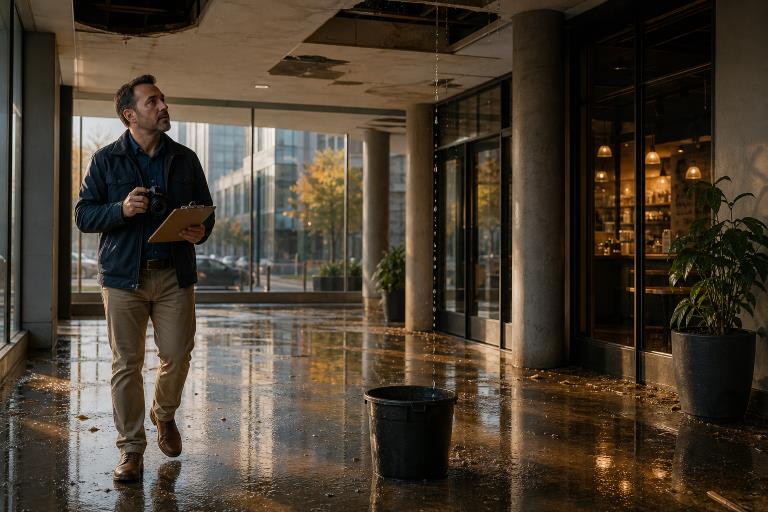
Find and stop the source of water intrusion first. Wet flooring, wall cavities, insulation, and stored materials need prompt evaluation. Storm-related roof punctures, broken windows, fallen trees, and damaged siding should receive temporary weather protection while permanent repairs, permits, and materials are coordinated. Contaminated water may require controlled access and specialized handling.
Vehicle and Impact Damage
Vehicle impacts can damage storefronts, loading areas, bollards, walls, doors, and utility lines. Even localized damage may require input from engineers, building officials, electricians, plumbers, or other trades before the affected area can safely reopen.
Build a Recovery Team and Communication Plan
Assign one recovery coordinator to keep decisions moving. Depending on the loss, the team may include the owner, property manager, tenants, insurer, adjuster, contractors, engineers, financial advisors, and legal counsel. Use one shared system for photographs, estimates, invoices, inspection reports, permit records, and approvals.
Give tenants, employees, customers, and vendors brief updates at predictable times. Share confirmed information rather than guesses. Explain which entrances, suites, parking areas, deliveries, utilities, and services are available, restricted, or temporarily relocated. Employees should know whether remote work, alternate entrances, or modified schedules apply.
Insurance, Financial, and Permit Questions to Review
- What damage, extra expense, debris removal, and business-income coverage applies?
- Which deductibles, exclusions, approvals, and documentation requirements affect the claim?
- Are flood, equipment failure, earthquake, or vehicle-related losses governed by separate coverage?
- Will repairs trigger current building, electrical, plumbing, fire, or accessibility requirements?
- What permit numbers, inspection dates, corrections, and final approvals must be tracked?
After a declared disaster, eligible businesses and private nonprofit organizations may be able to pursue disaster recovery loan assistance for certain uninsured or underinsured losses. Property owners should review available options carefully with their insurer and financial advisors.
Reduce Downtime Without Sacrificing Safety
Separate safe operations from damaged areas whenever practical. Prioritize repairs that restore life safety, weather protection, utilities, access, revenue-producing space, and tenant occupancy. Temporary barriers, drying equipment, lighting, security, and alternate work locations may help maintain essential operations while permanent work proceeds.
A strong continuity plan also accounts for communications, technology recovery, essential records, suppliers, and alternate operating procedures. The business emergency planning guidance from Ready.gov outlines why communication, IT recovery, emergency response, and continuity planning should work together.
A Simple Seattle Commercial Recovery Timeline
Day One
Protect people, secure the site, stop active damage when safe, notify key contacts, and begin documentation and expense tracking.
Days Two Through Seven
Complete detailed inspections, establish an initial scope, review insurance requirements, arrange alternate access or operations, and begin approved mitigation work.
Weeks Two Through Eight
Finalize repair priorities, coordinate permits and engineering, manage tenant and vendor access, track changes, and prepare for required inspections.
Common Mistakes to Avoid
- Repairing before documenting the loss.
- Assuming visible damage is the full extent of the problem.
- Discarding damaged contents without records or insurer guidance.
- Providing unclear updates to tenants and employees.
- Overlooking interruption costs, permits, inspections, or code requirements.
- Choosing speed over safety when building conditions remain uncertain.
Conclusion
Commercial property recovery in Seattle works best when safety, documentation, communication, and planning move together. A disciplined process can limit additional damage, support informed insurance decisions, reduce avoidable downtime, and help restore a building for employees, tenants, customers, and the wider community.