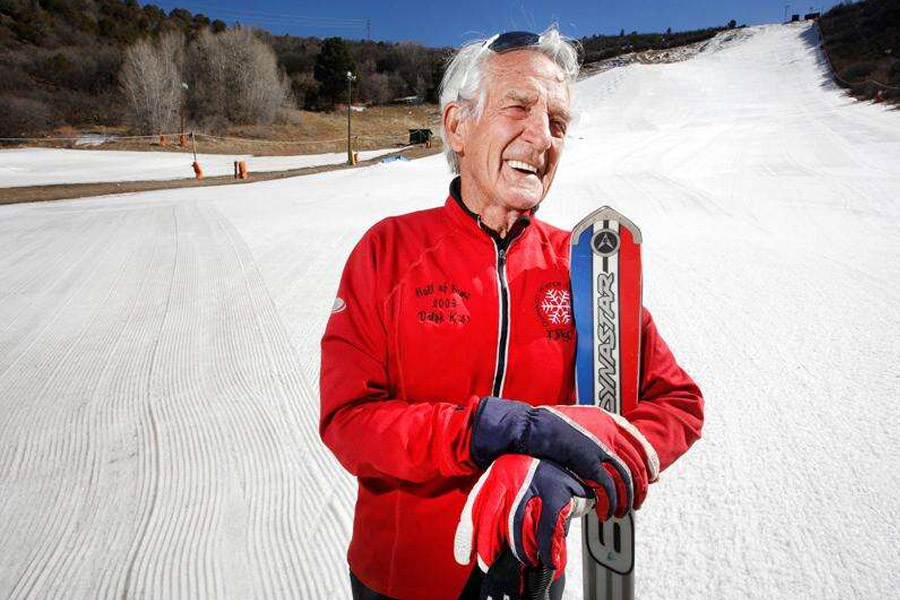
Basic Information
| Field | Details |
|---|---|
| Full name | Adolph “Dolph” Kuss |
| Also known as | Adolph Kuss, Dolph Kuss |
| Approximate birth year | c. 1930 |
| Birthplace | Leadville, Colorado region |
| Primary residence | Durango, Colorado |
| Occupation | Ski coach, teacher, trail builder, community sports leader |
| Notable roles | First men’s skiing coach at Fort Lewis College; U.S. Nordic ski coach |
| Honors | Inducted into regional skiing halls of fame; Fort Lewis College Hall of Fame |
| Family | Spouse: Sabina Kuss; Child: Sepp Kuss (born September 13, 1994) |
| Community contributions | Chapman Hill development, Purgatory involvement, Chicken Creek trail work |
| Public footprint | Oral histories, local journalism, college archives |
Early life and roots
Dolph Kuss began his life in the high country, a child of Leadville and the thin air that sharpens lungs and instincts. Born around 1930, he grew up where snow is not a season but a teacher. Family roots stretch to Italy on his mother’s side and Slovenia on his father’s side, a mix that became a quiet backbone for a rugged American life. He learned to move on skis as naturally as others learn to walk, and those early days folded into a lifetime of movement across powder, pine and trail.
The metaphor of altitude fits him; like a ridge line he has been both a landmark and a conduit, linking generations who sought skill, fitness and community in the mountains.
Coaching career and achievements
Dolph’s professional life reads like a map of midcentury American skiing. He competed in regional races in the 1940s and 1950s and then turned to coaching, a shift from personal pursuit to stewardship. By the 1960s he was coaching U.S. Nordic teams, participating in Olympic cycles and shaping athletes who went on to national level competition. He served as the first men’s skiing coach at Fort Lewis College from roughly 1965 to 1976, a span of years that established the college program and created pathways for student athletes.
Numbers matter here. Decades of teaching produced thousands of skiers and dozens of competitive athletes. Induction into college and state skiing halls of fame recognizes a coaching tenure that spans more than 20 years of formal program leadership plus many more years of informal mentorship.
His approach combined technical rigor with practical toughness. Practices were built around conditions, not calendars; mileage and repetitive technique drills sat beside long days in variable weather. In short, he trained bodies and he taught a culture.
Community builder and trail work
Durango’s landscape carries Dolph’s fingerprints. He helped develop Chapman Hill and contributed to early work at Purgatory ski area. He was instrumental in trail initiatives such as the Chicken Creek system, projects that turned rugged terrain into public assets. These efforts are not just infrastructure; they are social scaffolding, places where children take their first skis and neighbors meet for a loop.
Across a half century he served as instructor, advocate and organizer. He taught in formal classrooms and on the slopes; he laced up boots for volunteers and rubbed elbows with civic groups to secure equipment and land access. The result: physical places and a living culture that continues to spawn athletes and outdoor enthusiasts.
Family, parenting and influence on Sepp Kuss
One of Dolph’s most visible public links is his son, Sepp Kuss, born September 13, 1994. Sepp’s rise to the World Tour in professional cycling has been narrated often as a story of mountain upbringing and multisport childhood. That narrative is accurate. Sepp grew up in a household where skiing, endurance and outdoor play were everyday currencies.
Sabina Kuss, Sepp’s mother and Dolph’s partner, also taught Nordic skiing and was part of the family’s athletic fabric. The household produced a young man who learned balance on snow, patience on long climbs and a tolerance for cold and steepness. Those early lessons translated into cycling power and a mental template for sustained effort.
It is tempting to compress parenthood into a single cause and effect. The truth is more like a braided rope: genetics, coaching, community access and deliberate freedom all intertwined to hold Sepp steady through junior races, college-level decisions and the leap to professional ranks.
Oral histories and personal recollections
Dolph has given recorded interviews and oral histories that reveal specifics and textures. He recounts arrival in Durango in the early 1950s and describes seasons spent building programs, recruiting athletes and pushing local infrastructure forward. He speaks with the cadence of someone who has watched the same valley change in a hundred small ways: new equipment, different trails, the slow growth of organized sport.
These archives are important because they show intent. They document decisions to invest time and energy in community projects, not for profit but for legacy. They are also candid; he names challenges and acknowledges the labor behind every trail and every team.
Recent mentions and public profile
In recent decades Dolph’s name appears most often in retrospectives and community features. Local newspapers and college alumni pages have profiled his influence, especially as his son’s professional career drew wider attention. Mentions cluster around anniversaries, hall of fame events and trail dedications. The shape of recent coverage is celebratory and rooted in gratitude rather than in controversy or commerce.
His public financial profile is minimal. He is known for service, not for business holdings, and there is no public corporate footprint attached to his name.
Timeline of public milestones
| Year or period | Event |
|---|---|
| c. 1930 | Born in Leadville region |
| 1940s-1950s | Competitive skiing and early career |
| 1953 | Arrival in Durango region (approximate) |
| 1960s-1970s | Coaching U.S. Nordic teams and Olympic cycle involvement |
| 1965-1976 | First men’s skiing coach at Fort Lewis College |
| 1990s | Inductions into regional skiing halls of fame and college honors |
| 1994 | Birth of son Sepp Kuss on September 13 |
| 2000s-2020s | Ongoing recognition for trail work and community contributions |
Influence on local culture and sport
Dolph’s work seeded multiple cultures at once: competitive skiing, recreational trail use and a general ethos of endurance sports in Durango. He helped make outdoor fitness accessible; he also codified practices that made athletic programs durable. Think of him as a hinge between an older, more informal era of mountain sport and a modern system that supports athletes from youth leagues to professional careers.
His fingerprints show up in coaching philosophies, in the placement of trails, and in the decisions of families who followed his example and made the outdoors a classroom for their children.
FAQ
Who is Dolph Kuss?
Dolph Kuss is a longtime Durango ski coach, teacher and community leader born around 1930 who helped found collegiate and local skiing culture.
What are Dolph Kuss’s main accomplishments?
He coached U.S. Nordic ski teams, served as the first men’s skiing coach at Fort Lewis College, helped develop local ski areas and was inducted into regional halls of fame.
Is Dolph Kuss related to Sepp Kuss?
Yes, Sepp Kuss is Dolph’s son, born on September 13, 1994, and raised in a family steeped in skiing and outdoor sport.
What community projects did Dolph work on?
He contributed to Chapman Hill, early work at Purgatory ski area and the Chicken Creek trail system among other local recreational projects.
Has Dolph received formal recognition?
Yes, he is a member of Fort Lewis College Hall of Fame and has been inducted into regional snowsports halls of fame for his lifetime contributions.
Where can I find personal accounts from Dolph?
Dolph has given oral histories and interviews that recount his life, coaching career and community work in the Durango area.
What is known about his family background?
Public accounts note Italian maternal ancestry and Slovenian paternal ancestry, and they identify his spouse Sabina and son Sepp as the core household referenced in public profiles.
Is there public financial information about Dolph Kuss?
No, there are no public corporate filings or reliable estimates of personal wealth; his public presence is civic and athletic rather than commercial.