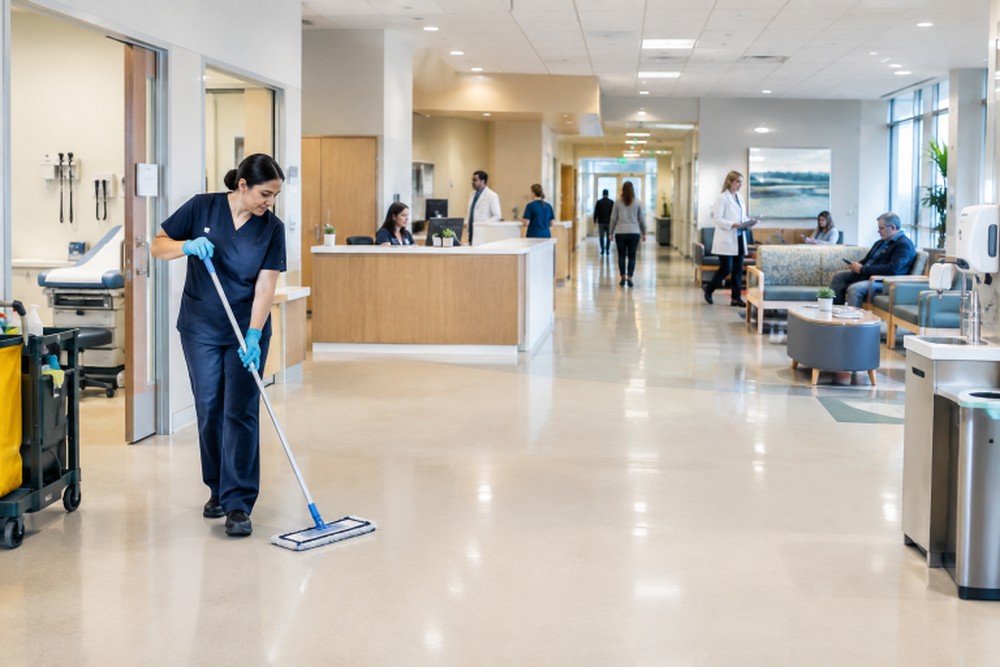
Healthcare facilities need dependable cleaning processes because patients, visitors, clinicians, and support teams share the same rooms and surfaces throughout the day. A strong program combines routine cleaning, appropriate disinfection, defined responsibilities, and communication between environmental services and care teams.
For organizations that need outside support, CNS Cleaning Company provides cleaning services for medical facilities and clinics designed around patient-facing spaces, staff areas, shared touchpoints, floors, and flexible scheduling. The company has operated since 1983 and describes customized scopes, trained teams, supervision, and ongoing quality checks for healthcare settings, with a strong presence in Bristol and the Greater Philadelphia area.
Why Healthcare Cleaning Programs Matter
Environmental cleaning means removing visible soil and organic material from surfaces, then using a suitable disinfectant when the situation, surface, and facility protocol call for it. It supports infection prevention, but it does not replace hand hygiene, appropriate use of personal protective equipment, or clinical sterilization procedures.
Healthcare settings require more structure than a typical office because room use can change quickly, and many surfaces are touched by multiple people. A documented plan helps staff understand what must be cleaned, when it must happen, which product to use, and who is accountable for completion.
The Main Risk Areas Inside A Healthcare Facility
Patient Rooms And Exam Areas
Patient rooms and exam areas commonly include beds, exam tables, counters, door handles, light switches, privacy curtains, and storage surfaces. Room turnover and discharge cleaning should use practical checklists so no routine task is left to memory alone. The checklist should distinguish between items handled by clinical staff and items handled by environmental services.
Waiting Rooms And Reception Areas
Waiting rooms may have continuous traffic even when treatment rooms are between appointments. Seating, check-in counters, pens, clipboards, doors, payment terminals, and public touchscreens should be included in the cleaning scope. These areas also benefit from prompt attention to spills, litter, and restroom supply needs because they shape a visitor’s first impression.
Restrooms, Breakrooms, And Shared Equipment
Restrooms, breakrooms, and staff workspaces are shared-use areas, not secondary priorities. Include fixtures, floors, handles, appliance exteriors, counters, and restocking needs in the plan. Mobile items such as wheelchairs, carts, blood pressure cuffs, keyboards, phones, and tablets also need a defined cleaning owner and a clear schedule.
Facilities managing patients with organisms that can persist in healthcare environments should follow infection-prevention directions closely. The CDC’s guidance for Candida auris infection control emphasizes thorough cleaning and disinfection of patient-care environments and shared equipment with appropriate products.
How To Build A Practical Cleaning Plan
- Map the facility. List rooms, corridors, entrances, restrooms, storage areas, staff spaces, and shared equipment zones.
- Classify each area. Consider patient population, traffic level, surface use, and the type of care provided.
- Set task frequencies. Identify what occurs between uses, daily, weekly, periodically, and as needed.
- Assign responsibility. Every task should have a named role or team, including after-hours and backup coverage.
- Select appropriate products. Product labels, required contact times, compatibility with surfaces, and safe storage all matter. The EPA’s disinfectant product guidance can help teams identify products approved for their intended use.
- Define completion standards. Describe what staff should inspect before a room or area is considered ready.
How To Manage High-Touch Surfaces
Each department should maintain a practical list of its high-touch surfaces. Common examples include door plates, elevator buttons, handrails, faucet handles, reception counters, phones, keyboards, shared devices, and chair arms. Cleaning frequency should reflect use and traffic rather than relying on one universal schedule.
Staff should use a repeatable workflow, such as working from cleaner areas toward dirtier areas and from higher surfaces downward when appropriate. Clean tools and used tools must remain separate. Just as important, disinfectants must remain visibly wet for the contact time stated on the label, or they may not perform as intended.
Why Staff Training And Communication Matter
A written plan is only useful when the staff understands it. Training should cover hand hygiene, personal protective equipment, product dilution and storage, cleaning order, spill response, isolation-room procedures, and how to report damaged surfaces or missing supplies. Demonstrations and short refresher sessions can reinforce critical steps without overwhelming staff.
Communication should be simple and consistent. Shift briefings, accessible checklists, and one reliable reporting channel make it easier to surface concerns. Leaders should also close the loop by confirming when reported problems have been addressed.
Inspections, Documentation, And Quality Checks
Quality checks confirm whether the program works in practice. Routine visual inspections can identify missed tasks, supply problems, damaged finishes, and recurring trouble spots. Some facilities also use fluorescent markers or ATP testing as additional auditing tools. These methods can support coaching, but they should not be treated as substitutes for a complete inspection process.
Documentation is not paperwork for its own sake. It helps leaders identify patterns, respond to repeated concerns, support training decisions, and compare performance across departments. Useful measures may include inspection findings, response times, recurring complaints, and completion of scheduled tasks.
How To Schedule Cleaning Around Patient Care
Cleaning should be coordinated with appointments, transfers, procedures, and discharge activity. Public spaces can often receive more detailed attention during lower-traffic periods, while high-traffic locations may benefit from a day porter or floating team member. Facilities should also plan additional coverage for seasonal surges, absences, holidays, and unexpected incidents.
What To Look For In An Outside Cleaning Partner
When comparing providers, ask about healthcare experience, employee training, supervision, background checks, inspection practices, issue response, and scheduling flexibility. The provider should be prepared to learn the facility layout, understand patient flow, and create a scope that separates routine tasks from urgent response procedures. Clear communication and documented expectations are more valuable than broad promises.
Common Questions About Healthcare Facility Cleaning
How Often Should A Healthcare Facility Be Cleaned?
Frequency depends on room type, patient volume, traffic, surface use, and infection-prevention needs. A waiting room, exam room, restroom, and administrative office should not automatically follow the same schedule.
What Is The Difference Between Cleaning And Disinfection?
Cleaning removes soil and debris. Disinfection uses an appropriate product to reduce or destroy certain microorganisms on a properly cleaned surface when used according to its label.
How Can Missed Tasks Be Reduced?
Use clear assignments, concise checklists, stable procedures, regular inspections, and a fast way for employees to report incomplete work.
Final Thoughts
Dependable healthcare cleaning comes from planning, training, communication, and measurement. Rather than relying on occasional deep-cleaning efforts, facilities should build repeatable routines that fit their spaces, staffing, patient needs, and operating hours. Reviewing the current program and improving one weak point at a time can create a safer and more consistent care environment.