Key Takeaways
- Small dents with intact paint are often easier to repair than sharp creases or dents with exposed metal.
- Paint chips and cracks deserve timely attention because moisture can reach the metal beneath the finish.
- Size is only one consideration. Depth, location, access, body lines, and panel material also matter.
- Paintless dent repair can be a practical option for many shallow door dings, parking-lot dents, and minor hail marks.
- DIY pulling methods can worsen a dent by stretching metal, creating high spots, or lifting paint.
- Before filing an insurance claim, compare the estimated repair cost with your deductible and policy terms.
A dent can happen anywhere in Calgary, from a crowded grocery-store lot to a garage mishap or a sudden storm. Before deciding to ignore it, repair it yourself, or book an inspection, look beyond the dent’s width. The condition of the paint, the shape of the impact, and the affected panel all influence the sensible next step. For shallow damage where the factory finish is still intact, Paintless Dent Repair Calgary may be worth considering. This approach reshapes accessible metal without automatically requiring filler or repainting, but suitability depends on the individual dent rather than a simple size measurement.
Start With a Careful First Look
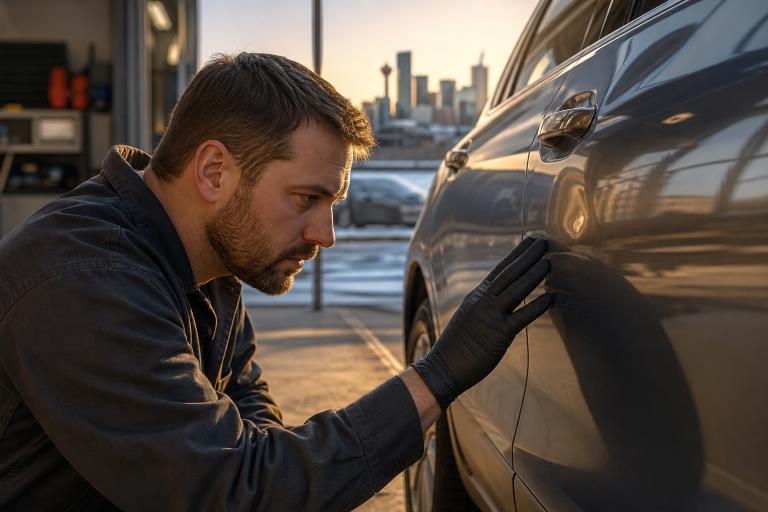
Inspect the vehicle in bright, even light after washing the affected area. Dust, salt residue, and road film can hide tiny paint chips or make a shallow dent appear deeper than it is. Look across the panel from multiple angles, since reflections reveal ripples, creases, and raised edges that a straight-on view can miss.
- Photograph the dent from several distances and angles.
- Check for chipped, cracked, peeling, or scuffed paint.
- Look for exposed metal, staining, or corrosion near the impact.
- Make sure the door, hood, trunk, or hatch still opens and closes correctly.
- Check nearby trim, lights, cameras, and parking sensors for damage.
When a Dent Needs Prompt Attention
A smooth dent with unbroken paint is usually a cosmetic concern, but it should not be treated the same way as impact damage that affects vehicle operation. Arrange an inspection sooner if a door rubs, a hood will not latch securely, a bumper cover has shifted, or a light, sensor, window, or camera is affected. Calgary drivers should also inspect vehicles carefully after hail or severe weather. Cosmetic hail damage can include dents with intact paint, while chipped paint, broken glass, and suspected structural damage call for a more thorough assessment.
Which Dents May Suit Paintless Repair?
Paintless repair is commonly considered when the original paint is intact, and the metal has not been heavily stretched or sharply folded. A technician uses specialized access points and controlled pressure to restore the panel to its original contour gradually. Access behind the dent is important, so the visible damage alone does not determine whether the process is appropriate.
Common candidates include:
- Shallow door dings from parking spaces.
- Small, smooth dents away from panel edges.
- Broad dents without a hard central crease.
- Some minor hail dents on accessible panels.
- Dents on flat or gently curved portions of a panel.
There is no universal rule that a dent below a certain diameter will always qualify. A small mark on a pronounced body line can be more difficult than a larger, shallow dent in the middle of a door or fender.
When Traditional Bodywork Makes More Sense
Conventional body repair may be the better path when the damage involves more than reshaping metal. This can include sanding, filler work, refinishing, panel repair, or replacement, depending on the condition of the vehicle. Choosing traditional work is not a failure of paintless repair. It is often the more appropriate way to restore a damaged surface.
- The paint is cracked, missing, or peeling.
- The panel has a deep crease, tear, or severe distortion.
- The damage reaches a seam, edge, brace, or reinforced area.
- Previous repairs have left filler or compromised paint beneath the dent.
- The impact may have affected structural components or safety equipment.
What Affects the Repair Cost?
Accurate pricing requires an inspection because two dents that look similar can require very different amounts of work. Labour time can increase when bracing, interior trim, lights, or electronic components restrict access.
- Size and depth: Deeper dents generally require more careful metal finishing.
- Location: Body lines, edges, and tight spaces can be more complex.
- Panel material: Steel and aluminum can respond differently during repair.
- Number of dents: Multiple marks may change the overall repair plan.
- Paint condition: Refinishing may be needed if the finish is damaged.
- Vehicle design: Trim removal or limited access can affect labor.
The Risks of DIY Dent Repair
Home dent-puller kits can seem appealing, especially for a small door ding, but forceful pulling can stretch metal or create a noticeable high spot. A careful inspection is essential because cracked paint, exposed metal, and sharp creases are signs to seek professional help rather than continue with a home repair attempt.
- Do not drill holes into a body panel.
- Do not apply concentrated heat to a small painted area.
- Do not pull aggressively on a deep crease.
- Do not use household adhesives or untested chemicals on the finish.
- Stop if paint begins lifting or the metal starts rippling.
Should Insurance Cover the Damage?
Coverage depends on the cause of the damage and the policy details. Hail, vandalism, collisions, and unidentified parking-lot damage may be handled differently. Review the deductible, confirm the type of coverage in place, document the damage with photos and dates, and compare the expected repair bill with the amount you would pay yourself. Your insurer can explain how a claim may be handled under your specific policy.
How to Prepare for an Accurate Estimate
Make the inspection easier by washing and drying the panel, taking photos in direct and angled light, and noting when the damage occurred if known. Point out older repairs, paint chips, or nearby scratches. Ask whether the proposed method preserves the original paint and request a written estimate that separates possible additional work.
Simple Ways to Prevent More Dents
Prevention cannot eliminate every risk, but parking habits can reduce exposure. Choose spaces with room to open doors, avoid tight cart-return areas when practical, and leave extra clearance beside large vehicles. In a home garage, keep tools, bicycles, and sports equipment out of the vehicle’s path. After severe weather, inspect the roof, hood, trunk, and upper door panels before minor damage is forgotten.
Final Decision Checklist
- Paint intact and dent shallow? Ask whether paintless repair is suitable.
- Paint cracked or metal exposed? Schedule an inspection promptly.
- Panel misaligned or safety equipment affected? Treat it as more than cosmetic damage.
- Repair cost near the deductible? Compare an out-of-pocket repair with a claim.
- Unsure what caused the damage? Take clear photos and arrange an in-person assessment.
The right repair choice for a Calgary vehicle depends on the dent, paint, panel, and overall condition of the car. A quick, informed inspection helps distinguish a manageable cosmetic issue from damage that needs more immediate attention.