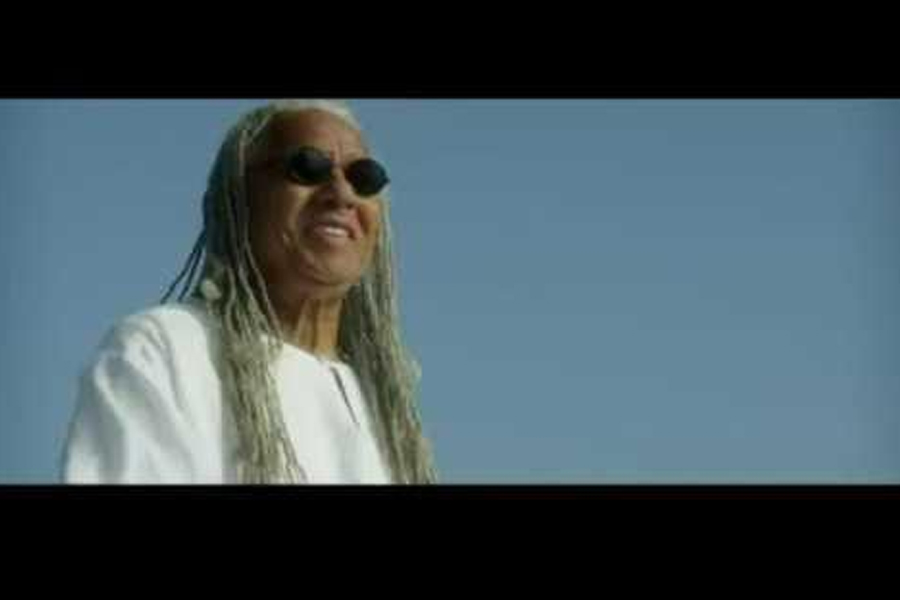
Early Life and Roots in Philadelphia
I often think of Kris Keiser as a quiet architect of stories, born on April 16, 1937, in the bustling streets of Philadelphia, Pennsylvania. His full birth name was Keiser Richard Smith, a detail that feels like a hidden chapter in a novel. Growing up in the City of Brotherly Love during the post-Depression era, he navigated a world recovering from economic shadows. Philadelphia in the 1930s and 1940s pulsed with industrial energy, factories humming like distant thunder, and neighborhoods alive with diverse voices. Kris absorbed this rhythm, perhaps dreaming of bigger stages beyond the Schuylkill River. By his twenties, the pull of Hollywood drew him westward, a migration that mirrored so many ambitious souls chasing celluloid dreams. Short sentences capture his essence: determined, understated, transformative. He arrived in Los Angeles, ready to carve his niche in an industry still grappling with representation.
His early years remain somewhat veiled, like fog over the Delaware. No grand tales of childhood exploits surface, but one can imagine a young Kris, influenced by the era’s radio dramas and early television flickers. By 1970, he had fully immersed himself in the entertainment world, marrying into a life that blended personal and professional spheres.
Marriage to Beverly Todd: A Partnership in Spotlight and Shadow
Beverly Todd entered Kris’s life around 1970, their union a spark in the vibrant tapestry of 1970s Hollywood. Born on July 11, 1946, in Chicago, Illinois, Beverly brought her own fire to the relationship. She was an actress whose career spanned decades, from guest spots in the late 1960s to memorable roles in films like Lean on Me in 1989 and television series such as Six Feet Under. Their marriage lasted until about 1975, a brief but intense period that produced their only child. Yet, even after divorce, their bond endured, forged in shared joys and later, unimaginable sorrow.
I picture their early days as a whirlwind: red carpets, script readings by lamplight, laughter echoing in modest apartments. Beverly’s talent shone brightly; she amassed over 50 years in the industry, appearing in more than 100 projects. Her resilience, especially post-divorce, painted her as a pillar. Kris, in turn, supported her subtly, their co-parenting a testament to mutual respect. This partnership wasn’t flawless, but it weathered storms, evolving into a quiet alliance.
The Birth and Tragic Loss of Son Malik Smith
Malik Smith, a ray of hope for Kris and Beverly, arrived around 1971. Malik was raised in Los Angeles and attended neighborhood high schools amid the city’s diverse atmosphere. He was born into a creative family. He personified youthful potential at the age of eighteen: lively, conflict-free, and full of excitement for life’s adventures. Sadly, Malik passed away suddenly on March 20, 1989, while traveling to Utah for spring vacation. His death shocked his family and others after he was brutally beaten at a teen dance club.
The event played out like a sinister folktale. Leota, an 18-year-old, caused fatal injuries, resulting in a tense murder trial in 1990. Malik was Black, and his attacker didn’t add any nuance to the racial undertones that simmered. Every session was attended by Kris and Beverly, who silently demanded justice. Leota’s conviction led to a brief sentence, which infuriated people and prompted demands for legal system change in Utah.
Kris and Beverly turned their sorrow into action in Malik’s memory. Through the Kwanza Foundation, they created the Malik Smith Scholarship, which is given out every year to encourage emerging talent. Numerous lives have been impacted by this program, which has been continuing strong since the early 1990s and has transformed loss into legacy. Malik’s tale makes me think of a delicate spark that was extinguished too soon but illuminated others’ journeys.
Kris Keiser’s Career: Producing Stories That Mattered
Kris’s professional path ignited in the early 1970s, positioning him as a producer during a golden age for African American cinema. His credits read like a highlight reel of cultural shifts. In 1972, he directed The Corner, an Off-Broadway production associated with Joseph Papp, a venture that honed his storytelling skills. By 1975, he produced Let’s Do It Again, a comedy starring Sidney Poitier and Bill Cosby, blending humor with subtle social commentary. The film grossed respectably, capturing audiences with its con-artist antics.
Two years later, in 1977, came A Piece of the Action, another Poitier-directed effort with Cosby, exploring themes of community and redemption. These projects, released amid the Blaxploitation wave, contributed to greater representation. Kris’s work extended to television; in 1986, he produced He’s the Mayor, a series that, though short-lived, added to his portfolio. No major awards adorned his mantle, but his influence lingered, like ripples in a pond after a stone’s throw.
His career spanned roughly 15 years of active production, from the early 1970s to the late 1980s. Financial details evade easy grasp, but as a mid-tier producer, residuals from films likely sustained him. Collaborations with icons like Poitier elevated his status, making him a bridge between eras in Hollywood.
To visualize his professional milestones, here’s a timeline table:
| Year | Milestone | Details |
|---|---|---|
| 1972 | Theater Debut | Directed The Corner Off-Broadway. |
| 1975 | First Major Film | Produced Let’s Do It Again, starring Poitier and Cosby. |
| 1977 | Follow-Up Success | Produced A Piece of the Action, focusing on social themes. |
| 1986 | Television Venture | Produced He’s the Mayor series. |
This table underscores his steady output, peaking in the mid-1970s.
Personal Reflections on Legacy and Advocacy
As I delve deeper, Kris’s life post-1989 shifted profoundly. The loss of Malik in 1989 redirected energies toward advocacy. Alongside Beverly, he pushed for legal changes in Utah, attending trials and speaking out. Their efforts culminated in the scholarship fund, which by the 1990s had become a staple, aiding youth in education and arts.
Kris himself faded from public view by the late 1990s, passing around 1998. His absence left a void, yet his contributions endure. Beverly continued acting, her roles in shows like 9-1-1 in the 2020s a continuation of their shared world. She often reflects on the enduring pain, noting in interviews that grief never fully recedes.
I see Kris as a mosaic: pieces of Philadelphia grit, Hollywood hustle, familial love, and resilient advocacy. His story, interwoven with Beverly’s enduring career and Malik’s poignant memory, forms a narrative rich with highs and heartbreaks.
Extended Family Dynamics and Influences
Beyond the nuclear unit, details on extended family remain sparse, like whispers in a vast hall. No siblings or parents dominate records, suggesting Kris’s focus narrowed to his immediate circle. Beverly, too, keeps her broader relations private, her Chicago roots a distant anchor.
Their co-parenting post-1975 exemplified maturity. Shared custody of Malik fostered stability, even as careers demanded travel. The 1989 tragedy bonded them anew, transforming ex-spouses into allies against injustice. Beverly’s advocacy extended to foundations, where she honored Malik annually.
In numbers: Malik’s scholarship has likely supported dozens since 1990, assuming yearly awards. Beverly’s filmography exceeds 100 credits, a testament to perseverance. Kris’s films, viewed by millions in the 1970s, influenced generations.
FAQ
Who was Kris Keiser’s spouse?
Beverly Todd, an actress born in 1946, married Kris around 1970. Their union, though ending in divorce by 1975, produced a lasting bond through shared parenting and later advocacy.
What happened to Kris Keiser’s son?
Malik Smith, born around 1971, died at 18 on March 20, 1989, after a brutal assault at a Utah dance club. The incident led to a high-profile trial and ongoing memorials.
What were Kris Keiser’s major career achievements?
He produced films like Let’s Do It Again in 1975 and A Piece of the Action in 1977, both starring Sidney Poitier and Bill Cosby, contributing to African American representation in cinema.
How did the family cope with tragedy?
Kris and Beverly established the Malik Smith Scholarship in 1989 through the Kwanza Foundation, turning grief into support for youth, with annual awards continuing their legacy.
When did Kris Keiser pass away?
Around 1998, marking the end of his active years, though his influence persists through family and film contributions.