At a glance
| Field | Details |
|---|---|
| Full name | Kristina Marie Akana |
| Born | September 13, 1993 — U.S. Air Force Academy Hospital, Colorado Springs, Colorado |
| Died | February 14, 2007 (age 13) |
| Family role | Youngest child of William and Mia Akana; sister to Anna (b. August 18, 1989) and Will (b. May 7, 1992) |
| Background | Military family; frequent relocations (North Carolina, Okinawa, Hawaii, California) |
| Education | Middle-school student at time of death |
| Known for | Remembered through family tributes and public advocacy by sibling Anna Akana |
| Challenges | Dyslexia; persistent bullying; social isolation |
| Interests | Dance, acting, talent shows, drawing and journaling |
Family portrait
The Akana household read like a compact novel of movement and resilience. William Akana, a U.S. Marine Corps officer, and Mia Akana raised three children within a life of orders, bases, and short goodbyes. The family moved multiple times: from Cherry Point, North Carolina, to Okinawa, Japan; then to Ewa Beach, Hawaii; and later to Winchester, California. Each relocation was a season folded into their story — new classrooms, new routines, new faces.
| Name | Relation | Birthdate | Notes |
|---|---|---|---|
| William Akana | Father | — | U.S. Marine Corps officer; family moved due to military service |
| Mia Akana | Mother | — | Homemaker and primary family support |
| Anna Kay Napualani Akana | Older sister | August 18, 1989 | Comedian, filmmaker, mental-health advocate; public voice for the family’s grief |
| Will Akana | Older brother | May 7, 1992 | Actor/voice actor; present in family narratives |
Sibling life was ordinary in its small rebellions and deep ties: the clothing fights, the shared jokes, the safety of a sibling’s ear when the world felt sharp. Kristina was the youngest; she walked in the shadows and sunlight of her siblings’ footsteps, trying on their jokes, their styles, their courage.
Childhood and personality
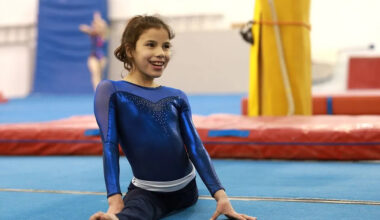
Kristina’s life had the quick bright strokes of a short story. She loved movement — dancing and acting — and she loved to perform, whether in family talent shows or in private sketchbooks. She kept a “safe haven” closet where she wrote and drew, a tiny interior world that sheltered a creative mind.
Her learning style was complicated by dyslexia. Numbers and letters sometimes resisted her; schoolwork became a battleground rather than a field of discovery. She moved schools in hopes of different classrooms and kinder peers, but bullying followed her like a shadow that refused to lift. Those years — roughly 2003–2007 — were shaped by a tension between her natural spark and forces that dimmed it.
Descriptions from family paint her as ambitious, fearless in small ways, and full of laughter. She could be brave during a performance and vulnerable in her journal. That contrast — outward vivacity and inward loneliness — is part of why her story continues to resonate.
Key dates and timeline
| Date | Age | Event |
|---|---|---|
| September 13, 1993 | 0 | Born at U.S. Air Force Academy Hospital, Colorado Springs, CO. |
| 1993–1997 | 0–4 | Early childhood; family based at Cherry Point, North Carolina. |
| 1997–2000 | 4–7 | Lived in Okinawa, Japan; attended 1st–3rd grades. |
| 2000–2003 | 7–10 | Lived in Ewa Beach, Hawaii; finished early elementary grades. |
| 2003–2007 | 10–13 | Family moved to Winchester, California; attended 7th–8th grade. |
| Mid-2000s | ~10–13 | Diagnosed with dyslexia; experienced persistent school bullying. |
| February 14, 2007 | 13 | Died by suicide. |
Numbers here are not only calendar marks; they are footprints along a path that narrowed too early. The sequence of moves — roughly every two to three years during childhood — created a rhythm of starting over: new seat assignments, new teachers, new expectations. For a child who needed consistency to manage learning differences and social pressures, that rhythm could be exhausting.
The aftermath: family, grief, and public remembrance
When a family lives in the public eye because one member is an artist and a storyteller, private grief can become a public language. Kristina’s life and death entered public conversation largely through Anna, who channeled personal loss into art and advocacy. Anna used writing, video, and performance to name the grief, the guilt, and the questions that follow a young life ended too soon.
Anna’s reflections — in books, on stage, and in performances that spanned years — turned a family story into a wider conversation about teen suicide, bullying, and mental-health stigma, particularly within Asian American cultural contexts where silence can be the default response. In 2012 Anna released a musical tribute; in 2013 and later she produced work that directly addressed surviving suicide and the ripple effects of loss. In 2024, Anna’s stage work peaked at an Edinburgh Fringe run that put family pain and comic insight side by side, using humor as a scalpel to examine grief.
Will’s presence in family narratives is quieter but no less important. As the sibling who discovered Kristina after the attempt that preceded her death, his experience became a point of trauma and a reminder that grief attaches itself to specific moments and people.
Memory as work: creative forms and public threads
Kristina’s creative impulses lived on — not through her own recordings, but through the creative memorials her family produced. There are music videos, interviews, essays, stage pieces, and social-media remembrances. Dates and milestones in the family’s public output often align with Kristina’s birthdate or the anniversaries of her death: birth-year tributes, birthday posts, and performances that ring like bells in years after 2007. These acts of remembrance function as both catharsis and architecture: they rebuild a shape for memory, beam by beam.
Her story is invoked in conversations about bullying prevention, educational support for students with learning differences, and the importance of early mental-health intervention. For many who encounter the Akana family’s narrative, Kristina becomes a shorthand for the consequences of silence, and for the urgency of noticing.
Small artifacts, large echoes
A journal entry. A closet where a child retreated. A talent-show applause. These are small artifacts; they are also the atoms of a life. Kristina’s life, compressed but luminous, continues to be felt in the way her family tells their story. Her presence is not only in dates and events, but in the way a sister turns to a stage to speak directly to pain; in the way a brother carries a private history that informs his work; in the way a household once shaped by military timetables learned to hold grief on its own terms.
The narrative threads — dates, numbers, relocations, diagnoses, creative projects — form a tapestry that is factual and human. The warp is the chronology; the weft is the feeling. Together they make a picture that is both portrait and reminder: brightness can be brief, but remembrance can last.