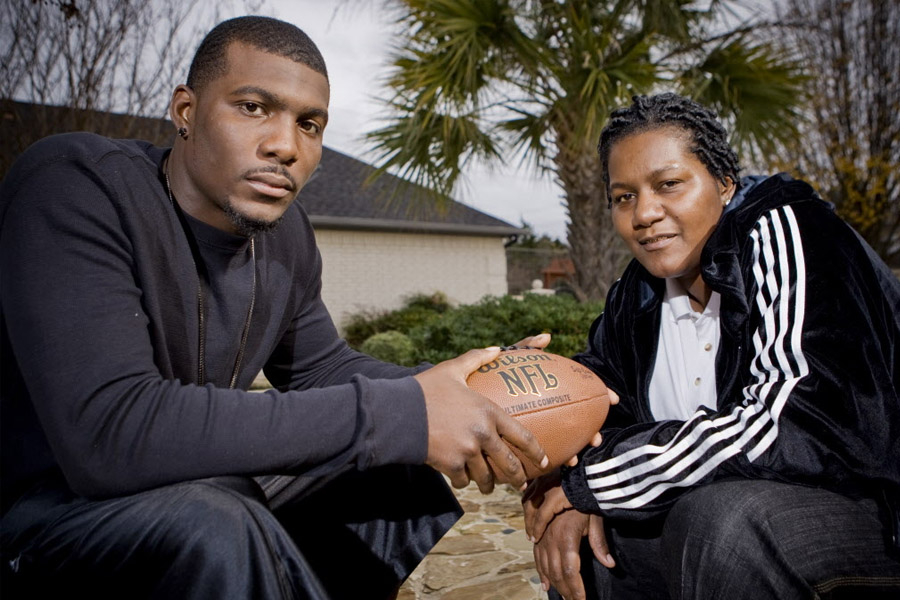
Portrait in Few Public Strokes
MacArthur “Mac” Hatton lived most of his life outside the glare of headlines. He appears in the public record primarily as the biological father of NFL receiver Desmond “Dez” Bryant, and what little is known paints a picture of a man whose personal choices and circumstances produced a tangled family tree, modest means, and a private resilience that shaped the lives around him. He was not a public figure by trade; he became notable because of family ties and the shadow his life cast across the narrative of a son who rose into the national spotlight.
Basic Information
| Field | Details |
|---|---|
| Full name | MacArthur Hatton (often “Mac” Hatton) |
| Born | circa 1947 |
| Died | November 12, 2016 |
| Age at death | 69 |
| Primary residences | Lufkin, Jasper, East Texas |
| Occupation | Industrial plant worker (until a back injury); various labor roles |
| Known for | Biological father of Desmond “Dez” Bryant; complex family relationships |
| Children (named) | Desmond “Dez” Bryant (b. Nov 4, 1988), Lyeddia Hatton (b. ~1996), Deon Hatton (b. ~1998), Shaun Hatton, Ebony Hatton |
| Later partner / spouse | Deidre Hatton (cared for him in final years) |
Family and Early Life: a Knotted Vine
Hatton’s personal story is braided through a family structure that was unconventional and, at times, publicly controversial. In the early 1980s he entered a relationship with the mother of Angela Bryant. During that earlier relationship he fathered two children who are both Angela’s siblings—people who, by the normal lines of kinship, also became half-siblings to the child he later fathered with Angela herself. Angela was a teenager when she became pregnant with Dez; the age gap and sequence of relationships created a scandalous pattern in public retellings.
The family that formed around Hatton and Angela was large and often overcrowded. At various times the household included up to ten people. Later in life Hatton lived with Deidre—who would retire from federal work to care for him during his illness—and the combined household resembled a patchwork community rather than a nuclear unit. Those family dynamics, messy and human, were central to the way Hatton has been remembered: neither saint nor monster in the simplified narratives, but a flawed man whose choices left lasting consequences.
Timeline: Dates and Turning Points
| Approx. Year | Event |
|---|---|
| ~1947 | Birth of MacArthur Hatton (estimate based on age at death) |
| Early 1980s | Relationship with Angela Bryant’s mother; fathers two of her children |
| 1987–1988 | Angela becomes pregnant as a teenager; Dez Bryant born Nov 4, 1988 |
| 1990s | Works at industrial plant in Lufkin; sustains a back injury that limits labor options |
| Mid–1990s | Additional children with Angela: Lyeddia (~1996) and Deon (~1998) |
| 1997–1998 | Periods where Dez briefly lives with Hatton; conflicts lead to separation |
| 2010 | Dez enters the NFL and offers financial help that Hatton declines |
| Nov 12, 2016 | Hatton dies after a prolonged illness at roughly age 69 |
| Nov 2016 | Dez plays in a Cowboys game after learning of his father’s death |
| 2024–2025 | Hatton’s past is referenced in public debates tied to Dez Bryant’s social-media comments; Dez posts tributes |
Work, Finances, and Daily Life
Hatton’s life was not recorded as one of business success or public achievement. He worked manual-labor jobs—industrial plant work in Lufkin is cited—until a back injury curtailed his ability to continue steady work. He reportedly never learned to read or write, a detail that helps explain the narrowness of economic opportunity for him and for the household he supported.
Living conditions were frequently cramped and resource-scarce. Accounts describe shared trailers and duplexes, padlocked refrigerators used to ration food, and stretches when family meals came from charitable sources. When Dez reached the NFL and offered assistance, Hatton refused—an act that can be read as pride, reserve, or a reluctance to accept charity from a son whose life had diverged so sharply from his own.
The Relationship with Dez Bryant: Distance, Forgiveness, and Public Performance
Dez Bryant’s rise to professional football brought new attention to the private histories behind his upbringing. The relationship between father and son was neither simple nor consistent. Dez lived with Hatton temporarily during his adolescence but was later forced out for rule conflicts; the pair did not maintain a close public relationship into Dez’s adulthood. Still, when Hatton died Dez publicly acknowledged him—playing in a game after learning of the death and later describing Hatton as a man of strength. Those moments of public tribute complicate the record: they create an image of a son who could condemn and forgive in the same breath; a man shaped by struggle who could recognize, retrospectively, some measure of influence.
The paternal story is not only about abandonment or neglect. It is also about how people adapt to scarcity, how resilience is modeled awkwardly in difficult circumstances, and how forgiveness can be a chosen frame for public grief. Dez’s comments after his father’s death—saying he forgave him, praising his strength—are part confession, part elegy.
Controversies and Public Memory (2024–2025)
Hatton’s past reappeared in public conversation during controversies surrounding Dez Bryant’s social-media pronouncements. Critics invoked the circumstances of Dez’s conception and Hatton’s relationship with Angela, using loaded labels and moral condemnation. Dez responded with public defenses and remembrances—statements that emphasized forgiveness, testimony, and a determination not to let past failings define present character.
Those exchanges turned Hatton into a hinge point in a larger debate about accountability, family history, and online character judgments. For some, Hatton is an example of a flawed parent whose actions demand scrutiny. For others—particularly within his family—he remains a figure of endurance who kept a household together in the only ways he knew how.
Media Footprints and Records
Hatton leaves a light footprint in formal archives. There are few, if any, interviews conducted with him and no record of a public career. Mentions are mostly embedded in narratives about Dez Bryant: background sketches, player profiles, and occasional family overviews on small video channels. The public record is therefore secondhand—constructed from family memories, sports reporting, and social media echoes—rather than a direct voice from Hatton himself.
Legacy and Remembrance
Hatton’s legacy is an uneven ledger: half-drawn lines between fault and affection, absence and influence. He is at once a cautionary figure and a remembered provider. His life reads like a weathered ledger—columns of births, departures, makeshift shelters, and a steady work ethic interrupted by injury. The grief expressed by relatives, and the tributes posted years later by his son, infuse the outline with human texture. The man who died on November 12, 2016 remains present mainly through the people he fathered, the family structures he altered, and the stories that continue to be told about resilience found in imperfect places.