Losing one tooth can feel manageable at first, especially if the space is toward the back of the mouth. Yet Illinois residents who begin chewing mostly on one side or avoiding certain foods may notice how quickly one missing tooth can affect everyday comfort. For people weighing single tooth implants Illinois, Novi Smile offers information about implant crowns, bridges, and tooth replacement planning. With implant-focused oral surgery services serving Oswego, Buffalo Grove, and Glen Ellyn, Novi Smile is a useful local resource for patients comparing individual tooth-replacement options.
There is no universal answer for replacing a missing tooth. A practical plan should account for the location of the gap, the health of the gums and surrounding teeth, the amount of available bone, and how the treatment fits into daily life, finances, and long-term oral health goals.
Why Replacing One Tooth Matters
Picture a person in Illinois who lost a lower molar and starts relying on the other side of the mouth during meals. Over time, that habit can make eating feel less comfortable and limit food choices. A gap may also allow neighboring teeth to tip toward the open space, while the tooth above or below it may shift because it no longer meets an opposing tooth.
Missing front teeth can affect smile confidence and certain speech sounds. Missing back teeth may be less visible but can still change how biting forces are distributed. After tooth loss, the bone in that area can also change because it no longer receives the stimulation associated with a functioning tooth root.
The Main Tooth Replacement Options
Fixed Dental Bridge
A traditional bridge replaces the visible tooth by connecting it to crowns placed on neighboring teeth. It can provide a fixed, non-removable result without the need for implant surgery. However, the teeth adjacent to the gap generally need to be reshaped to support the bridge, making their current condition an important factor in the decision.
Removable Partial Denture
A partial denture is a removable appliance that can replace one or more missing teeth. It may be an appropriate option when several teeth are absent or when a patient wants to avoid surgery. Fit, comfort, and stability differ from person to person, and periodic adjustments may be needed as the mouth changes.
Single Dental Implant
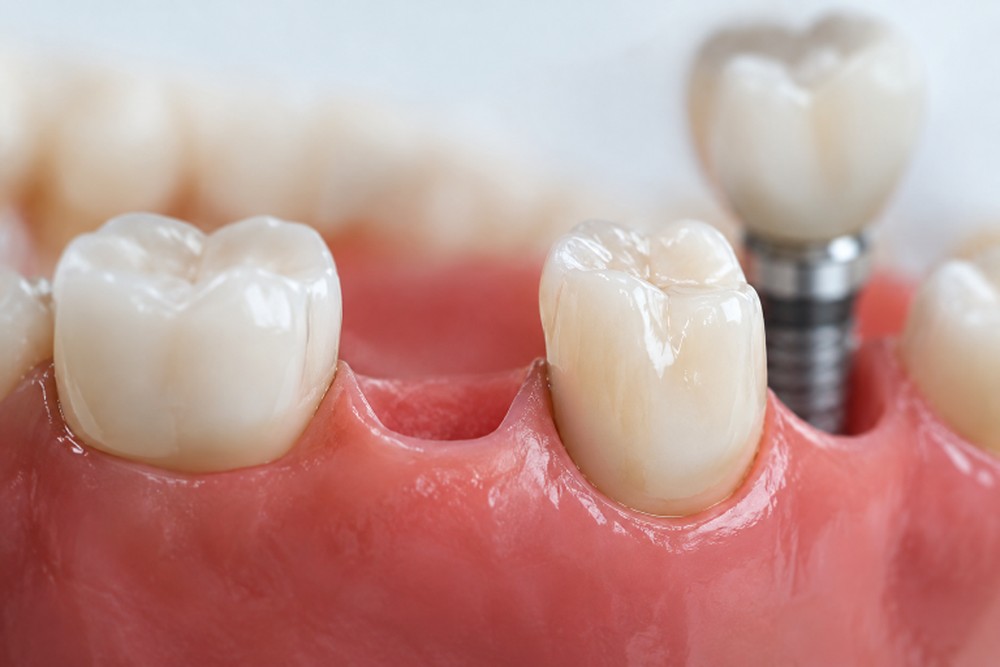
A single implant replaces the missing root with a post in the jawbone and supports a crown above the gumline. Unlike a traditional bridge, it usually does not require reshaping healthy teeth adjacent to the gap. It does, however, involve surgery and a healing period before the final crown is placed.
How a Single Dental Implant Works
The three main parts of a dental implant are designed to work together:
- Implant post: A small post placed in the jawbone to serve as an artificial tooth root.
- Abutment: A connector that joins the implant post to the replacement tooth.
- Crown: The visible, tooth-shaped restoration created to restore the space.
After placement, the jawbone heals around the implant in a process called osseointegration. Healing time varies based on factors such as the treatment site, bone quality, health history, and whether additional procedures are needed. The materials used for crowns, implants, grafts, and related restorations continue to evolve, and dental materials research encompasses tooth replacement and tissue repair.
Comparing Implants, Bridges, and Partial Dentures
- Dental implant: Offers a fixed crown supported by an implant post. It may protect neighboring teeth from preparation, but requires surgery, healing time, and a higher initial investment.
- Fixed bridge: Provides a fixed replacement without the need for implant placement. It may be faster in some cases, but it commonly relies on reshaped supporting teeth.
- Partial denture: It is removable and often less invasive. It may be a practical choice for some patients, although comfort and stability can require adaptation.
Price is only one part of the comparison. Patients should also consider maintenance, expected repairs, appearance, comfort, future treatment needs, and the health of the teeth around the missing space.
Who May Benefit From an Implant?
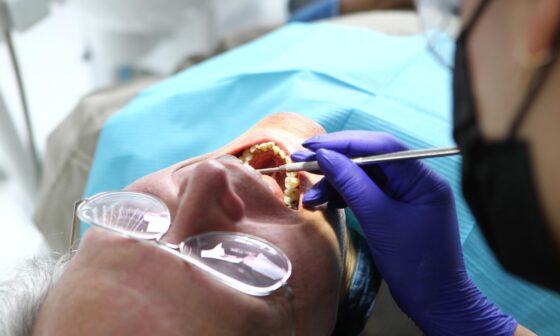
An examination, not age alone, determines implant candidacy. A dental professional may evaluate gum health, the amount and condition of the jawbone, oral hygiene habits, bite forces, the location of the missing tooth, and the condition of nearby teeth. Medical conditions, medications, smoking, and tobacco use can also affect healing and should be discussed openly.
Some patients need gum treatment, an extraction, or bone grafting before implant placement. Others may be ready for a more direct treatment path. The goal is not to force a particular option, but to select a plan that is clinically appropriate and sustainable.
What the Treatment Process May Look Like
- Consultation: The provider reviews goals, health history, and concerns.
- Examination and imaging: X-rays or 3D scans can help assess bone, gums, nerves, and neighboring teeth.
- Treatment planning: The team discusses whether an implant, a bridge, a partial denture, or another option is appropriate for the case.
- Site preparation: Extraction, grafting, or periodontal care may be recommended first.
- Implant placement and healing: If an implant is selected, the post is placed and allowed time to stabilize.
- Final restoration: The abutment and crown are placed once the site is ready.
A temporary tooth may be available in some situations, particularly when the missing tooth is visible in the smile. The timing and type of temporary restoration depend on the specific treatment plan.
Cost, Timing, and Long-Term Care
A written estimate should clarify whether it includes imaging, extraction, grafting, implant placement, sedation, the abutment, crown, temporary restoration, and follow-up visits. Patients should also ask how insurance benefits, financing options, and future repair or replacement needs are handled.
Timing can depend on the tooth’s location, bone density, gum health, healing response, and the laboratory work required for the final crown. Once treatment is complete, daily brushing, cleaning between teeth as directed, and regular dental visits remain essential.
Questions to Ask Before Choosing Treatment
- Why is this option recommended for my missing tooth?
- What alternatives should I consider?
- Will nearby teeth need to be reshaped?
- Do I need gum treatment or bone grafting first?
- Who will perform the surgical and restorative steps?
- How long might the complete process take?
- Will a temporary tooth be available?
- What does the written estimate include?
Be cautious if pricing is unclear, if there is pressure to decide immediately, or if a treatment recommendation is made without an adequate examination. A careful consultation should leave patients with a clear understanding of benefits, tradeoffs, and next steps.
A Practical Next Step
Replacing one tooth is a personal decision with functional, cosmetic, and financial considerations. For Illinois patients, a well-planned consultation can make it easier to compare comfort, timing, appearance, and long-term maintenance. The best choice is the one that supports oral health while fitting the individual’s needs and goals.