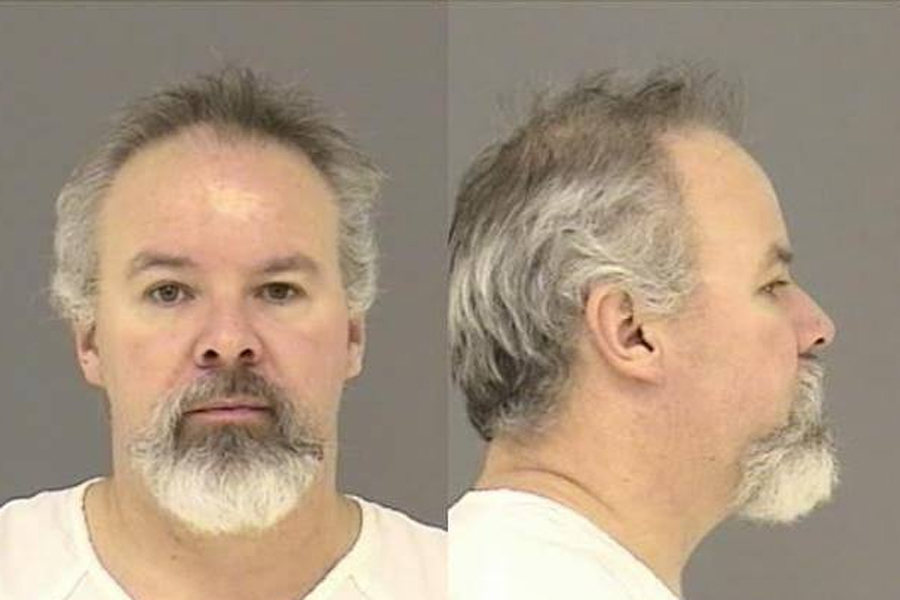
Basic Information
| Field | Details |
|---|---|
| Full Name | Scott Lee Kimball |
| Date of Birth | September 21, 1966 |
| Nationality | American |
| Known For | Con man turned convicted murderer; operated as an FBI informant during a 2003–2004 killing spree |
| Arrest | 2006, after a multi-agency investigation and a vehicle chase in California |
| Convictions | Multiple counts linked to four homicides accounted for in a plea arrangement |
| Sentence | 70 years (imposed October 2009) |
| Incarceration Status | Incarcerated in Colorado |
| Primary Victims (widely reported) | Kaysi McLeod, Jennifer Marcum, LeAnn Emry, Terry Kimball (his uncle) |
| Family (publicly discussed) | Ex-wife: Larissa; Sons: Justin Kimball, Cody Kimball; Uncle: Terry Kimball (victim) |
| Prior Criminal Activity | Fraud, check forgery, identity-related schemes |
| Role as Informant | Worked as an FBI informant while committing murders in 2003–2004 |
| Aliases/Monikers | Known to have used multiple aliases |
A Life Built on Cons: The Pattern Before the Violence
Before the homicides that made him notorious, Scott Lee Kimball had already mapped out a career in deceit. Fraud, check forgery, and identity schemes were his chosen instruments—quiet crimes that trained him to become a convincing storyteller. He learned how to charm, to improvise, and to read the room. Those skills would later function like a dark toolkit: the patter of a hustler masking the ambitions of a predator.
Kimball’s transition from white-collar scams to violent crime wasn’t a clean break; it was an escalation. The boundaries he crossed appeared incremental—another forged check here, a false identity there—until suddenly the stakes were human lives. By the time law enforcement placed him on their radar for far more serious suspicions, he had already discovered his most audacious cover: federal informant.
The Informant Paradox: 2003–2004
Between 2003 and 2004, while working as a paid informant, Kimball exploited that very status to conceal what investigators later linked to several murders. The paradox is chilling: every informant brief was a fog machine. Under the haze, he used freedom of movement and credibility to target the vulnerable. The case has since become a cautionary tale in law enforcement circles about informant oversight and the lethal blind spots that can occur when a source appears productive.
In time, the missing persons reports stacked up: young women who vanished without the ordinary traces of a life interrupted, and a relative—his uncle—who simply disappeared. Years later, as searches were conducted and remains were identified, the narrative hardened. The informant had been the hunter.
Family in the Blast Radius
The public often remembers serial killers as solitary figures. Kimball wasn’t. He had an ex-wife, Larissa, who confronted the impossible reality of discovering the man she knew was not the man he claimed to be. Their sons, Justin and Cody, grew up bearing questions that don’t heal with age: What do you do with a father whose legacy is a headline? How do you define yourself against the gravity of someone else’s crimes?
In television interviews years later, Larissa described the shock and betrayal, the domestic memories reframed by violence. Justin and Cody, now adults, have spoken with clear-eyed candor about the trauma that followed them, the childhood injuries and scars—both physical and invisible—and their determination to sever the chain. Their public voices matter, not for spectacle but for context: the victims’ families aren’t the only ones who carry losses. The killer’s family is left with a ruin where their history should be.
And then there is Terry Kimball, Scott’s uncle—listed by investigators among the murdered. The inclusion of a family member among the victims adds a particularly bitter edge to an already harrowing case. It converts the story from criminal enterprise into a betrayal that runs through bloodlines.
A Plea and a Prison Cell
In 2006, a multi-agency effort culminated in Kimball’s arrest after a pursuit in California. The long process that followed, including intensive searching and case-building, led to an October 2009 plea arrangement that accounted for four deaths and brought a 70-year sentence. The deal kept the case from a capital trial and ensured a lengthy incarceration.
From the cellblock years, there have been further footnotes—allegations and disciplinary moments that surface in the public record—but the broad arc remains fixed: a skilled con man who wore the informant’s badge as camouflage, and the dead left in the wake.
The People Behind the Names
- Larissa (ex-wife): A witness to the double life. Her interviews capture the domestic shockwave—how routine moments turn radioactive when the truth arrives.
- Justin and Cody (sons): Children who became men under the shadow of their father’s crimes. Their public remarks convey a mix of distance and reckoning; they can’t rewrite the past, but they refuse to be defined by it.
- Terry Kimball (uncle and victim): A reminder that this was not abstract violence. It was intimate. It crossed kitchen tables and family photo albums.
- Other victims widely reported—Kaysi McLeod, Jennifer Marcum, and LeAnn Emry—anchor the case in names and lives, not just headlines. Each disappearance became a puzzle piece in a pattern that investigators, families, and reporters painstakingly assembled over years.
Timeline Highlights
| Year/Date | Event |
|---|---|
| September 21, 1966 | Birth of Scott Lee Kimball. |
| 2003–2004 | Operates as an FBI informant while committing murders later linked to him by investigators. |
| 2006 | Arrested following a multi-agency investigation and a California vehicle chase. |
| October 2009 | Pleads guilty in a deal accounting for four deaths; receives a 70-year sentence. |
| 2010s | Continued investigative attention; case becomes a textbook example in discussions on informant oversight. |
| 2023 | High-profile interviews air featuring Kimball’s ex-wife Larissa and sons Justin and Cody, bringing renewed attention to the family’s experience. |
How the System Was Fooled
Kimball’s greatest coup wasn’t a forged check or a faked signature; it was institutional trust. As an informant, he offered access and answers, trading in the currency of proximity to criminal worlds. That role bought him time and space. It allowed him to disarm skepticism and move freely—a con within the system itself.
The case’s enduring resonance lies in this contradiction. Informants can clarify cases and save lives. But without strict guardrails, a manipulative informant can turn the relationship into an alibi. In Kimball’s story, oversight gaps became fatal.
Media, Memory, and the Aftermath
The case continues to draw documentaries, longform features, and podcasts. Audiences keep returning not just for the procedural twists but for the human echoes: the mothers and fathers seeking answers, the sons searching for the edges of their own identities, and the investigators who must live with the knowledge that their informant was silently accelerating the very violence they sought to stop.
The family’s later interviews add texture often missing from true-crime narratives. They remind us that evil isn’t always a distant stranger; sometimes it wears familiar shoes by the front door. Their decision to speak—measured and resolute—acts as a kind of reclamation, a refusal to let the perpetrator monopolize the narrative.
FAQ
Who is Scott Lee Kimball?
He is a Colorado con man and convicted murderer who operated as an FBI informant during a 2003–2004 period in which several killings were committed.
How long is his prison sentence?
He is serving a 70-year sentence imposed in October 2009.
How many victims are associated with the case?
Four deaths are commonly cited in relation to his plea and subsequent coverage.
Who are his family members publicly discussed in the case?
His ex-wife Larissa and his sons Justin and Cody have spoken publicly; his uncle Terry Kimball is among the victims.
How did he use his informant status?
He leveraged the trust and freedom of movement that came with being an FBI informant to deflect suspicion while committing violent crimes.
When was he arrested?
He was arrested in 2006 after a multi-agency investigation and a vehicle chase in California.
Did he have a criminal history before the murders?
Yes, he had a lengthy record of fraud, check forgery, and related schemes.
Are there credible figures for his net worth or assets?
No, there are no reliable public estimates; reporting focuses on criminal activity and legal outcomes.
Why does his case receive ongoing media attention?
It combines a high-stakes informant failure with multiple homicides and a family’s public reckoning.
What makes this case significant for law enforcement?
It’s a stark lesson on informant management and the consequences of oversight gaps.