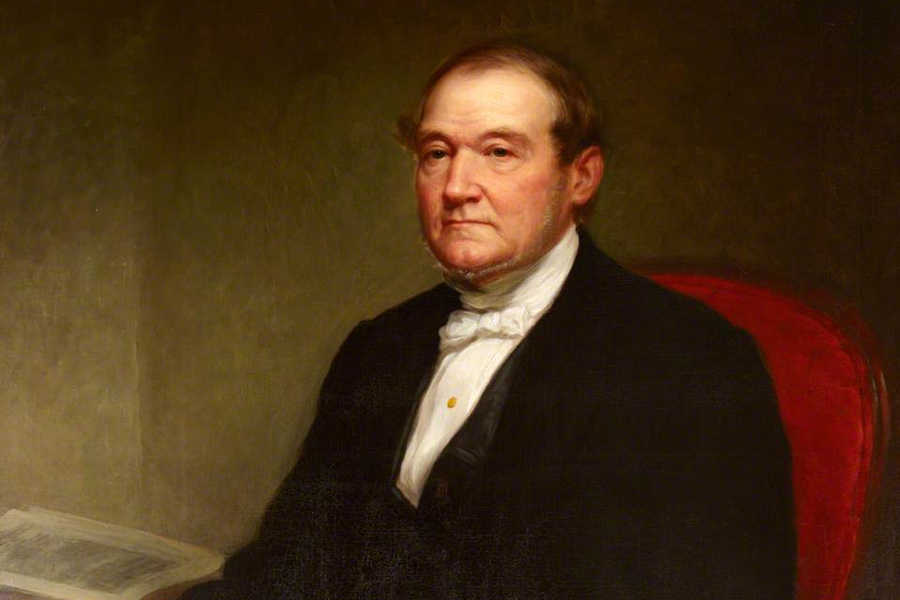
A portrait in numbers and stone
I have always been fascinated by lives built as much from land as from intent. William Backhouse Astor Sr. was born on September 19, 1792, in New York City and died on November 24, 1875, in the same city. He was the son of John Jacob Astor, the immigrant entrepreneur who founded the family fortune. I think of William as the steward who turned his father’s fortune into a real world of buildings, addresses, and institutions. He studied in Göttingen and Heidelberg around 1808 to 1811, returned in 1815 to the family firm, and married Margaret Alida Rebecca Armstrong on May 20, 1818. Those dates anchor a life that spanned 83 years and the rapid urban transformation of Manhattan.
Family and intimate alliances
Family was the latticework that supported the Astor edifice. William and Margaret had seven children between 1819 and 1832. The list reads like a map of influence.
- Emily Astor, born 1819, married Samuel Cutler Ward; died young in 1841.
- John Jacob Astor III, born 1822, father of William Waldorf Astor, lived until 1890.
- Mary Alida Astor, born 1823, married John Carey.
- Laura Eugenia Astor, born 1824, married Franklin Hughes Delano.
- William Backhouse Astor Jr., born 1829, married Caroline Webster Schermerhorn in 1853.
- Henry Astor, born 1830.
- Sarah Todd Astor, born and died 1832.
I find family trees hypnotic. The branches here are many: through marriage the Astors tied themselves to the Armstrongs, Livingstons, Delanos, and Gibbes families. Grandchildren include William Waldorf Astor, born 1848, who later moved to England and became Viscount Astor. Another famous grandson, John Jacob Astor IV, born 1864, carried the family name into the age of hotels and modern celebrity before his death in 1912.
Career, finance, and the art of land
The hustle and bustle of the trade floor did not appear to be reflected in William’s work. On a map, it appeared to be lots held patiently. By the time his father passed away in 1848 and he inherited the majority of the family’s wealth, William had established himself as the leading manager of a sizable Manhattan real estate holdings. According to some reports, he possessed hundreds of properties—nearly 720 homes in mid-century Manhattan. Instead than emphasizing ostentatious manufacturing endeavors, he concentrated on land ownership. It was a slow-pressure tactic, similar to water on stone.
He had a smart and cautious approach to his finances. He rented and built as the city expanded, carrying on the family’s focus on urban lots. In nineteenth-century standards, the Astor assets were worth tens of millions of dollars at the time of his death in 1875. I envision long-term returns computed over decades rather than months, calligraphy in black ink, and balance statements in ledgers.
Philanthropy and public works
I like how wealth here was not only stored but also spent, in carefully directed ways. William contributed substantially to the Astor Library, continuing and expanding his father’s bequest with gifts of money, land, and books. He gave $250,000 to the library project during his lifetime, and placed further sums in his will. Those dollars seeded a public institution that later became part of New York’s broader library network.
Other benevolences included gifts to hospitals and homes for the needy. He gave $50,000 to St. Luke’s Hospital and supported St. Margaret’s Home. These actions were not ostentatious. They were cement and mortar for civic infrastructure, and for me they read as an understanding that great private wealth should be sewn into the city’s public fabric.
A timeline in table form
| Year | Event |
|---|---|
| 1792 | Born September 19 in New York City |
| 1808-1811 | Education in Göttingen and Heidelberg |
| 1815 | Returns to New York, joins John Jacob Astor & Son |
| 1818 | Marries Margaret Alida Rebecca Armstrong on May 20 |
| 1819-1832 | Births of seven children |
| 1833 | Inherits estate from uncle Henry Astor I |
| 1848 | Death of John Jacob Astor, William becomes principal heir |
| 1853-1859 | Major funding and construction for the Astor Library |
| 1872 | Wife Margaret dies on February 15 |
| 1875 | William dies on November 24; buried at Trinity Church Cemetery |
Lesser known stories and human curvature
Character can be revealed through short stories. William was forced into responsibilities at a young age because his older brother was disabled for a large portion of his life. He shunned public drama and ostentatious investments. With a lawyerly resistance to accept abrupt intrusions on his wealth, he maintained property and privacy and challenged income-tax assessments both during and after the Civil War. These are small incidents, but they reveal the man: steady, private, and wise.
The Rokeby estate gifts and the Rokeby portions handed to family members—which subsequently became the locations of private estates and manicured properties—are another little-known thread. Rokeby lands were given to Laura, while William Jr. went on to construct family assets in Newport and New York. Those packages resemble chess pieces that have been passed down through the centuries.
The family as social ecosystem
I see the Astors as architects of a social architecture. William Jr. and his wife Caroline Webster Schermerhorn, known as “Mrs. Astor,” shaped social life in New York during the Gilded Age. John Jacob III and his son William Waldorf Astor moved wealth into philanthropy and, in the case of Waldorf, across an ocean into English peerage. The family functions as an ecosystem where marriages, inheritances, and civic donations circulate influence. Each generation refines the strategy of holding land and shaping institutions.
FAQ
Who was William Backhouse Astor Sr.?
I would describe him as the steward of a growing urban fortune. Born in 1792 and educated in Europe, he managed and expanded the Astor real-estate holdings and became the leading head of the family after 1848. He died in 1875 at age 83.
How wealthy was he during his lifetime?
Estimates from nineteenth century accounts place his estate and holdings in the tens of millions of dollars by the time of his death. He owned hundreds of Manhattan properties, and contemporaries described the Astor holdings as among the largest private real-estate fortunes in the United States.
Who were his immediate family members?
He married Margaret Alida Rebecca Armstrong on May 20, 1818. They had seven children born between 1819 and 1832: Emily, John Jacob III, Mary Alida, Laura Eugenia, William Jr., Henry, and Sarah Todd. Grandchildren include William Waldorf Astor, born 1848, and the later famous John Jacob Astor IV, born 1864.
What major philanthropic acts did he perform?
He contributed roughly $250,000 to the Astor Library during his life and left additional sums in his will. He also funded hospital donations, such as $50,000 to St. Luke’s Hospital, and supported charitable homes like St. Margaret’s Home.
Where is he buried?
He is interred at Trinity Church Cemetery in New York City. The grave marks the resting place of a man who tied private fortune to urban form.
What was his business strategy?
I see it as land-first. He concentrated on Manhattan real estate, holding lots and developing as the city expanded. He favored long-term rents and development over speculative industrial investment.
What is a surprising fact about him?
Despite vast wealth, William operated with a degree of restraint. His philanthropy was significant yet measured. He managed the family fortune with a ledgerlike discipline and refused to convert wealth into personal spectacle. In that restraint lies his peculiar, quiet power.