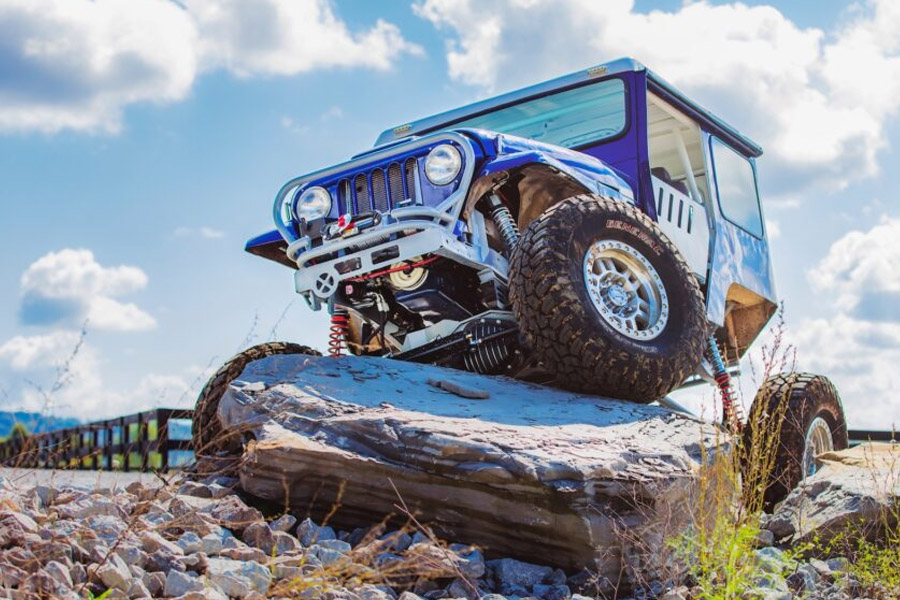
Build the Bones Before Chasing the Glory
A serious off road truck is not a fashion project with oversized tires and a heroic social media caption. It is a machine that gets bounced, twisted, soaked, scraped, and occasionally insulted by the landscape. If the foundation is weak, every shiny add on becomes expensive luggage.
Thus, the smartest constructions begin with the least impressive elements. More important than swagger is chassis support, suspension geometry, tire clearance, and load balance. A truck with all four tires working together over broken ground feels like a mountain goat with a toolbox, not a metal tantrum.
The goal is not to make the truck look wild in a parking lot. The goal is to help it stay composed when the trail turns into a rock garden, a mud trench, or a staircase designed by an angry giant. Build strength first. Let style show up later, covered in dust and minding its own business.
Suspension That Keeps the Truck Calm When the Ground Gets Rude
Comfort, traction, and control unite in suspension. Factory components lose patience rapidly over tough terrain. They were designed for highways, potholes, and the occasional unpleasant shortcut, not deep ruts and sharp ledges.
A serious setup increases wheel articulation on rough terrain. That increases rubber contact with the ground, improving grip and reducing drama. Better shocks assist handle heat and repetitive hits, especially on extended trail days when inexpensive dampers act like overcooked noodles.
Never focus solely on lift height. Tall, poorly handling trucks are like bewildered giraffes. Good suspension tuning involves spring rates, shock valving, steering angles, and how the truck reacts under load. If you bring camping gear, tools, gasoline, or recovery equipment, your suspension should be ready for that extra weight instead of acting shocked every weekend.
Drivers who invest in adjustable components get even more flexibility. They can tune the ride for washboard roads, technical crawling, or heavier expedition setups. The result is a truck that feels planted instead of panicked.
Tires That Bite Instead of Beg
Choosing tires is more important than pointing at the worst tread pattern and nodding since they are the only portion of the truck that touches the ground. Different surfaces require different skills. Disorganized gravel craves stability. Mud demands self-cleaning tread. Sand wants float. Sidewalls and tire pressure matter for sharp rocks.
A good off-road tire goes beyond appearance. It grips where regular tires spin hopelessly like a blender without a lid. Reinforced structure protects against trail’s many sharp edges, while deep tread blocks claw through soft conditions. Durability is as important as traction for off-road driving.
Truck behavior also depends on size. Larger tires assist vehicles roll over uneven ground and clear obstacles. Also impact gearing, braking sensation, and steering responsiveness. Going bigger without considering such modifications can convert a capable truck into a slow, brick-laden shopping cart.
Air pressure management is another secret weapon. Lower pressures can improve traction and ride quality on rough terrain, while proper reinflation restores safe road handling afterward. A truck with great tires and no pressure strategy is only doing half the job.
Storage That Works Like a Campsite Butler
Off-road travel magically makes everything required. Recovery gear, water, tools, spare parts, cooking supplies, additional clothes, first aid kits, camp equipment, and possibly a suspiciously big coffee setup want a ride. Truck beds become moving yard sales without planned storage.
Smart storage turns chaos into efficiency. Bed racks, cargo drawers, modular bins, and roof mounted solutions can transform the truck into a well packed expedition tool. The real benefit is not just carrying more stuff. It is carrying it in a way that keeps weight secure, accessible, and balanced.
Vertical storage systems add utility layers, making them useful. Heavy objects stay down and stable while bulky items ride above. This eliminates the traditional off-road packing disaster of losing a tool behind 15 other items plus a folding chair you forgot you had.
A well planned cargo layout also saves time at camp and on the trail. Recovery straps should not require an archaeological dig. Cooking gear should not rattle around like a drawer full of haunted silverware. When every item has a place, the truck feels more capable and the whole trip runs smoother.
Armor That Lets You Hear the Scrape Without Crying
Sooner or later, the underside of an off road truck will meet a rock that seems personally offended by your route choice. Protection matters because vulnerable components live underneath the vehicle, and those components tend to object strongly to blunt force.
Skid plates shield critical areas such as the oil pan, transfer case, fuel tank, and transmission. Rock sliders protect the sides when the truck leans into obstacles or squeezes through technical sections. Strong bumpers add impact resistance and often create mounting points for useful equipment.
Good armor alters a driver’s trail approach. They may drive confidently and choose better lines instead of fearfully avoiding obstacles. Do not charge every boulder like a caffeinated rhinoceros. When terrain is unexpected, the vehicle has a safety buffer.
Material choice matters here too. Steel offers serious strength, while aluminum can save weight in some applications. The best option depends on how the truck is used, how much weight it already carries, and whether the priority is ultimate toughness or a more balanced build.
Recovery Gear That Prevents Legendary Bad Decisions
Every off road driver eventually learns a humbling truth. The trail does not care how confident you felt ten minutes ago. Mud deepens. Sand shifts. Tires sink. A line that looked smart from the driver seat turns out to be nonsense. Recovery gear exists for exactly these moments.
A complete recovery arrangement should incorporate many solutions. When traction is lost, a winch can move the truck. Recovery boards grab tires burrowing into the Earth’s core. Safety and control are improved with shackles, belts, gloves, and a good recovery kit.
This gadget is useful for more than just getting unstuck. It decreases risk and speeds up problem-solving. Drivers can recover with a strategy instead of improvising with inferior tools and optimistic shouts. This is crucial in distant places where delays are more than inconvenient.
Training matters just as much as the tools themselves. The fanciest winch on Earth is not helpful if the operator treats it like a carnival game. Knowing anchor points, load ratings, and safe recovery practices turns equipment into actual capability.
Lighting and Power for Nights That Refuse to Cooperate
Trail travel does not always end before sunset. Weather shifts, routes take longer than expected, and camp setup sometimes happens under a sky that looks like wet charcoal. Better lighting helps drivers read terrain, spot hazards, and move with far less guesswork.
The placement and beam pattern of auxiliary lighting can increase close field vision, long distance spotting, and side illumination. Workplaces and camps benefit from flood beams. The route benefits from spot beams. Correctly combined, they give the vehicle the appearance of a nocturnal predator with good hardware taste.
More accessories require more power. A careful power plan is needed. Avoid annoying failures with better batteries, charging systems, fuse management, and wiring. Nobody wants their lights to flicker while the winch moans and the fridge wonders why it was invited.
A solid electrical system also supports radios, compressors, navigation gear, and charging ports for devices. In practical terms, that means the truck can stay useful longer without acting like an overwhelmed office printer.
Weight Balance and Practical Build Choices
One of the sneakiest mistakes in off road builds is adding useful parts until the truck becomes an overburdened pack mule. Every bumper, rack, tire, drawer, and tool has a weight cost. Stack too much onto one vehicle and performance suffers in steering, braking, suspension response, and fuel use.
Good builders keep true to meaning. Rock crawler, overland tourer, weekend trail truck, and hunting rig need distinct considerations. Not every car requires every accessory. Instead of gathering parts like a monster storing steel, wise owners chose gear that complements their driving.
Balance matters just as much as total weight. Concentrating gear too high or too far back can upset handling and make steep climbs or descents more awkward. Keeping dense items low and centered improves stability and reduces that unpleasant tippy feeling nobody enjoys.
Practicality wins over hype every time. A truck that performs consistently is more impressive than one stuffed with accessories that rarely earn their keep.
FAQ
What is the best first upgrade for an off road truck
The best first upgrade is usually suspension or tires, depending on the truck’s current condition and intended use. If traction is the main weakness, start with tires. If control, clearance, and ride quality are the problem, suspension deserves attention first.
Do bigger tires always make a truck better off road
No. Bigger tires can improve clearance and obstacle handling, but they also affect gearing, braking, steering, and fuel economy. They work best when the rest of the truck is prepared for the change.
Is heavy armor worth the extra weight
Yes, if the truck regularly sees rocky or technical terrain. Protection can prevent expensive damage and give the driver more confidence. The key is choosing armor that matches the vehicle’s use instead of adding unnecessary bulk.
Why is storage such an important upgrade
Storage keeps gear secure, organized, and easy to reach. That improves safety, saves time, and helps maintain proper weight distribution. A messy truck is annoying on pavement and downright ridiculous on a trail.
What recovery gear should every truck carry
At a minimum, most off road trucks benefit from recovery boards, rated straps, shackles, gloves, and a basic tool kit. A winch becomes especially valuable for solo travel or more difficult terrain.
Do lighting upgrades require electrical changes
Sometimes. If the truck is adding multiple lights, a winch, compressor, fridge, or communications gear, the electrical system may need upgrades to support the load reliably and safely.