Shipping less-than-truckload (LTL) freight from Toronto often combines two tight constraints: urban pickup realities and cross-border paperwork. A truck that arrives to find a low door, no dock, or an unannounced liftgate need can lose a day. A pallet that is missing correct dimensions or a commercial invoice without an HS code may sit at the border. The most reliable way to keep freight moving is to do the right work before a driver backs into the bay. This guide focuses on the practical steps Toronto shippers can take to prevent delays, re bills, and damage across common LTL lanes to the United States.
Capture exact freight specs before you request a pickup.
Measure the freight after packaging and record length, width, and height per pallet to the nearest inch or centimeter. Weigh each pallet, not just the total, and confirm stackability. LTL pricing and trailer planning hinge on cubic space, density, and overlength; a single 120-inch crate can trigger an overlength surcharge and change the loading plan. When you book with a Toronto Trucking company, share precise dimensions, total weight, piece count, and whether the pallets can be double stacked. Those details determine which linehaul the freight can catch and whether a 53-foot trailer or a straight truck is appropriate.
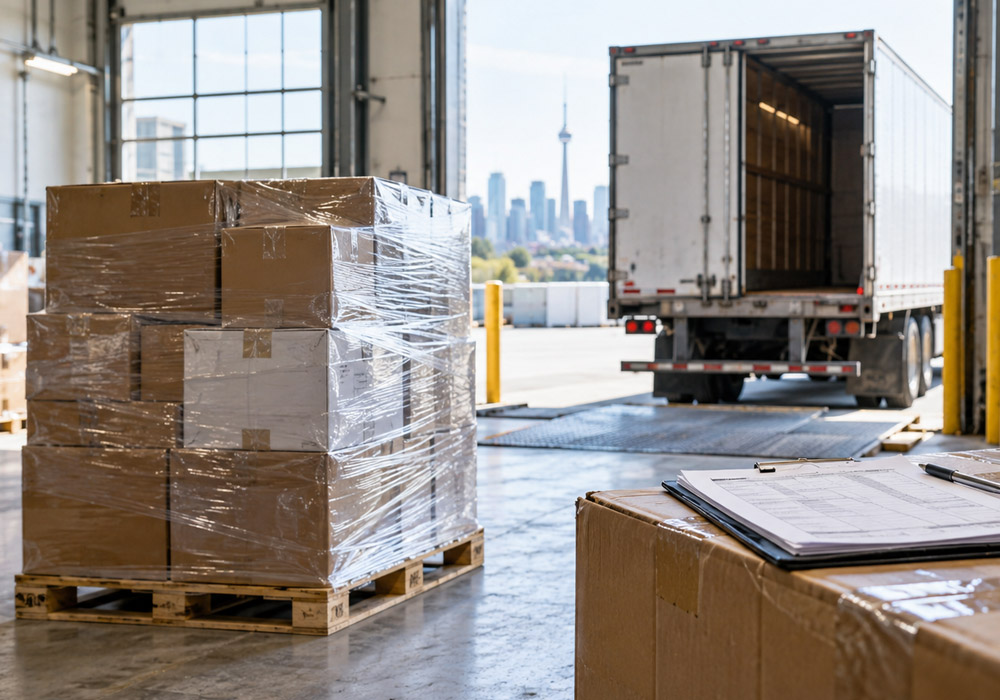
Package to survive touches in a multi-stop network. Use 48 by 40 inch pallets when possible to avoid overhang, add corner boards to resist compression, and stretch wrap from the base up with multiple passes. Band heavy items to the skid, add a top cap to distribute downward force, and label all sides with the consignee name, city, and BOL number. Mark “Do Not Stack” only when the contents cannot bear weight; non-stackable freight uses more cubic capacity and can increase cost or limit available space. As a rule of thumb, “stackable and stable” loads move faster with fewer claims than tall, uneven, or overhanging skids.
Get customs ready: broker, USMCA/CUSMA, and border reference numbers.
For U.S.-bound loads, complete a commercial invoice that includes the buyer and seller, a detailed description, HS tariff code, country of origin, value, currency, and Incoterms. If you will claim preferential duty under USMCA/CUSMA, provide a valid certification of origin with the correct importer/exporter data. Assign a customs broker and send the invoice, BOL, and any licenses hours before pickup; your carrier will need border reference numbers (for example, PAPS for U.S. import or PARS for Canada import) on the paperwork and labels. Missing HS codes or late documents commonly cause border holds and after-hours storage fees.
Attach documents in a pouch on the lead pallet and match all fields across the BOL, invoice, and labels so the carrier’s eManifest data lines up. List a contact with daytime and after-hours phone numbers for both shipper and consignee. For example, a Toronto auto parts supplier shipping five pallets to a Detroit plant can avoid overnight delays by emailing the broker package before 2 p.m., placing the PAPS barcode on the BOL, and confirming release with the broker before the linehaul departs. That simple sequence protects the border crossing and helps the freight make its morning delivery window.
Choose equipment and accessorials that match the pickup and delivery sites.
Confirm the loading environment at both ends: dock height (typically 48 to 52 inches), ceiling clearance, yard space, and door width. If there is no dock, request a liftgate and a pallet jack; if the consignee is a retail store, school, or jobsite, note “limited access” and whether inside delivery is needed. Many downtown Toronto streets restrict long trailers and curb space, so a straight truck may be a better fit even if the pallets would fit a 53-foot van. Failing to declare accessorials often leads to a failed delivery, reattempt fees, and a day lost rescheduling equipment.
Consider special handling flags that influence routing. In winter, “protect from freezing” helps liquids and temperature-sensitive goods avoid unheated transfers, but it may limit which terminals the freight can pass through and add a day to transit. Hazardous materials require UN numbers, proper packaging, and SDS on hand; mark the BOL accordingly and ensure the site has a certified loader. These decisions are trade-offs: extra services cost more, but the alternative is the risk of product loss, penalties, or an unsafe unload that cannot proceed.
Schedule around Toronto traffic, plant hours, and dock capacity.
Share a realistic ready time and close time rather than “anytime.” If the dock is busiest at shift change, set a window that avoids it. Let the dispatcher know whether you will live load or if the freight is pre-staged on skids. Toronto corridors like Highway 401, the Gardiner Expressway, and key arterial roads can bottleneck; a 3 p.m. pickup request during peak congestion can easily miss the evening linehaul. Clear driver instructions, gate codes, and a named loading contact reduce on-site searches that turn into detention. LTL networks run on departure cutoffs; aligning your window with those cutoffs prevents an automatic one-day delay.
Give carriers a simple site reference: a dock photo, yard map, and notes on which entrance suits large vehicles. If the destination requires appointments, send the consignee’s preferred days and hours with the original tender. For shippers with flexible timelines, an earlier pickup increases the odds of same-day cross-dock and linehaul loading. When pickups span multiple vendors in the GTA, consider consolidating at a nearby terminal or cross-dock to reduce missed windows and duplicated accessorials across several stops.
Hand off checklist and post-pickup follow-through
Before the truck departs, place a legible BOL with the shipment, keep a signed copy, and verify piece and pallet counts match what was loaded. Photograph each pallet after wrapping to document packaging condition. Recheck labels on all sides, confirm the total weight on the BOL, and note “shipper load and count” if the driver did not witness the load. After pickup, email the complete document set to your broker and confirm the border status is “released” before the freight reaches the crossing. If the consignee requires an appointment, provide several acceptable slots to avoid dwell. Small handoffs done well reduce re-bills, claims cycles, and schedule surprises.
Shipments move smoothly when facts match the freight, and the plan matches the sites. Accurate dimensions and weights let dispatchers select equipment and space correctly; durable packaging protects goods through multiple terminals; completed invoices and HS codes keep customs officers from reaching for a hold notice; and realistic windows help a driver catch the intended linehaul. Toronto adds its own constraints, but none are mysterious when they are stated upfront. Treat documentation, packaging, equipment, and timing as a single checklist, and your next cross-border LTL move is far more likely to arrive on the day you expect.