When a tree begins to lean toward a roof, drops large limbs, develops visible decay, or changes after a storm, it is important not to guess at the level of risk. A local assessment can help determine whether the tree needs monitoring, careful pruning, or controlled removal. Property owners seeking a top tree removal company in Ambler and Montgomery County PA can contact Cabanas Tree Expert for help evaluating concerns around homes, commercial properties, and managed communities.
Tree removal is not automatically the right answer simply because a tree is old or large. The tree’s condition, root stability, branch structure, distance from people and property, and access for equipment all affect the recommendation. A healthy shade tree can offer value to an Ambler property, while a dead or structurally unstable tree above a driveway can create an avoidable hazard. Timing matters as well: a concern identified before a limb breaks or a tree fails may allow the work to be planned under calmer, safer site conditions rather than handled as an emergency.
Ambler’s established neighborhoods include mature landscapes, close property lines, sidewalks, narrow side yards, and trees growing near houses. These conditions can make even a routine job more complicated. A large branch over a garage or a declining tree behind a fence may require a carefully planned approach to protect buildings, landscaping, and neighboring property.
Ambler’s history adds another layer to tree care. The borough developed around its railroad connections and older brick-and-stone homes, and many of the shade trees on established blocks were planted long before modern driveways, garages, and utility upgrades were added. Root systems that have spread for decades may now lie beneath paved driveways, walkways, and foundations, making it harder to predict how a tree will respond to pruning or soil disturbance. Owners of older homes should also be aware that roots from nearby trees can gradually shift stone and retaining walls, as well as garden steps.
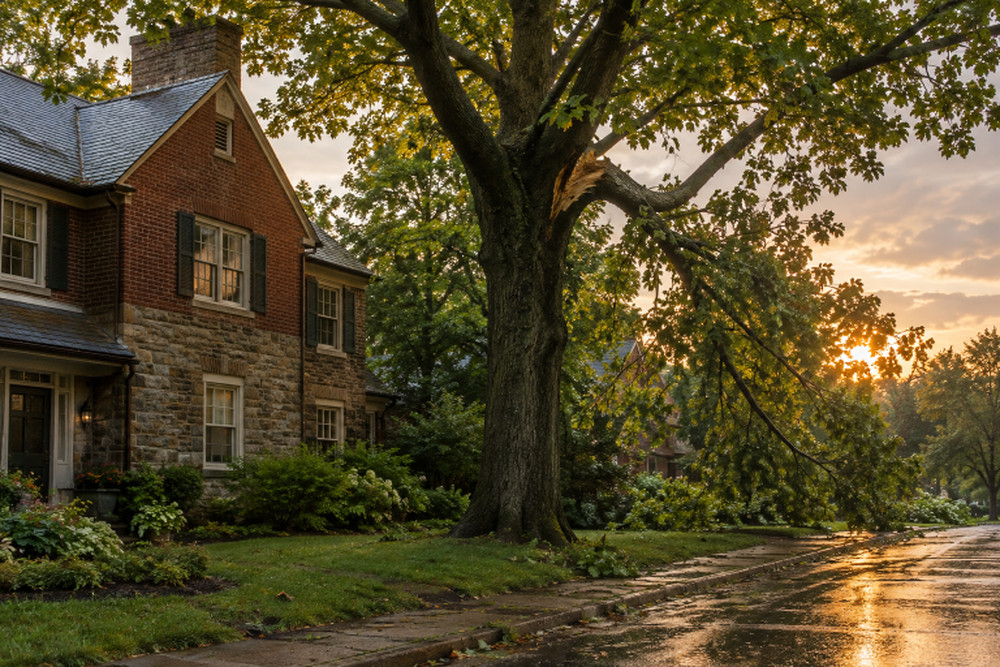
Local weather also matters. Strong winds, heavy rain, saturated soil, snow, and ice can expose previously unseen defects. Wet ground may reduce support around roots, while snow or ice can add weight to weak limbs. A prompt inspection after severe weather can identify damage before a partially broken branch falls into an area where people park or walk. It can also help distinguish fresh storm damage from older defects that may have been present but unnoticed before the weather event.
Spring and summer bring their own concerns. Heavy thunderstorms can quickly drop large limbs, and the humid summers common in Montgomery County encourage fungal activity in weakened trees. Owners who notice mushrooms at the base of a trunk, sap seeping through bark, or thinning leaves during the growing season should schedule an evaluation instead of waiting for fall. Early attention often provides more options, from targeted pruning to a planned replacement planting that suits the size of the lot.
Trees along the streets and sidewalks of the borough also affect neighbors. When a tree falls or drops a limb into a public right-of-way, the impact affects pedestrians, parked cars, nearby homes, and the property owner. Routine maintenance of trees near sidewalks and street edges can reduce these shared risks, especially on blocks where families, dog walkers, and commuters pass by every day. Clearance should be considered with normal pedestrian use in mind, including visitors carrying packages, people using strollers, and residents walking dogs after dark.
For property owners outside Ambler who need help with mature trees, storm cleanup, or routine maintenance, Cabanas Tree Expert also provides Doylestown tree service for nearby residential and commercial properties.
Warning Signs That Deserve Professional Attention
A single symptom does not prove that a tree will fail, but several warning signs together can justify a closer inspection. Watch for:
- A sudden or worsening lean, especially after rain or wind.
- Exposed roots, newly raised soil, or cracking soil around the base.
- Large dead limbs, hanging branches, or extensive canopy dieback.
- Deep cracks at the trunk or where major branches connect.
- Visible cavities, decay, fungal growth, or damaged bark near the base.
- Branches touching a roof, chimney, siding, driveway, or utility line.
- Storm damage that leaves a tree split, partially uprooted, or unbalanced.
It is helpful to note when a change first appeared and whether it followed construction, excavation, heavy weather, or a change in drainage. A few clear photographs from safe locations can also make it easier to explain the concern during an on-site visit, particularly when the problem is serious in the canopy.
Proper pruning can address many clearance and deadwood concerns without removing an otherwise sound tree. Penn State Extension explains that mature-tree pruning may be used for risk management, infrastructure clearance, and storm restoration, but excessive or incorrect cutting can harm a tree. That is why pruning should focus on the actual defect or conflict rather than indiscriminate cutting.
How Cabanas Tree Expert Can Help Ambler Property Owners
Cabanas Tree Expert provides services tailored to the tree’s actual condition and the site’s needs. Depending on the situation, the recommended work may include:
- Tree removal: For dead, severely damaged, unstable, or high-risk trees that cannot be reasonably managed with pruning or treatment.
- Tree trimming and pruning: For removing deadwood, improving clearance, reducing selected limb weight, and managing branch structure.
- Emergency tree service: For fallen trees, blocked driveways, hanging limbs, or trees affecting structures after a storm.
- Stump grinding: For clearing the remaining stump after removal so the area can be regraded, seeded, or landscaped.
- Land clearing and brush work: For preparing overgrown areas, lots, or development sites for safer access and future use.
A tree behind an Ambler home may need controlled rigging because access is limited by fences, patios, utility lines, or neighboring structures. On a larger Montgomery or Bucks County property, equipment access may allow for a different plan. This is one reason an in-person evaluation is valuable when a tree is large, damaged, or close to important property. The work plan should account for where sections can be safely lowered, where equipment can be positioned, and how crews can enter and leave the site without unnecessary disruption.
What to Do After Storm Damage
After a storm, safety should come before cleanup. Keep people and pets out of the affected area, and do not stand beneath hanging limbs or a partially fallen tree. Never touch a tree that is in contact with a power line, and contact the utility provider if electrical equipment or wires may be involved.
Photographs taken from a safe distance can help document conditions for a contractor or insurance claim. Penn State guidance on helping trees recover after storms warns against working near utility lines and recommends hiring a qualified tree care professional for damaged trees and limbs. Avoid climbing, using a ladder with a chainsaw, or attempting to pull down a lodged limb from the ground. If a driveway or walkway must remain closed, keep the area marked or blocked off until the damaged tree or limb has been addressed.
What Happens During a Tree Service Estimate?
A useful estimate begins with the property, not a one-size-fits-all price. Cabanas Tree Expert can review the tree’s height, condition, lean, surrounding targets, equipment access, debris removal needs, and whether stump grinding is wanted. The scope can then be explained in writing so the property owner understands what work is recommended and why.
Credentials and insurance also matter when comparing tree services. Tree work can involve elevated cutting, unstable wood, ropes, rigging, heavy equipment, and property protection. Cabanas Tree Expert states that it is licensed, bonded, and insured, with ISA accreditation and TCIA membership. Property owners can also ask for proof of coverage and clarification about cleanup, access, and debris handling before work starts. Reviewing these details in advance can help avoid misunderstandings about what will remain on site and what areas should be kept clear on the day of service.
Location: Cabanas Tree Expert | 500 Railroad Ave, Ambler, PA 19002 | (215) 978-9827
Frequently Asked Questions
Does every leaning tree need to be removed?
No. Some trees naturally grow at an angle. A sudden lean, root movement, recent soil disturbance, or storm-related change is more concerning and should be assessed in context.
Can pruning make a hazardous tree safe?
Pruning can reduce certain risks by removing dead, broken, rubbing, or overextended limbs. It cannot correct every issue, especially severe trunk decay, major root failure, or a tree that is already structurally unstable.
What should I do if a branch is near a power line?
Stay away from the line and contact the utility provider. Tree work near energized lines requires specialized safety procedures and should not be attempted by a homeowner.
Should a removed tree be replaced on an Ambler property?
In many cases, yes. Replacing a removed tree helps restore shade, privacy, and neighborhood character over time. The best replacement species depends on the size of the yard, the location of overhead lines and structures, and the soil conditions on the lot. A written plan can help property owners choose a tree that will fit the space as it matures.