Key Takeaways
- Play can help preschoolers practice important early skills without making learning feel like a formal lesson.
- Simple games and everyday routines can support language, early math, movement, memory, cooperation, and confidence.
- Adults can strengthen learning by observing first, asking brief questions, and adding small challenges when a child is ready.
- Short, flexible activities are often more successful than long activities with many rules.
- The most useful play experiences fit a child’s interests, abilities, energy level, and comfort needs.
Preschoolers learn by touching, moving, pretending, repeating, testing ideas, and talking about what they notice. That is why a short game of sorting socks, acting out a story, or building a block tower can offer far more than entertainment. Families looking for structured options can also explore board games for toddlers and preschoolers that encourage children to practice skills through shared play. Play-based learning does not mean leaving children alone to figure out everything themselves. It means giving them room to lead while an adult provides materials, encouragement, language, and just enough guidance to keep the experience meaningful. A child who is interested and comfortable is more likely to stay involved, try again after a mistake, and build confidence over time.
Why Play Still Matters
Play is not simply a break between “real” learning activities. It is often the setting where young children learn how objects work, how people cooperate, and how to solve manageable problems. When children stack, sort, negotiate roles, or invent a pretend situation, they are making choices and adjusting their thinking based on what happens next.
Adults can make play more intentional without making it rigid. For example, a caregiver might place several cups near a water table and ask, “Which one holds more?” A teacher might notice children building a road and ask where it should begin or how everyone can use it. A recent study on play-based learning in preschools reported that 96.9% of surveyed preschool teachers agreed or strongly agreed that play supports academic learning.
What Skills Can Play Help Build?
Language and Communication
Pretend play gives children a reason to use words. A stuffed animal can become a patient, a customer, a lost traveler, or the hero of a made-up story. Children practice naming objects, describing actions, asking for help, and explaining what they want to happen. Open prompts such as “What happens next?” and “How does your character feel?” invite longer responses without putting pressure on a child to give one correct answer.
Early Math Thinking
Early math includes more than reciting numbers. Preschoolers can compare amounts, match objects, notice patterns, sort by attributes, and use position words such as under, beside, and behind. These ideas can appear naturally while dividing snack pieces, grouping toy animals, counting steps to the door, or deciding which tower is taller. Research described by early math researchers working in preschool classrooms shows how math activities can be woven into regular routines with familiar materials rather than isolated as worksheets or drills.
Memory and Attention
Many simple games ask children to remember a rule, find a match, repeat a pattern, or follow a short sequence. These experiences can build attention in an age-appropriate way. Keep rounds brief and goals clear. If focus begins to fade, switching to a movement break or ending while the child is still interested can be more helpful than insisting they continue.
Motor Skills and Coordination
Fine motor play includes grasping crayons, placing small objects, turning cards, threading large beads, or stacking blocks. Gross motor play includes hopping, balancing, reaching, crawling, and moving through a simple obstacle path. Both kinds of play can help children become more comfortable using their bodies while also practicing directions, planning, and persistence.
Social and Emotional Growth
Playing with others creates small opportunities to practice waiting, sharing materials, listening, and coping when plans change. Children may need support when frustration appears. Adults can model useful phrases such as, “You can have the next turn,” “I see you both want that piece,” and “Let’s find a solution together.” The goal is not perfect behavior. It is helping children learn ways to express needs and recover from everyday disappointments.
Five Play-Based Activity Types to Try
1. Sort, Match, and Group
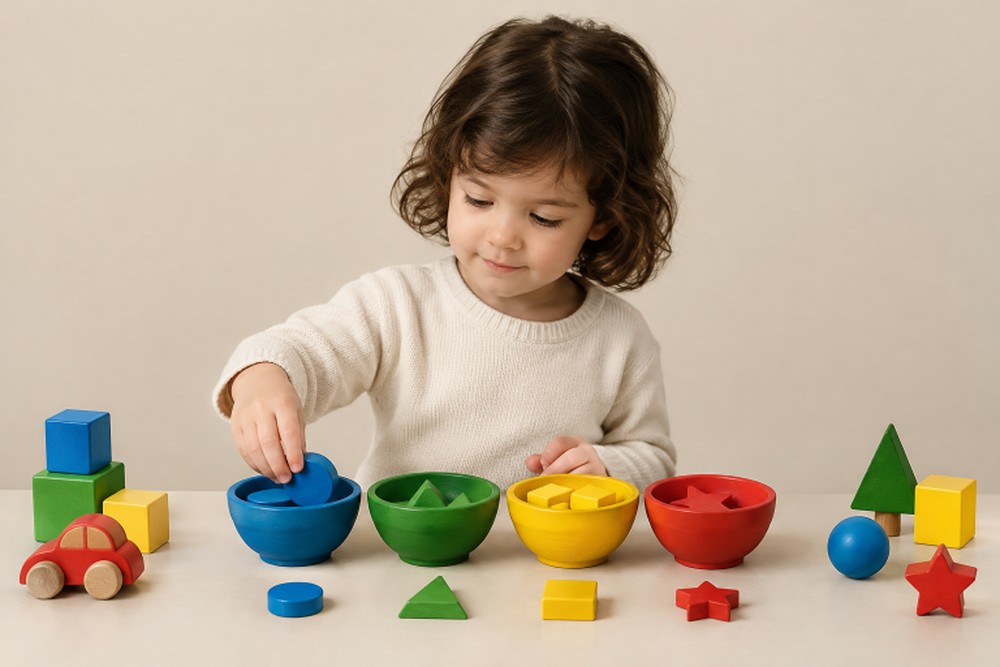
Gather safe household items or toys and invite children to group them by color, size, shape, or purpose. Ask, “Why does this belong here?” Once the first round feels easy, add one new rule, such as sorting only red items that are also soft.
2. Storytelling and Pretend Play
Use figures, stuffed animals, drawings, empty boxes, or kitchen items as story prompts. Let the child choose the setting and characters. Help build a beginning, middle, and ending by asking what problem the characters face and how they solve it.
3. Movement and Direction Games
Try directions such as “Take two steps forward,” “Put your hands above your head,” or “Stand beside the chair.” These games introduce location words, order, body awareness, and listening skills. Keep the space clear and adapt movements to each child’s mobility and comfort.
4. Memory and Sequencing Activities
Clap a short rhythm, make two silly motions, or arrange two objects in a pattern and ask the child to repeat it. Begin with only two steps. Add another only when the child is enjoying the challenge. Celebrate effort and strategy, not only a correct response.
5. Cooperative Challenges
Give two or more children a shared goal, such as building a path for toy cars or finishing a large drawing together. Encourage them to plan aloud and make space for each person’s idea. Cooperation is different from winning. The emphasis should be on working toward something together.
How Adults Can Guide Play Without Taking Over
- Set one simple goal. Choose a focus such as counting, describing, balancing, or taking turns.
- Offer a small number of materials. Too many choices can make it harder for a young child to begin.
- Watch before directing. Notice what the child already knows, enjoys, or finds difficult.
- Ask short questions. A prompt like “What could you try?” encourages thinking without supplying all the answers.
- Add one small challenge. Change a rule, introduce a new word, or invite the child to explain a choice.
- Stop while it is still fun. A positive ending can make children more willing to return to the activity later.
How to Choose and Adjust an Activity
Choose activities with simple rules, clear goals, and multiple ways to participate. Consider the child’s current abilities, interests, communication style, sensory needs, and energy level. Avoid requiring reading skills the child has not developed, and supervise small pieces or materials that may not be safe for the child’s age. An activity may need adjusting if a child walks away immediately, repeatedly misunderstands the rules, becomes upset after each attempt, or likes the theme but not the format. Try shortening the session, reducing the number of steps, offering a choice between materials, or changing the challenge. A small adjustment can turn frustration into a successful learning moment.
A Simple Weekly Play Plan for Families
- Monday: Sort and match objects by color, shape, or use.
- Tuesday: Create a short story with toys, drawings, or household objects.
- Wednesday: Play a movement game that includes directions and balance.
- Thursday: Count, compare, and talk about more, less, same, and enough.
- Friday: Try a cooperative activity that requires sharing ideas or taking turns.
Conclusion
Play-based activities give preschoolers a natural way to practice skills they will use at home, at school, and with others. The strongest activities are not always the most complicated. A brief sorting game, a made-up story, or a movement challenge can create meaningful learning when adults provide time, encouragement, and thoughtful questions. Keeping play practical, active, and joyful helps children build skills while still getting to be children.