The debate over the true cost of housing often suffers from oversimplification. Traditional advice frequently compares a monthly rental payment directly to a monthly mortgage payment, concluding that if both figures are roughly equal, purchasing a property is the superior financial decision. This surface-level comparison completely ignores the compounding web of unrecoverable expenses inherent to property ownership. To understand the true financial reality of housing, one must look beneath the top-line numbers. Every dollar spent on housing falls into one of two buckets: recoverable capital that builds personal net worth, or unrecoverable sunk costs that disappear forever. Breaking down these expenses side by side reveals the real financial commitment required to buy versus rent.
1. Upfront Capital Requirements and Acquisition Expenses
The initial cash outlay required to enter a home creates a major financial divergence between renters and buyers from day one.
Down Payments and Sunk Closing Costs
Purchasing residential real estate demands a substantial upfront commitment. Even with modern low-down-payment loan products, buyers must assemble thousands of dollars for the down payment. On top of that, closing costs demand cash for lender origination, underwriting fees, credit checks, appraisal reports, professional home inspections, and title insurance policies. These closing fees are completely unrecoverable sunk costs. In contrast, tenants typically pay only an application fee, a security deposit, and the first month of rent to gain physical occupancy. Furthermore, a security deposit is refundable upon lease completion, meaning it remains an asset on the renter’s balance sheet rather than a permanent expenditure.
Initial Furnishing and Move-In Upgrades
Moving into a purchased home frequently triggers immediate secondary expenses. Buyers often need to purchase major appliances such as refrigerators, washers, and dryers that were not included in the transaction. Window treatments, lawn care equipment, extra furniture for larger floor plans, and initial safety upgrades rapidly consume liquid capital reserves. Renters generally move into units equipped with functioning kitchen appliances, standard blinds, and shared grounds care, dramatically curbing initial out-of-pocket setup costs.
2. Recurring Monthly Outlays Beyond Principal and Rent
A monthly mortgage statement is rarely a single static charge; it bundles several non-equity expenses that grow over time.
Property Taxes and Insurance Premiums
While a fixed-rate mortgage locks in your principal and interest charges for thirty years, your total monthly housing payment will still rise over time. Local municipalities adjust property tax assessments to match rising budget needs and changing real estate valuations. Similarly, hazard insurance carriers routinely raise annual premiums to cover regional construction cost inflation and extreme weather events. These tax and insurance increases flow directly into your mortgage escrow account, driving monthly payments upward year after year.
Municipal Utility Allocations and Added Surcharges
Homeowners take on the entire burden of municipal utility services. Sewer connections, storm runoff management, municipal trash collection, culinary water, and natural gas heating charges are paid entirely by the property owner. In rental settings, property owners often absorb municipal utility fees, leaving the tenant responsible only for personal interior electrical use and internet access.
3. Unrecoverable Housing Expenses and Maintenance Reserves
When calculating housing math, it is vital to remember that rent is the absolute maximum amount a tenant pays for housing each month, whereas a mortgage payment is the absolute minimum an owner must pay.
The True Cost of Routine Home Repairs
Every physical component of a house has an engineered lifespan. Asphalt shingle roofs last twenty to twenty-five years, water heaters last eight to twelve years, and central cooling units require replacement after fifteen years. When these systems fail, the financial obligation falls squarely on the homeowner. Setting aside funds to cover routine repairs, plumbing backups, electrical updates, and seasonal pest management represents an ongoing, unrecoverable cost that homeowners cannot skip without damaging property value.
HOA Assessments and Exterior Upkeep
Properties situated in planned communities or attached developments include mandatory homeowner association assessments. These fees cover common area landscaping, exterior structural insurance, shared roofs, and amenities. While association dues remove the physical labor of exterior upkeep, they are recurring sunk expenses that can increase without the owner direct consent. Renters enjoy landscaped courtyards, community rooms, and exterior maintenance without paying separate assessment bills.
4. Financial Flexibility and Market Risk Exposure
Liquidity and flexibility represent genuine economic value that traditional rent-versus-buy calculations frequently overlook.
Real Estate Illiquidity and Transaction Fees
Real estate is an illiquid asset class. Liquidating home equity requires finding a qualified buyer, negotiating purchase terms, clearing municipal inspections, and waiting through thirty-day escrow cycles. When the transaction closes, the seller pays agent commissions, settlement fees, transfer taxes, and often buyer closing credits. These transaction fees consume thousands of dollars in accumulated value. If market prices decline or plateau during your ownership window, selling can result in an outright cash loss.
Rent Predictability and Capital Deployment
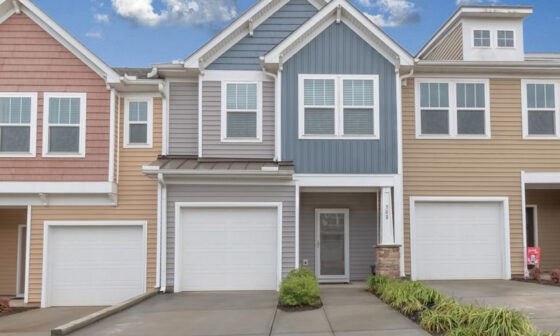
Renting caps your downside financial risk. When lease terms conclude, you can walk away with zero selling fees and no exposure to regional property value drops. For individuals evaluating regional living options in growing areas, securing spacious townhomes for rent in Idaho Falls provides access to multi-level residential layouts, attached parking, and private neighborhood streets without tying up six figures of personal capital in illiquid property equity. Renters can keep their capital fluid, deploying savings into flexible markets rather than locking funds into drywall and concrete.
5. Opportunity Costs of Trapped Equity
Every dollar tied up in real estate equity is a dollar that cannot generate investment income elsewhere in the economy.
Comparing Home Appreciation to Liquid Market Portfolios
A common misconception assumes that home equity always outpaces other financial instruments. While real estate historically appreciates at a pace slightly above general consumer inflation over multi-decade cycles, broad equity indices have historically delivered higher average annualized returns over long periods. When a buyer commits eighty thousand dollars to a down payment, that capital is no longer compounding in diversified stock portfolios, retirement accounts, or small business ventures. A renter who invests the difference between renting and buying can build substantial liquid wealth over the exact same timeframe.
Inflation Hedging Through Fixed Debt Amortization
Homeownership does possess one distinct mathematical advantage: the power of debt amortization in an inflationary environment. When you hold a thirty-year fixed mortgage, you repay the original debt with future currency that has been diluted by inflation. Over ten or twenty years, your fixed principal and interest payment becomes an increasingly small percentage of your household income, creating a reliable financial anchor that long-term renters cannot replicate.
6. Determining the True Net Cost Over Time
Understanding the true cost of housing requires mapping expenses across realistic holding periods rather than looking at a single year.
Five-Year Horizon Versus Ten-Year Horizon
During the first three to five years of homeownership, the vast majority of payments cover mortgage interest, property taxes, insurance, and routine maintenance, with very little principal reduction. Add initial buying fees and eventual selling commissions, and owning for fewer than five years is almost always more expensive than renting a comparable home. However, as the horizon extends beyond seven to ten years, principal paydown accelerates, closing costs amortize across more months, and home equity begins to outweigh maintenance expenses.
Running the Numbers to Guide Your Housing Choice
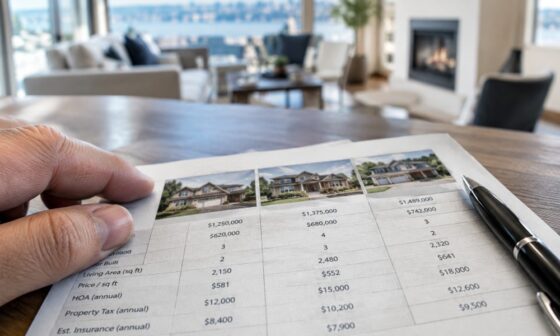
The real cost of housing is neither pure asset growth nor money thrown away. It is a nuanced equation combining debt service, unrecoverable property maintenance, investment opportunity costs, and personal lifestyle requirements. By evaluating both explicit bills and hidden carrying expenses, you can choose the housing path that genuinely strengthens your overall financial foundation.