Key Takeaways
- A written maintenance plan helps identify small issues before they become disruptive equipment failures.
- Commercial HVAC and refrigeration schedules should reflect runtime, product load, location, and equipment condition.
- Daily staff observations complement professional service, but they do not replace qualified repairs.
- Temperature logs, work orders, and repeat-repair patterns provide useful direction for maintenance decisions.
- For food-related businesses, refrigeration maintenance should support documented food-safety procedures.
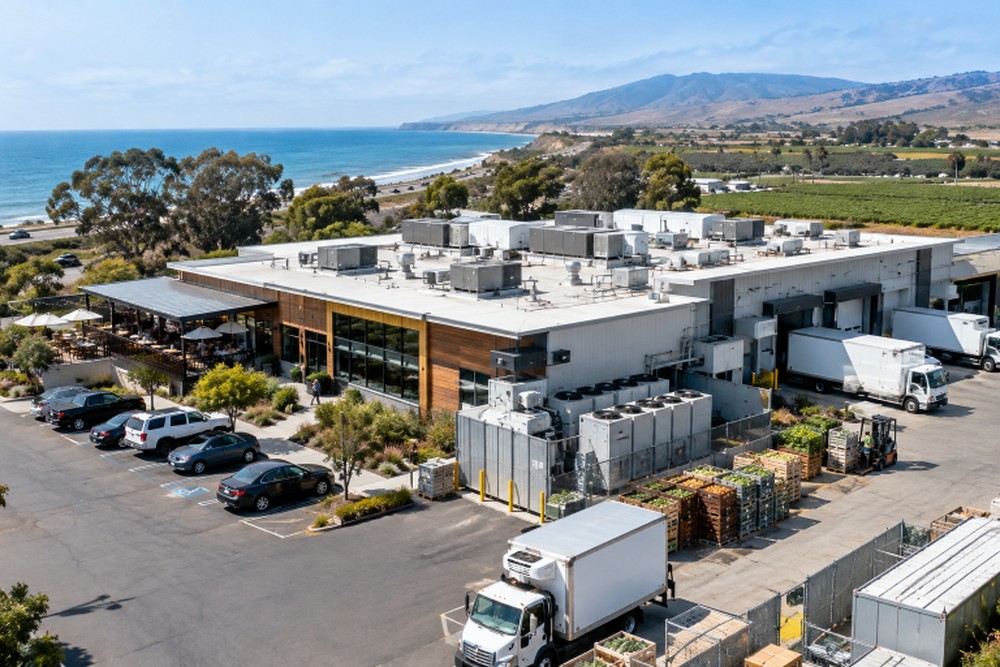
For restaurants, wineries, grocers, produce operations, and offices from Santa Barbara through Santa Maria and Paso Robles, a dependable HVAC and refrigeration maintenance plan is a practical part of protecting business operations. Central Coast facilities may contend with coastal moisture, windblown debris, agricultural dust, warm inland afternoons, and changing seasonal demand.
Equipment that continues running is not always operating efficiently or reliably. A plan built around routine observations, scheduled professional service, clear reporting, and accurate records can help California business owners protect employee comfort, temperature-sensitive inventory, and long-term equipment budgets.
Why a Written Maintenance Plan Matters
Reactive maintenance begins after equipment breaks down. Preventive maintenance schedules inspections, cleaning, measurements, and needed corrections before a failure interrupts the workday. That difference matters when a walk-in cooler holds perishable product, an ice machine supports a busy dining room, or an air-conditioning unit serves customers during a hot Central Coast afternoon.
Unplanned downtime can mean uncomfortable indoor spaces, lost sales, emergency repair costs, water damage, spoiled inventory, or a rushed search for temporary cooling. A written plan also prevents maintenance from being postponed simply because the equipment appears to be working.
One schedule does not fit every facility. A rooftop unit near the coast may need closer attention to debris and corrosion than a protected inland unit. Refrigeration equipment in a high-volume kitchen, winery, or produce facility may require more frequent review than equipment with lighter use.
How to Build the Plan
Start With an Equipment Inventory
List each HVAC unit, thermostat, exhaust system, walk-in cooler, freezer, reach-in case, ice machine, alarm, and monitoring device. Record its location, model and serial numbers, installation date, purpose, and service history. Identify assets that support critical operations or hold high-value inventory.
Assign Risk and Responsibility
Rank equipment by operational impact. A freezer storing prepared food or a process-cooling system supporting production should receive more attention than a lightly used comfort-cooling unit. Assign simple observations to trained employees, reserve electrical and sealed-system work for qualified technicians, and designate one person to review incomplete work orders.
Create Escalation Rules
Staff should know which conditions require immediate reporting: temperature drift, water leaks, repeated breaker trips, burning odors, unusual compressor noise, damaged door gaskets, excessive frost, or alarms that do not clear. Clear rules reduce hesitation when a small concern becomes urgent.
Daily, Weekly, and Seasonal Checks
Daily and Weekly Observations
- Review displayed temperatures and note readings outside the facility’s target range.
- Look for alarms, leaks, frost, unusual noises, blocked vents, and restricted airflow.
- Confirm that the cooler and freezer doors close completely and that the gaskets appear intact.
- Keep product, boxes, and storage materials away from supply and return openings.
- Review temperature logs for repeated spikes, long recovery periods, or recurring alerts.
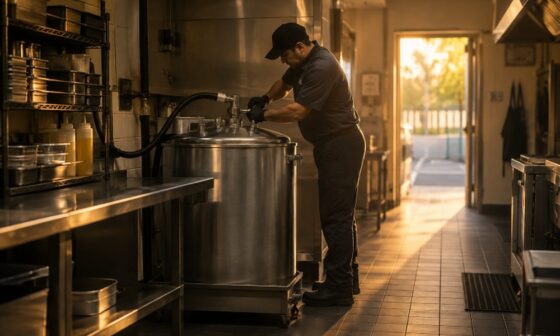
Employees should not remove electrical panels, handle refrigerant, bypass safety controls, or attempt repairs outside their training. Their role is to notice, document, and promptly report changing conditions.
Monthly and Seasonal Planning
Each month, review open repair recommendations, recurring failures, alarm history, and unusual utility changes. Before warmer weather, arrange an inspection of cooling equipment, filters, coils, drains, outdoor fan assemblies, belts (where applicable), and controls. Before cooler weather, test heating operation and applicable safety controls. Facilities near loading areas, kitchens, vineyards, or dusty agricultural routes should also watch for conditions that foul coils or more quickly restrict airflow.
HVAC Maintenance Priorities
Airflow is central to commercial comfort cooling and heating. Dirty filters, obstructed grilles, dirty coils, worn belts, and failing fans can make equipment run longer while delivering less consistent comfort. Condensate drains also deserve attention, as a blockage can cause water around the unit or damage below it.
Controls matter just as much as mechanical components. Review thermostat schedules, zoning, sensor placement, and recurring occupant complaints. If one area is regularly too warm or too cold, compare the complaint with runtime, airflow, and control information rather than repeatedly changing the setpoint.
Call a qualified professional when a unit repeatedly shuts down, fails to maintain the desired indoor temperature, trips a breaker more than once, produces a burning odor, or appears to have an electrical or refrigerant-related issue.
Refrigeration Maintenance Priorities
For refrigeration, stable performance is more meaningful than one acceptable reading. Repeated temperature swings, extended run times, heavy frost, standing water, or poor recovery after door openings can point to problems with airflow, door seals, controls, defrost operation, loading practices, or other components.
- Check door alignment, hinges, latches, and gaskets for gaps, cracks, or flattening.
- Keep stored product from blocking evaporator airflow or crowding equipment surfaces.
- Maintain clear space around condensers so that heat can dissipate from the equipment.
- Report recurring ice buildup instead of simply removing it and moving on.
- Avoid loading large amounts of warm product without allowing for appropriate recovery time.
Records, Alerts, and Food Safety
Keep service records simple and consistent. Each entry should include the date, asset, readings or observations, work completed, parts replaced, remaining recommendations, and person responsible. Useful trends include unplanned service calls, downtime, repeat repairs, temperature excursions, and the frequency of filter or belt replacements.
Alarms are only valuable when they produce an appropriate response. Set alert limits that reflect the equipment, stored product, and operating environment, and ensure staff know who receives notifications and what action is required.
For food businesses, maintenance supports but does not replace a complete food-safety program. A HACCP approach to monitoring, corrective action, and recordkeeping provides a useful framework for documenting temperature checks and responding when readings fall outside an established limit. Protect exposed food during service, remove debris and tools afterward, and clean affected areas before returning equipment to regular use.
Common Mistakes and Questions
Common planning mistakes include using a single checklist for every asset, recording tasks without noting measurements, delaying service until peak season, and treating recurring symptoms without investigating the underlying cause. Small changes in cleanliness, airflow, sensor accuracy, or operating conditions can contribute to gradual performance drift, which may increase operating demands before a major failure becomes obvious. Industry coverage of hidden efficiency problems that develop over time reinforces the value of reviewing trends rather than relying on a single service visit.
How Often Should Equipment Be Serviced?
The right frequency depends on manufacturer guidance, age, runtime, environment, product load, and repair history. High-use refrigeration and heavily loaded cooling equipment generally deserve closer monitoring than lightly used systems.
Can Employees Handle Basic Maintenance?
Trained employees can perform visual inspections, record temperatures, identify damaged gaskets, replace filters when appropriate, and report concerns. Technical testing and repairs should remain with qualified professionals.
Final Thoughts
A strong maintenance plan is not necessarily complicated. It needs a complete asset list, realistic schedules, clear responsibilities, useful records, and timely action when conditions change. For Central Coast California businesses, combining daily awareness with professional HVAC and refrigeration service can help protect comfort, inventory, equipment reliability, and operational continuity throughout 2026.