Key Takeaways
- Select the shaft material based on the actual environment, mechanical loads, speed, contact surfaces, and service-life target.
- Corrosion resistance must be balanced with hardness, fatigue performance, machinability, wear resistance, and cost.
- Surface finish, dimensional tolerances, cleaning methods, and contact with dissimilar metals can strongly affect shaft life.
- A low initial material cost can lead to higher lifetime costs when corrosion results in repairs, downtime, or repeated replacements.
Why Shaft Material Selection Matters
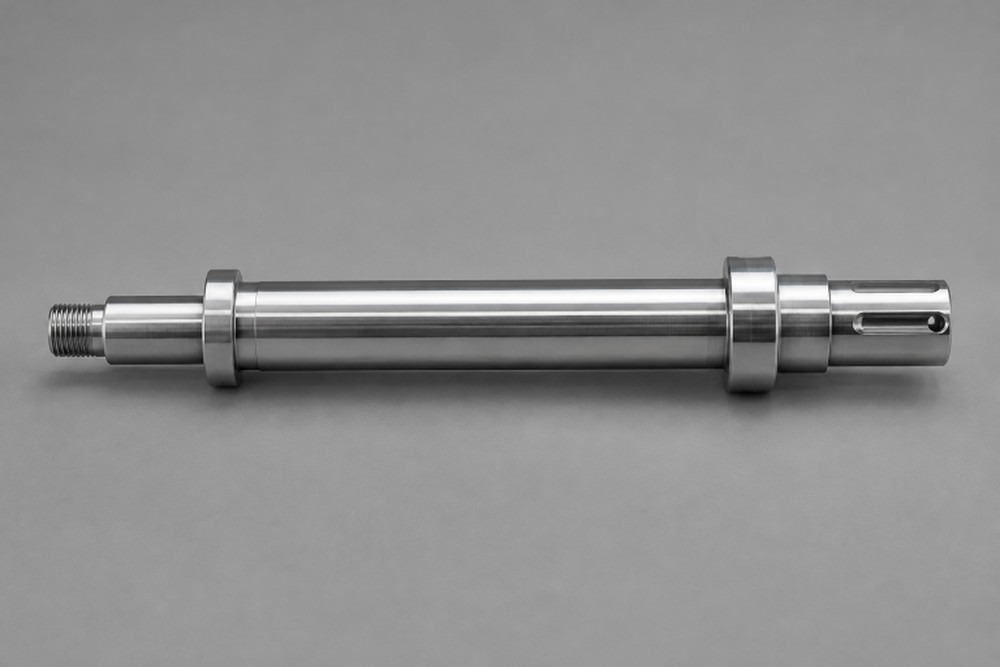
Precision shafts transmit torque and support components such as bearings, seals, gears, pulleys, and couplings. When corrosion damages a working surface, the effect can extend far beyond appearance. Pitting, staining, and roughness may interfere with sealing, alter bearing fits, increase vibration, and make accurate motion harder to maintain. For applications that require polished stainless stock, learn more here before finalizing the material and finish specifications.
A shaft may appear acceptable during a quick visual inspection, while localized damage develops beneath a seal lip, within a keyway, at a shoulder, or around a threaded feature. In a washdown conveyor or an outdoor drive assembly, recurring moisture can turn a small surface defect into an early maintenance issue. The correct choice begins with the operating conditions, not with a material name alone.
Conditions To Review Before Choosing
Before requesting quotes or comparing grades, list requirements: liquids, chemicals, salt exposure, cleaners, operating temperature, and wet duration. Document torque, bending and shock loads, speed, duty cycle, hardness, surface roughness, runout, straightness, and maintenance access.
Review all contact points, including bearings, seals, gears, couplings, fasteners, and nearby metals, since they affect material choice. A shaft suited for a dry enclosure may fail when exposed to aggressive cleaners, coastal spray, or trapped water.
Common Shaft Material Groups
Carbon And Alloy Steel
Carbon steel is often practical for dry, controlled settings because it is widely used, readily machined, and can be economical. It generally needs oil, paint, plating, or another protective approach when moisture is expected. Alloy steel can provide improved strength, toughness, and heat-treatment response for demanding torque, impact, and fatigue conditions, but it still requires a deliberate corrosion-control plan.
Stainless Steel
Stainless steel is often selected for wet, cleanable, chemical-exposure, or appearance-sensitive equipment. Its corrosion resistance depends on alloy composition and the protective passive surface film, as explained in this overview of stainless steel corrosion behavior. Grade selection still matters. A stainless grade that performs well indoors may not provide adequate resistance to chlorides, stagnant liquids, or specific process chemicals.
Coated Or Treated Materials
Coatings and surface treatments can combine a strong core material with added surface protection. However, a coating is only protective while it remains continuous and compatible with the application. Bearing seats, seal tracks, keyways, threads, and edges deserve special review because wear or impact can expose the substrate.
How Corrosion Starts On Precision Shafts
Corrosion-resistant does not mean corrosion-proof. Chloride moisture can cause pitting in susceptible materials, while stagnant liquid near seals, washers, shoulders, deposits, or tight joints can cause crevice corrosion. Dissimilar metals connected electrically in an electrolyte, such as water, can also corrode.
Contamination is another preventable risk: carbon-steel particles, unsuitable abrasives, poor storage, and cleaning residues can damage a suitable surface. Proper handling and cleaning are therefore part of material selection, not just post-production tasks.
Surface Finish And Tolerances
A smooth, controlled finish helps reduce places where moisture, process residue, and debris can collect. It also supports predictable contact between the shaft, bearing, and seal. Scratches, burrs, sharp transitions, and damaged bearing seats can accelerate wear even when the base material is appropriate.
Finishing should be specified with the functional surface in mind rather than treated as a cosmetic requirement. Research summarized in the surface-finish study of 316L stainless steel found that the finish condition affected pitting behavior under test conditions. For critical shafts, specify measurable requirements for roughness, roundness, straightness, and runout, then verify them through inspection.
Material By Operating Environment
Food, Washdown, Marine, And Chemical Service
Food and washdown equipment requires attention to detergents, sanitizers, cleanability, and crevice reduction. Marine and coastal systems must account for salt spray, humidity, standing water, and hidden areas near seals and fasteners. For chemical processing, identify the exact chemical, concentration, temperature, and exposure duration. Broad labels such as “chemical resistant” are not enough for a reliable decision.
Medical, Laboratory, Outdoor, And General Industrial Equipment
Medical and laboratory equipment may require cleanability, low particle generation, repeatable motion, documentation, or nonmagnetic behavior. Outdoor machinery must tolerate rain, condensation, dust, temperature changes, and limited maintenance. In each setting, compare the durability of a solid corrosion-resistant alloy with the inspection and repair needs of a coated solution.
Balancing Strength, Wear, And Corrosion Resistance
The most corrosion-resistant material isn’t automatically best for every shaft load. Assess strength, hardness, toughness, fatigue, and wear at bearings, seals, splines, and gears. Heat treatment may improve hardness and wear, but must preserve dimensional stability and corrosion resistance.
Stainless parts can gall at sliding or threaded contacts, especially with poor lubrication, clearance, or material pairing. Reliable designs combine the right grade with suitable geometry and finish, drainage, compatible parts, needed lubrication, and realistic maintenance.
Common Mistakes And A Simple Selection Process
Common errors include choosing only by purchase price, leaving finish and runout unspecified, ignoring galvanic contact, assuming a coating will remain intact at a seal track, and failing to control storage contamination. Avoid these issues with a structured process:
- Define the environment, including moisture, chemicals, salts, cleaners, temperature, and exposure time.
- Define mechanical duty, including torque, bending, speed, shock, and expected cycles.
- Map contact surfaces and nearby metals.
- Set measurable requirements for dimensions, hardness, finish, straightness, and runout.
- Compare candidate materials for corrosion resistance, strength, wear, machinability, availability, and lifetime cost.
- Validate the choice through supplier data, testing, and relevant field experience.
Questions For Suppliers
Ask which material data applies to the actual service environment, what surface finish and hardness can be supplied consistently, and how straightness, roundness, runout, and surface condition are inspected. Also ask about traceability, handling practices, cleaning recommendations, compatibility with bearings and seals, and viable alternatives if the preferred material is unavailable.
Conclusion
Choosing a corrosion-resistant shaft material requires more than selecting stainless steel or adding a coating. A reliable decision considers the shaft material, the real environment, mechanical demands, finish requirements, mating components, and maintenance strategy. Reviewing those factors together helps reduce corrosion-related wear, limit unplanned downtime, and support dependable precision machinery over its intended service life.