Canadian equipment owners watch the forecast for snow and wind, and a fabric building is usually chosen with those two loads in mind. The slower threat arrives on mild damp days, when moisture collects on the inside of the cover and drips onto what is stored below.
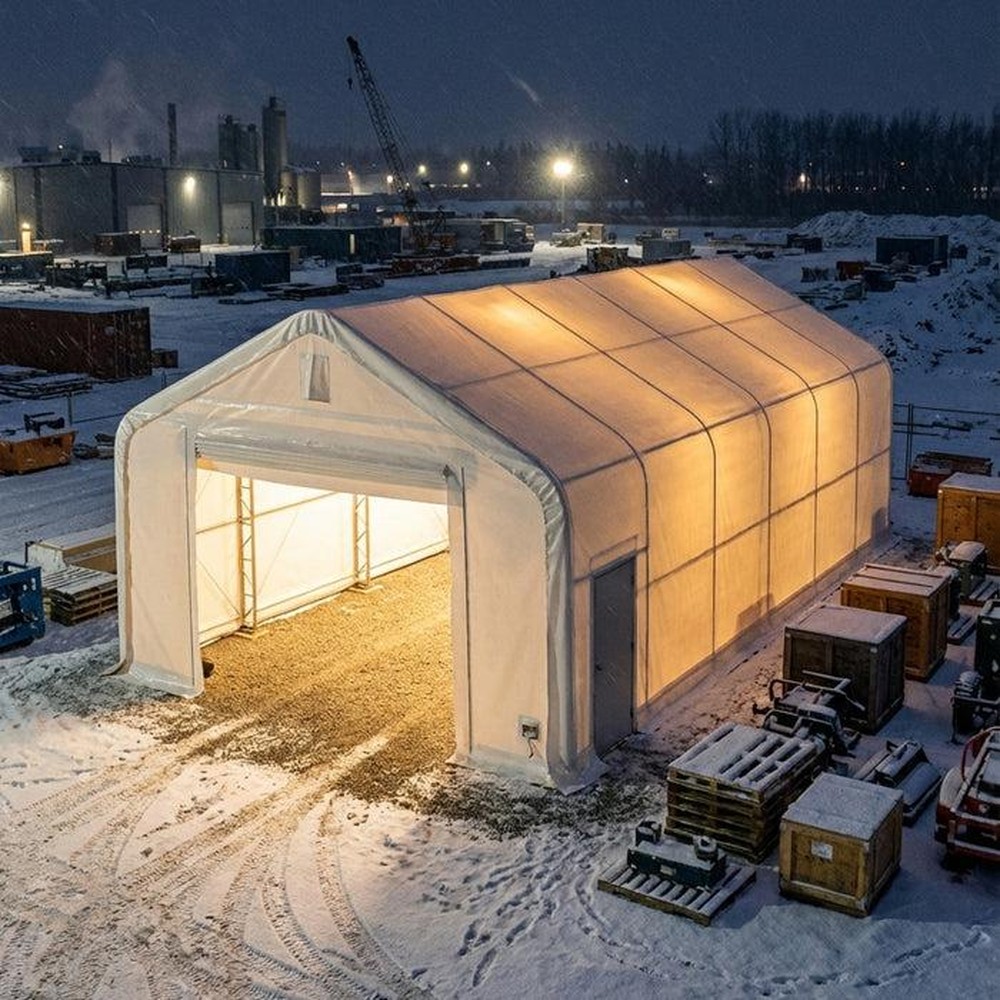
A dual truss storage shelter handles the structural loads well, but a tarp shelter is still a cold skin around warm, humid air. Knowing where that moisture comes from is the difference between dry equipment in spring and a yard full of rust.
The Two Sources of Water Inside a Fabric Building
Air holds less water as it cools. When damp air inside the building touches the cold underside of the fabric, the surplus condenses into droplets, the same way a glass of cold water beads on a humid day.
Ground moisture adds to the load. Bare soil or gravel releases water vapor continuously, and a machine driven in wet from the yard brings more. A shelter with no floor treatment can fill with humid air faster than it can lose it.
How Air Moves Through a Fabric Building
Fabric buildings leak air at their ends and at their eaves, and that leakage is helpful. Warm air rises under the peak, escapes through gaps or vents, and draws drier outside air in low, carrying moisture out with it.
A hoop building with sealed end walls loses that exchange. Adding vents high on the gable ends, or leaving a gap at the eave line, restores the airflow without letting in rain or snow, and it costs very little against the damage condensation does.
Protecting What Is Stored Underneath
A layer of gravel or a plastic ground sheet cuts the vapor rising from the soil, and a concrete pad does it better. Steel implements, batteries and tools should sit off the floor, since cold surfaces collect moisture first.
A farm that stored a baler in its shelter over the winter found frost on the steel and rust at the gearbox seams by spring, even though the roof never leaked. The damage came from moisture inside, which is exactly what vents and drier floors prevent.
Fabric shelters compare well against steel buildings on speed and cost, and they pass natural light into the interior. Some owners treat one as a temporary building because it can be moved, but the moisture control it needs is permanent work.
Habits That Keep the Inside Dry
A short routine makes a large difference over a winter.
- Open the doors on dry afternoons to air the interior
- Keep drains and ground slope clear of the walls
- Wipe moisture from metal surfaces before storing
- Check vents and tensioning after every storm
Tension matters for moisture as well as wind. A slack cover in a tarp shelter sags into pockets that hold water and drip in the same spot every time, so retensioning the fabric after the first cold snap removes those drip points.
Where Fabric Buildings Are Heading
Covers with built-in vents, reflective inner layers and anti-drip coatings are appearing in the field, and ventilation kits are increasingly sold as part of the building rather than as a separate upgrade chosen after the first wet winter.
The practical rule is to plan the airflow before choosing the cover. TMG Industrial gives the span, fabric weight and truss spacing for this 20 by 63 foot tarp shelter, and those figures show how much interior volume there is to keep ventilated.