A healthy Perrysburg landscape does not come from setting a timer and forgetting it. Sun exposure, soil, slopes, new plantings, and changing weather in Northwest Ohio all affect how quickly a yard uses water. Homeowners considering irrigation system installation Perrysburg OH, can look to Simmons Landscape & Irrigation, a Northwest Ohio and Southeast Michigan provider whose irrigation services include landscape-focused system design, installation, repair, and maintenance for residential and commercial properties.
The goal is not to apply more water. It is to deliver an appropriate amount for the roots to use, while avoiding puddles, wasted water, and runoff into streets or drains. A flexible plan also makes it easier to respond to a hot, windy week, a soaking rain, or a change in the landscape without overcorrecting.
Why Perrysburg Yards Need a Flexible Watering Plan
A wide, sunny lawn near pavement may dry much faster than a shaded side yard. Flower beds, mature shrubs, young trees, fresh sod, and newly seeded areas also have different needs. A schedule that keeps one zone green could leave another overwatered.
Weather changes matter. Heat and wind can increase moisture loss, while heavy rain may provide enough water to postpone a cycle. Properties near drainage routes should be especially mindful of where excess water travels.
Read the Yard Before Setting the Timer
Before adjusting a controller, walk the property and look beyond the grass surface. Push a screwdriver or small soil probe several inches into the ground. If the soil is moist below the surface, the lawn may not need another cycle yet. If it is dry and difficult to penetrate, watering, compaction, or both may need attention.
- Watch for puddles, cracked soil, wilted plants, thin turf, and unusually green patches.
- Mark areas with full sun, partial shade, and consistent shade.
- Identify slopes, low spots, sidewalks, driveways, curbs, and storm drains.
- Notice places where water runs away before it has time to soak in.
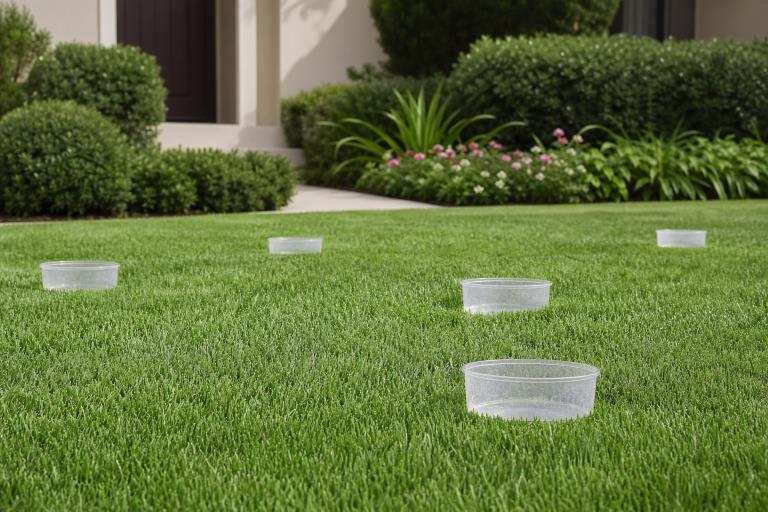
For a quick coverage check, place several shallow, straight-sided cans throughout one irrigation zone. Run the zone as usual, then compare the water depth in each can. Major differences can reveal blocked heads, poor spacing, tilted sprinklers, or pressure problems.
Divide the Landscape Into Watering Zones
Different parts of the property should not automatically share one runtime. Separating zones helps prevent the common problem of a shaded bed or low spot getting soaked simply because a sunny lawn needs more water.
- Turf zones: Need broad, even coverage that reaches the root area without pooling.
- Planting beds: Often benefit from slower, targeted watering around shrubs, flowers, and trees.
- Shade zones: Usually dry more slowly and may require less frequent watering.
- Sunny edges: Grass near concrete, driveways, or south-facing walls can lose moisture faster.
- New plantings: Need closer observation while roots are becoming established.
Choose Better Watering Times
Morning is generally the most practical time to water because temperatures and wind are often lower, giving water a better chance to reach the soil. Midday watering can lose more water to evaporation and wind drift, while consistently late-evening watering can leave foliage wet for longer than necessary.
- Water during the cooler morning hours when possible.
- Skip or delay irrigation after meaningful rainfall.
- Use shorter cycles on slopes or compacted soil.
- Pause between cycles so water can soak in before the next application.
- Adjust schedules based on actual soil moisture and plant condition.
During a declared water shortage emergency, Perrysburg officials may limit lawn sprinkling and other non-sanitary water uses under the city’s authority to limit water use. Check current municipal notices before continuing routine outdoor watering during unusually dry conditions.
Reduce Runoff Around Perrysburg Homes
Runoff is often a sign that water is being applied faster than the ground can absorb it. Redirecting a sprinkler head by a few degrees, shortening a run time, or splitting one long cycle into two shorter sessions can make a meaningful difference.
- Keep spray off sidewalks, streets, driveways, and building walls.
- Repair heads that mist, gush, leak, or point in the wrong direction.
- Use a cycle-and-soak approach on slopes and dense soil.
- Keep fertilizer, grass clippings, and leaves away from curbs and drains.
- Use mulch in beds and consider rain gardens in recurring low areas.
Know When Professional Irrigation Planning Makes Sense
Some issues can be corrected with a controller adjustment, but recurring trouble may indicate a system design or maintenance issue. Consider a full assessment when dry spots remain after schedule changes, pressure varies during a cycle, heads are damaged or buried, or a patio, fence, driveway, or addition has changed the landscape layout.
Professional help is also useful when the controller runs during rain, a zone fails to shut off, or water consistently reaches the pavement instead of plants. The right changes can improve coverage while reducing unnecessary water use.
Protect Irrigation Systems During Construction
Road, sidewalk, utility, and water main work can put private irrigation components at risk, particularly near the public right-of-way. Before excavation begins, locate visible heads, valves, backflow equipment, and controller connections. Take dated photos, mark private components near the work area, and turn the system off during active construction.
After work is complete, test every zone. Look for broken heads, damaged wiring, leaks, reduced pressure, and coverage changes resulting from grading or concrete replacement.
Seasonal Watering Checklist
- Spring: Inspect heads, test zones, check sensors, and correct coverage as growth begins.
- Early summer: Watch for dry spots, leaks, and overspray, then fine-tune run times.
- Mid-summer: Base watering on rainfall, soil moisture, heat, wind, and visible plant stress.
- Late summer: Inspect nozzles for clogs and identify compacted areas that shed water.
- Fall: Reduce watering as temperatures decline and arrange winterization before freezing weather.
Common Perrysburg Irrigation Questions
How Often Should a Perrysburg Lawn Be Watered?
Frequency depends on rainfall, soil type, grass variety, shade, slope, and recent weather. Check moisture below the surface rather than relying only on a calendar.
Why Does Water Pool in One Part of the Yard?
Pooling can indicate compacted soil, poor grading, a blocked drainage path, excessive run time, or a leaking sprinkler head.
Is It Better to Water for a Short Time Every Day?
Frequent shallow watering is not always ideal for established turf. When conditions allow, slower watering that reaches deeper into the root zone can support stronger roots.
What Should Homeowners Do Before a Watermain Project?
Locate private irrigation lines, photograph equipment, shut the system down during work, and test every zone once construction has ended.
Build a Watering Plan That Fits the Property
A thoughtful Perrysburg watering plan starts with observation. Monitor the soil, separate areas with different needs, correct overspray, and adapt to rainfall and seasonal conditions. These habits can support healthier plants, reduce runoff, protect household water use, and keep the landscape attractive throughout the growing season.