A ceiling stain, drip, or damp odor may seem like a minor maintenance issue, but commercial roof leaks are rarely simple. Water may travel beneath the roof surface, through insulation, along decking, or around structural details before it becomes visible indoors. By the time a leak reaches a ceiling tile or wall, the entry point may be some distance away. That is why property owners should begin with a diagnosis rather than immediately choosing a patch or coating. Commercial roof waterproofing from PCR LLC is an assessment-based service for commercial property owners and facility managers in Iowa and Northern Missouri. The company evaluates water entry, seams, flashings, penetrations, ponding, and roof condition to help determine whether targeted detailing, repair preparation, waterproofing, or coating work is appropriate.
Why a Small Roof Leak Can Signal a Larger Problem
Visible interior damage is a symptom, not a complete diagnosis. A small opening in a membrane seam, flashing detail, or penetration can allow water into layers that are not immediately visible. Moisture can affect insulation, corrode metal components, damage finishes, interrupt work areas, and create slip or electrical hazards if it reaches occupied spaces. Repeated leaks also make daily building management harder. Inventory may need to be moved, workstations may be blocked off, and tenants or employees may lose confidence in the property’s condition. The goal is not merely to stop the current drip, but to identify how water entered and what allowed the condition to continue.
Common Places Where Commercial Roof Water Enters
A roof review should focus on details where different materials meet or where equipment interrupts the roof surface. Common areas of concern include:
- Open, aged, or poorly bonded membrane seams.
- Cracked, loose, lifted, or deteriorated flashing at walls, edges, and transitions.
- Penetrations around HVAC units, vents, pipes, curbs, and conduit.
- Drains, scuppers, gutters, and overflow routes that are blocked or not moving water effectively.
- Loose fasteners, laps, and sealant failures on commercial metal roofs.
- Transitions between roof sections with different elevations or materials.
- Older patches that may have addressed a symptom without correcting the underlying issue.
What Ponding Water Can Tell You About a Roof
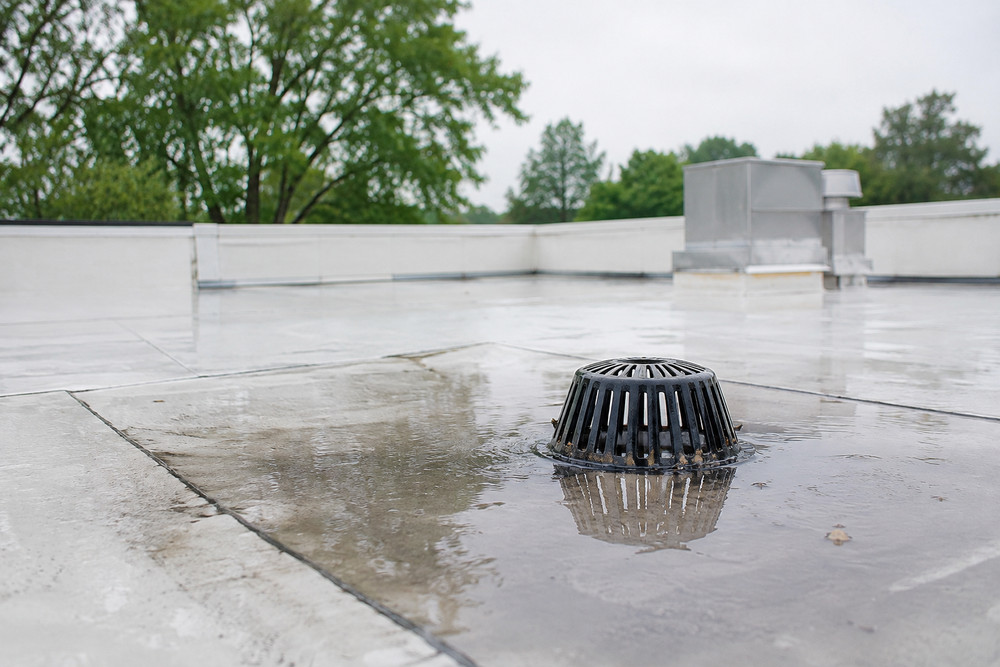
Ponding water is unwanted water that pools on a roof instead of draining away. On a low-slope commercial roof, a recurring puddle can indicate debris in a drain, a blocked scupper, a low area in the roof, changed drainage patterns, surface deterioration, or movement in the supporting structure. Standing water keeps roof materials wet for longer periods and can make existing weak points more consequential. Cleaning a drain may be necessary, but it may not solve the larger issue if the roof surface does not direct water toward that drain. Property owners and staff should not walk on a wet, damaged, or unfamiliar roof without suitable training, access equipment, and safety controls.
How to Read the Signs Inside the Building
Interior clues can help a facility team document a problem and communicate clearly during an inspection. Watch for new stains after heavy rain, water that appears only during wind-driven storms, swollen ceiling tiles, peeling paint, damp drywall, musty odors, or rust near fasteners, ductwork, and equipment. Recurring leaks in the same general area deserve particular attention, even if each repair seems small. Water may be entering at a nearby detail and following a concealed path before it appears indoors. Interior symptoms are useful evidence, but they do not replace an inspection of the roof-level conditions.
A Simple Leak-Triage Process for Property Managers
- Protect people and equipment. Keep people away from wet floors, sagging ceilings, and possible electrical hazards. Move vulnerable equipment or inventory when it can be done safely.
- Document the event. Record the date, weather conditions, leak location, approximate size, photographs, and whether water is still actively entering.
- Check for urgent hazards. Escalate issues involving electrical systems, unstable materials, damaged ceilings, or operational safety concerns.
- Review roof history. Gather past inspection notes, repair records, coating work, and photos of recurring trouble spots.
- Arrange a professional assessment. Ask for the likely entry point, contributing conditions, recommended scope, and work that should be prioritized.
Repair, Waterproofing, Coating, or Replacement?
The appropriate solution depends on the roof’s condition, moisture exposure, drainage, repair history, and the building’s plans. A useful evaluation distinguishes these options rather than treating them as interchangeable.
- Targeted repair may fit an isolated seam, flashing, fastener, or penetration failure.
- Waterproofing may help strengthen vulnerable details or manage broader moisture risks when the existing roof remains serviceable.
- Roof coating may be considered when the substrate is suitable, the surface is properly prepared, and drainage or repair needs have been addressed.
- Replacement may be more practical when deterioration is widespread, insulation is saturated, decking is compromised, or repeated repairs have not delivered lasting results.
A coating should not be used to conceal unresolved leaks, trapped moisture, failing details, or damaged roof components. Preparation and corrective work are part of the process of deciding whether a restoration approach is realistic.
What a Sound Commercial Roof Assessment Should Include
A useful assessment should review the roof surface, seams, flashings, edges, penetrations, rooftop equipment, drains, scuppers, gutters, and visible ponding areas. It should also account for leak history and interior symptoms, not just what is visible during one visit. Property owners should expect photos or written notes that explain the findings. The report should distinguish between urgent work, planned corrective work, and items worth monitoring. It should also explain why repair, waterproofing, coating preparation, or replacement is being recommended.
Drainage Checks That Should Not Be Skipped
Drainage is central to roof performance. Check drains, scuppers, gutters, strainers, and overflow paths for leaves, sediment, and other debris. Look for dirt rings, staining, plant growth, or surface wear that may reveal where water repeatedly collects. Flashing and water-management details also matter because roof intersections and penetrations are vulnerable points for water entry. The U.S. Department of Energy’s guidance on moisture barriers and flashing reinforces the importance of directing water away from vulnerable roof details.
Questions to Ask Before Approving Roof Work
- Where does the inspection indicate water is entering?
- Is the visible leak isolated, or are similar conditions present elsewhere?
- Is the roof a viable candidate for waterproofing or coating?
- What preparation and corrective work must happen first?
- How will drainage and recurring ponding be addressed?
- What work is urgent, and what can be scheduled later?
- How will the project affect tenants, deliveries, production, and building access?
- What inspection and maintenance steps should follow the work?
A Practical Maintenance Plan
Schedule regular roof reviews rather than waiting for interior damage. Inspect after major storms, keep drainage points clear, photograph changes around seams and flashings, and maintain one organized roof history file. Coordinate roofing work with HVAC, solar, signage, and other rooftop contractors to ensure new penetrations and service activities do not create avoidable vulnerabilities.
Diagnose the Roof Before Choosing the Fix
A commercial roof leak is a warning, not a final diagnosis. The right response depends on the actual entry point, drainage conditions, roof age, moisture exposure, prior repairs, and the building’s operational needs. A careful assessment helps owners avoid repeated patches, poorly timed coatings, and larger disruptions that could have been prevented with earlier corrective work.
Conclusion
Commercial roof leaks require more than a quick patch because visible water damage may not reveal where moisture is entering or how far it has spread. Property owners should prioritize safety, document recurring problems, and arrange a thorough assessment of the roof’s seams, flashings, penetrations, and drainage systems before selecting a solution. PCR LLC provides commercial roof waterproofing assessments for facilities in Iowa and Northern Missouri, helping owners determine whether targeted repairs, waterproofing, coating preparation, or replacement is appropriate. By addressing underlying problems and maintaining regular inspection records, facility managers can reduce recurring leaks, protect building interiors, and make more informed decisions about long-term roof performance.