Warehouses are full of dangers like equipment that is not working safely, goods falling off of shelves, people being run into by forklifts, and slips and falls. Safe warehouse procedures, such as following safe lifting techniques and having safe flooring, also reduce risks. Are warehouse injuries widespread, though? Data provided by the Bureau of Labor Statistics show an increase in deaths within the warehousing and storage industry, from 28 deaths in 2023 to 32 deaths in 2024. These statistics also reveal 4.8 nonfatal illness and injury cases per 100 full-time employees, of which 4.1 cases required time off from work, limited work capability, or a job reassignment.
Since there is a high frequency of these accidents, it is not easy to determine who is at fault for injuries suffered by visitors and employees alike. Many parties could potentially be liable, such as the owner of the warehouse and manufacturers of the equipment.
Workers’ compensation may cover medical bills and lost wages, while another party’s negligence may lead to a personal injury lawsuit.
Here is a detailed look at the process of finding out who is liable for injuries in a warehouse accident and factors that may affect a claim.
What Makes Warehouse Work Hazardous
As stated by the Occupational Safety and Health Administration (OSHA), warehousing is a rapidly growing, fast-paced industry, but this industry has several workplace hazards. Musculoskeletal injuries are very common along with being hit by a powered industrial truck or any material handling equipment.
Material handling, hazardous chemicals, slips, trips, and falls, and robotics are some of the other hazards on the list.
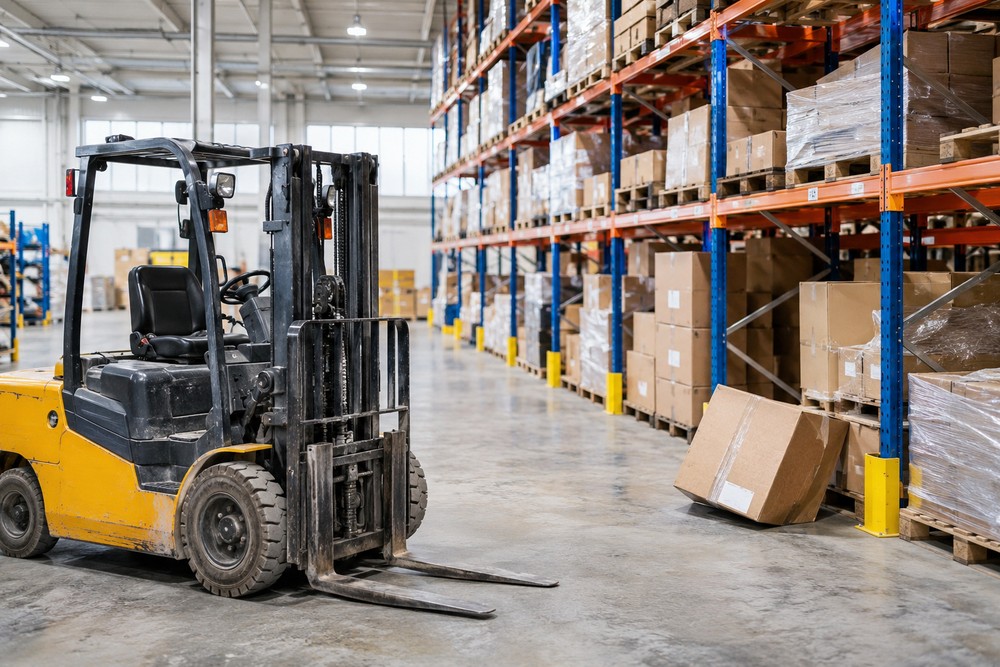
There are multiple hazards involved with operating a forklift. OSHA reports that workers can be injured when lift trucks are driven off loading docks, when lift trucks fall between a loading dock and an unsecured trailer, when workers are struck by a lift truck, and when workers fall from elevated pallets and tines.
Where Responsibility Can Arise
A warehouse is a constant mix of people, vehicles, and equipment. That means several parties can touch a single incident.
One company may own the building, another may operate the shift, a third may supply the workers, and a fourth may maintain the equipment.
According to the Johnson & Associates, LLC website https://www.leejohnsonlegal.com/, an injured worker may be able to seek compensation beyond workers’ compensation when a third party’s carelessness caused the accident, such as a machine manufacturer or an outside contractor.
The injury statistics that are reported using the OSHA 300 log are the source of the BLS survey statistics referred to above. They indicate whether similar accidents have taken place before at that location.
How Compensation and Shared Responsibility Fit Together
Two separate questions often get blended. The first is how an injured worker receives benefits.
According to the U.S. Department of Labor, workers’ compensation is a form of insurance that provides financial assistance, medical care, and other benefits for employees injured on the job, and it is usually administered at the state level. The department adds that coverage varies by state, but coverage for all employees is common in many states.
The next question is whose duty it is to keep the workplace safe.
According to the OSHA guidelines for temporary workers, the staffing firm and its client company are considered joint employers, and both of them have the responsibility to provide a safe environment for their employees.
The degree of their responsibility depends on the circumstances. According to OSHA, an employer cannot shift their responsibilities onto another party.
The above statements refer to the workplace safety regulations established by OSHA. State legislation regulates whether and under what circumstances the parties have any monetary liability to the victim.
What Records and Details Tend to Matter
The information that becomes relevant after a warehouse incident is usually practical information. Practical information like who gave the order, which equipment was used, whether the employee was trained, whether the equipment was in good condition, and how the situation looked physically are some examples. Training, maintenance, and a proper division of responsibilities between the employer become a major point in OSHA recommendations.
The best sources to investigate any particular incident are the employer’s injury logs, any OSHA inspections, and the laws of the state where the incident took place. Forklift operation and ergonomics are focus areas under OSHA’s national emphasis program on warehousing, and OSHA separately addresses the safety of temporary workers.