Why northern sunshine is not a joke
People think Minnesota means solar panels spend half the year sulking behind a wool blanket of snow. Reasonable assumption. Winter might visit unexpectedly and consume everything in the freezer. Yet solar can work remarkably effectively here, and not just symbolically. It can save money, cut bills, and hustle roofs.
The rationale is straightforward. No beach weather is needed for solar panels. They require sun. They frequently operate better in chilly air. Heat reduces solar equipment efficiency, so a panel on a hot rooftop is less productive than one in chilly northern air and brilliant winter sun. Minnesota may not have sunbelt vibes, but it gets enough sunlight to make residential solar a long-term house update.
Not every home should cover its roof with gleaming rectangles. The state merits a more serious examination than usual. Not whether Minnesota is warm enough for solar. Whether a home has the correct layout, utilities, and expectations.
What homeowners are really paying for
Solar pricing generally focuses on panels, as if the installer is dropping off seven miraculous glass crackers and calling it a day. Full home systems comprise panels, inverters, mounting hardware, electrical work, permits, labor, and design. Structural snow load and weather durability might affect Minnesota prices.
Many homes prefer mid-sized systems. It’s large enough to reduce annual electricity use without becoming a luxury vanity project. Electric vehicles, electric heating add-ons, and high-electricity homes may need something larger. Smaller or more efficient dwellings may need less.
Also, location matters. Twin Cities homeowners have more installation options than rural homeowners. More competition sharpens prices. Fewer bids in sparsely populated areas might increase expenses and scheduling delays. That does not destroy the contract, but it might modify the economics sufficiently to need careful quotation comparison.
Cold weather gives panels a quiet advantage
Solar has immense irony. Panels dislike severe temperatures. More like marathon runners on a chilly morning than holidaymakers frying on a beach towel. Cold regions allow panels to convert sunlight into power more effectively than warmer ones.
So Minnesota’s cold seasons don’t hurt solar effectiveness. Winter’s shorter days and snow cover are major issues. Short days cut production hours. Low sun angles reduce solar energy reaching the array compared to summer. Even yet, cool air efficiency maximizes sunshine.
This surprises many homeowners. They expect temperature to be the issue. Usually not. Real problem is seasonal fluctuation. Minnesota systems can scream in summer and hush in winter, but the yearly total matters most. Solar requires year-long balance, not monthly magic.
Snow is annoying but not catastrophic
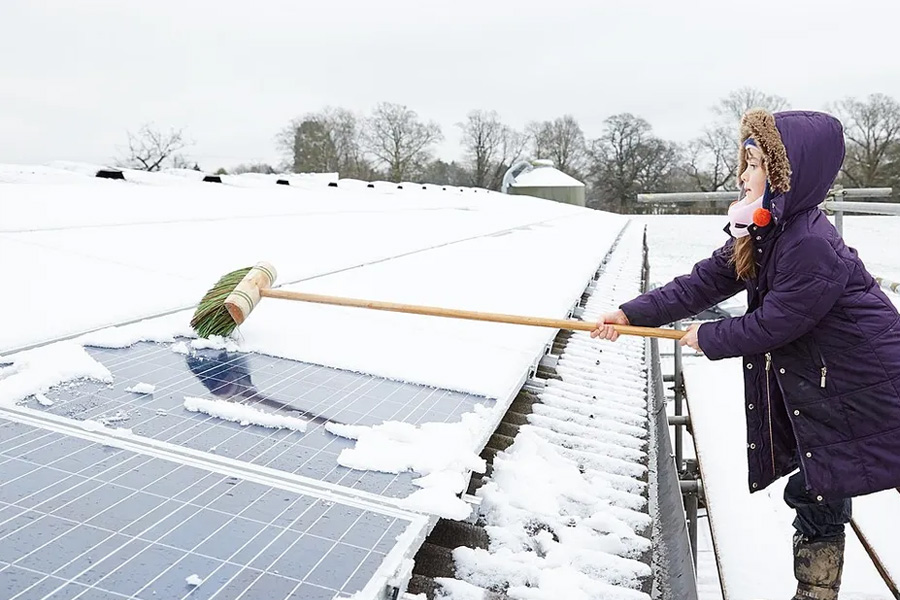
Snow blocks production when it sits directly on panels. No mystery there. A buried panel is about as useful as a flashlight wrapped in mashed potatoes. But snow losses are usually manageable over the course of a year.
Smooth, dark, and angled panels allow snow to glide off easier when sunlight returns. Northern installers prefer higher tilt angles for greater shedding and winter performance. After a storm, certain systems recover fast. If it snows hard and stays cold, others are blanketed for days.
The key is that periodic snow cover does not ruin system economics. Minnesota installation estimates usually include winter losses. Homeowners shouldn’t worry about slow January production. January should appear tired. The array works. Just being Minnesotan.
Safety matters here. Roof-mounted systems should not tempt homeowners into icy acrobatics with a shovel. If the system is on the roof, it is usually best to let the panels clear naturally. Ground-mounted systems are easier to manage, but even then the tools should be gentle and panel-safe.
Utility policy can make or break the numbers
This is where solar stops being only a hardware story and becomes a policy story. Two homes with identical roofs and identical panels can have very different financial outcomes depending on who provides their electricity and what compensation exists for excess generation.
A large utility incentive and good net metering system might make solar more appealing to homes. Summer overproduction, when longer days exceed residential usage, benefits from exported power credits. Performance-based incentives can sweeten the sale by rewarding system owners depending on array power production.
That setup might make a good investment appealing. Without such benefits, the repayment time may frighten some households. This is crucial in a state with investor-owned utilities, cooperatives, and municipal suppliers. Financial disparities exist in Minnesota.
Homeowners shouldn’t switch utility regions. That would be like thinking all garage snow shovels function when one is solid, one is damaged, and one became a child’s beach toy. Utility laws affect solar value more than first-time purchasers know.
The best roofs are not always the biggest roofs
A big roof doesn’t guarantee good solar. Square footage is less important than orientation, shade, pitch, and clear space. East and west roofs can perform well if they avoid excessive shade, but south-facing roofs have the most output potential.
Shade is notoriously troublesome. Tall trees, chimneys, dormers, surrounding buildings, and roof clutter reduce production. Many mature trees in Minnesota are gorgeous and adept at freeloading when they block a solar array. Some shadow difficulties may be controlled with careful design or equipment, but severe or continuous shading might reduce performance sufficiently to undermine the argument for installation.
Roof age matters. Installing solar on an old roof is typically a bad idea. Later panel removal and reinstallation is costly and time-consuming. In a state with freeze-thaw cycles, snow loads, and harsh weather, roof quality should be checked before signing a solar contract.
Ownership usually captures the most value
Homeowners generally have three broad ways to go solar. They can buy with cash, finance with a loan, or use a lease or power agreement arrangement. Each route changes who gets the financial benefits and how quickly the homeowner sees savings.
Cash purchases often yield the highest long-term profits since the owner preserves tax savings and production-based incentives. Loans spread out initial expenses and keep many ownership perks, but interest charges diminish financial upside. For consumers that seek liquidity and system ownership, financing may work.
A lease is different. Although they eliminate upfront friction, they generally give the third-party owner the most benefits. That gives the homeowner convenience while giving someone else a significant cash share. The trade-off is acceptable to some. Some feel like making the pie, arranging the table, and watching a stranger enjoy dessert.
Homes that may not be good solar candidates
Solar is not a universal win. Some properties simply do not justify the expense.
A severely shaded roof can limit production sufficiently to cancel out optimistic forecasts. Without enough roof area with greater exposure, a north-facing roof might suffer. A household moving soon may not stay long enough to fully benefit from the payback period. Homes served by utilities with weak compensation policies may save less than those in stronger program territory.
Electricity utilization is another consideration. A low-consumption family may not need a huge system, reducing savings. Solar is still feasible. It means the project should be appropriately sized to avoid rooftop theater costs.
FAQ
Does solar still work during long Minnesota winters?
Yes, but winter output is lower because the days are shorter and the sun sits lower in the sky. Panels can still generate electricity in cold weather, and cool temperatures actually help efficiency. The main limitation is not the cold itself. It is the reduced daylight and occasional snow coverage.
Is snow removal necessary for rooftop panels?
Usually not. Snow often melts or slides off naturally once sunlight returns. Trying to clear rooftop panels during winter can create a serious safety risk. Ground-mounted systems are easier to clear, but even then the tools should be soft and appropriate for solar surfaces.
Can solar help with high summer electric bills?
Yes. Summer is typically when Minnesota systems produce the most electricity because daylight hours are long and the sun is stronger. That high production can offset heavy air conditioning use and may also build utility credits that help balance lower-production months later in the year.
What kind of house benefits most from solar in Minnesota?
A strong candidate usually has a relatively new roof, good sun exposure, limited shade, and a utility arrangement that gives fair value for solar production. Homes with steady annual electric usage and owners planning to stay put for several years tend to see the most benefit.
Do batteries automatically make a Minnesota solar system better?
Not always. Batteries cost money, and grid-connected solar without storage is valuable for many houses. When backup power is needed or utility rates incentivize storing and shifting electricity consumption, a battery makes sense. This improvement is smart for certain homes. Some buy it for pricey peace of mind.