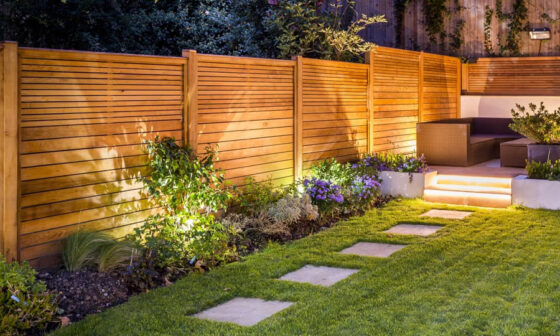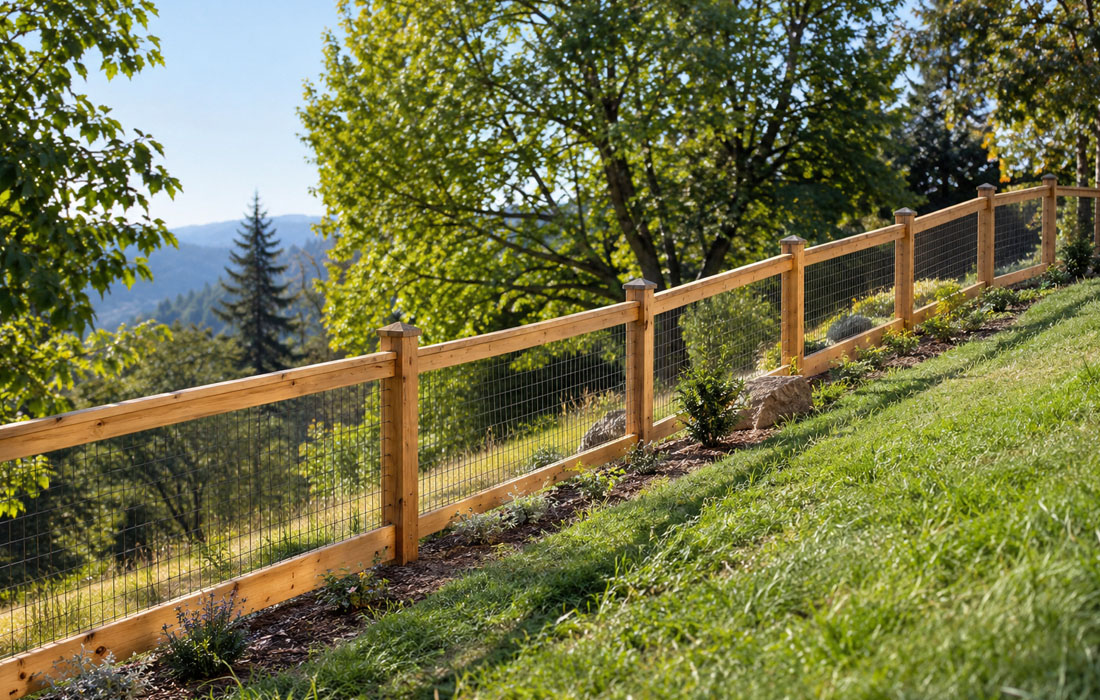
Uneven ground can make a straightforward fence project surprisingly complex. The grade angle, the soil type under your posts, and where a gate needs to swing all affect what will actually work in your yard. Before picking a style based on photos alone, it helps to understand how slope drives key choices such as stepped versus racked panels, post footing details, and strategies to close ground gaps for privacy or pets. This article walks through practical decisions homeowners face on hillsides and rolling lots, with specific examples of how materials like chain link, cedar, vinyl, and ornamental aluminum behave on a slope and what to consider for long-term stability in wet soil.
Measure the Grade: Finding Slope Before You Design
Start by mapping the yard’s rise and run. Stretch a taut string line between two stakes and use a line level or a laser level to establish a true horizontal reference, then measure vertical changes at several points along the fence path. Note where the yard drops sharply, where it waves, and where high spots or swales could collect water against the future fence line. Local providers offering custom fencing services in Salem often start by documenting those elevation changes because they determine whether panels can rack to grade or need to be stepped. Recording slope in inches over a 6- or 8-foot span also helps you anticipate triangular ground gaps before a single post hole is dug.
Choosing Panels That Rack vs. Stepping on a Slope
Two basic strategies fit fence lines to hills: racking and stepping. Racked fences angle their rails so the infill follows the ground. Chain link mesh racks easily, as do many rackable ornamental aluminum panels with slotted picket connections. Site-built wood fences can be assembled picket by picket to trace the grade. Vinyl privacy panels, however, often have limited rackability; the rails and pickets are locked together, which restricts how much angle they can take. Stepped fences keep each section level and drop at the posts, creating a stair-step look. The trade-off is visual versus function: stepped lines look crisp but leave triangular openings under the low ends, while racked lines hug the grade but show angled rails that some owners dislike.
Consider a backyard that falls 10 to 12 inches over a 24-foot run. A racked aluminum fence can track that slope cleanly with uniform ground clearance, making it good for small dogs that nose under gaps. A stepped vinyl privacy fence delivers a level top profile, but each 8-foot panel could leave a significant wedge-shaped opening at the bottom unless you add a toe board. For wood privacy, many builders set level rails, then trim cedar pickets to the grade with a circular saw and scribe, avoiding big gaps while keeping a flat top line. Preassembled panels install faster but are less forgiving on hills than site-built sections.
Post Footings, Drainage, and Soil in Wet Climates
Soil and water move fences more than wind does on many slopes. Clay holds moisture and swells; sandy loam drains but can slump on a steep bank. On inclines, downhill posts see extra lateral pressure from saturated soil and lawn loads. A common mistake is setting wood posts in solid concrete without a drainage path, which traps water at the ground line and accelerates rot. A more durable footing typically includes several inches of compacted crushed rock at the base of the hole for drainage, a plumbed post, and concrete that crowns above grade to shed water. For galvanized steel posts, keeping the concrete slightly proud of the soil helps prevent standing water at the post sleeve.
Footing dimensions should reflect the panel height and exposure. Taller privacy sections act like a sail; on a slope, that means more overturning moment on the downhill side. Wider or deeper footings, bell-shaped bases, and closer post spacing can help resist that load. In very wet stretches, switching a few line posts to steel rather than buried wood can reduce long-term decay at grade. Whatever the material, avoid burying bottom rails or pickets in soil to make up for a dip; it will wick moisture and invite insects. Instead, cut infill to the contour or add a sacrificial gravel board you can replace later without pulling posts.
Gate Placement on an Incline: Clearance, Swing, and Hardware
Gates magnify grade problems, because the bottom edge must clear the highest point of the swing arc. If a gate swings uphill, it risks dragging. To reduce binding, hang single gates so the hinge post sits higher than the latch post when possible, and swing them downhill or toward the flatter side of the opening. Adjustable or rising hinges can add lift across small slopes, and pool enclosures may require self-closing hinges. For double drive gates on a slope, use a drop rod to pin the downhill leaf, and a center stop to prevent sag. Latch alignment also changes with grade, so choose hardware with vertical adjustability and check it after the first few seasonal cycles.
On steep driveways, a sliding solution can be more practical than a wide swing. Cantilever gates avoid a ground track that can clog with gravel and pine needles on a slope, but they require a longer counterbalance frame and robust posts with concrete footings aligned to resist side loads. If you prefer a swing design, consider narrowing the leaf width to reduce clearance conflicts and add a guide wheel only as a last resort, since wheels telegraph bumps and can catch on frost heave or lifted pavers at the apron.
Privacy, Pets, and Neighbors: Solving Ground Gaps on Hills
Closing ground gaps on grade without trapping water is a balancing act. For privacy fences, toe boards or gravel boards fastened along the bottom rail fill wedges created by steps while keeping wood off the soil. With cedar pickets, trim each board to the contour to prevent daylight triangles and deter small pets from squeezing under. Chain link can add a bottom tension wire or a buried apron of mesh that tucks under a shallow trench, which helps with dig-prone dogs. Where runoff crosses the fence line, keep at least an inch of clearance above hardscape and use washed rock under any skirt board so stormwater can pass without puddling against posts. If you share a boundary, discuss whether a stepped profile or racked rails better suits both yards before work begins.
Hills don’t rule out a sturdy, good-looking fence; they just demand clearer decisions. Measure the slope, select materials that can either rack or be trimmed to the grade, and size footings for wet soil and lateral pressure. Plan the gate so it swings freely, with hardware you can tune as the ground settles. Solve bottom gaps with cut-to-fit infill, tension wire, or a replaceable toe board rather than burying wood. Before digging, confirm property lines and call 811 to mark utilities. With a design shaped by the land rather than against it, your fence will fit the site, contain what needs containing, and stand straighter through the seasons.