As fall approaches, homeowners often take a closer look at their outdoor storage needs. Vehicles, lawn equipment, tools, seasonal decorations, and recreational gear all need a place to stay protected as temperatures drop. For many property owners, that means deciding between a traditional wood structure and a modern metal building.
Wood has long been a familiar choice for sheds, barns, garages, and workshops. However, metal construction has become increasingly attractive because of its durability, lower maintenance needs, and predictable performance in changing weather. The right material ultimately depends on the building’s purpose, location, budget, and expected lifespan.
Understanding how these materials compare can make the decision easier, especially for homeowners preparing their property for winter.
Durability: How Do Metal and Wood Compare?
Durability is one of the biggest factors to consider when choosing a storage structure. Both wood and metal can provide years of service when properly designed and installed, but they respond differently to outdoor conditions.
Wood is naturally sturdy and can be repaired or modified relatively easily. However, it is vulnerable to moisture, insects, rot, and prolonged exposure to the elements. Poor drainage or inadequate sealing can accelerate deterioration around the foundation, walls, doors, and roof.
Metal has a different set of advantages. Quality steel panels can resist rot and insect damage, while modern protective coatings help reduce corrosion. Metal buildings also tend to maintain their structural characteristics without requiring the same level of routine treatment as wood.
Maintenance Can Affect the Long-Term Cost
The initial purchase price is only one part of owning a shed, garage, or barn. Maintenance requirements can influence the total cost over time.
Wood structures may require periodic:
- Painting or staining
- Sealing against moisture
- Replacement of damaged boards
- Pest inspections and treatment
- Repairs caused by water exposure
Metal generally requires less routine maintenance. Owners should still inspect the roof, fasteners, doors, drainage areas, and exterior finish, but the maintenance schedule can be simpler.
This does not mean metal is maintenance-free. Address scratches or damaged coatings, and don’t ignore standing water. However, reducing recurring exterior work can be valuable for homeowners who want a practical storage structure rather than a project that requires frequent upkeep.
Cost Over Time Matters More Than the Sticker Price
A lower purchase price does not always mean a lower total cost. When comparing wood and metal, homeowners should consider expected maintenance, repairs, replacement components, and the structure’s potential lifespan.
For example, a wood building may have an attractive upfront price but require painting and weatherproofing over the years. A metal structure may have different upfront costs but require less ongoing exterior maintenance.
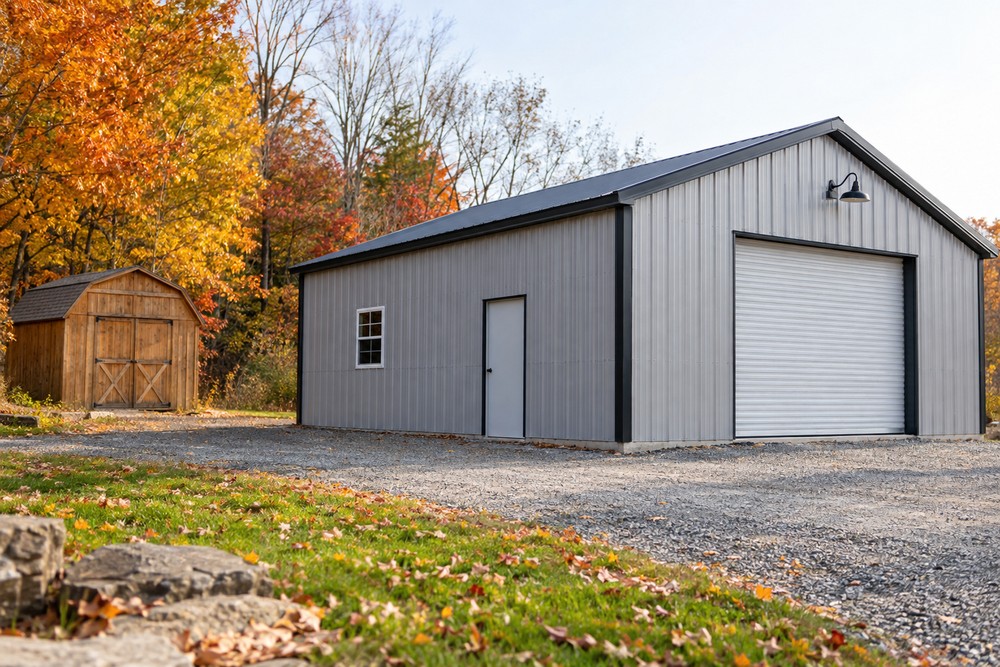
Homeowners storing vehicles or expensive equipment may also value structural durability and weather resistance more. A properly designed metal garage can provide dedicated space without the same concerns about wood rot or insect damage.
For those comparing vehicle and equipment storage options, metal garage buildings can be worth considering alongside traditional wood construction.
Snow Load Requires More Than Just Choosing a Material
Snow is an important consideration for properties that experience significant winter weather. However, it is a mistake to assume that simply choosing metal automatically solves snow-related concerns.
A building’s ability to handle snow depends on its overall engineering and construction, including:
- Roof design and pitch
- Span between structural supports
- Frame size and spacing
- Roof and wall materials
- Fastener selection
- Local snow-load requirements
- Foundation and anchoring
Metal and wood structures can both be engineered for substantial snow loads when properly designed. The important question is whether the building is specified for the conditions where it will be installed.
Before ordering, homeowners should ask what snow-load rating applies to the structure and whether the design accounts for local building requirements. This is particularly important in areas where heavy or drifting snow is common.
Freeze-Thaw Cycles Can Test Building Materials
Winter weather involves more than snow. Repeated freezing and thawing can affect buildings in several ways.
When moisture enters cracks, joints, or porous materials and then freezes, it expands. Repeated cycles can contribute to deterioration over time. Poor drainage can make these problems worse by keeping moisture around the foundation or lower portions of the structure.
Wood can absorb and release moisture as weather conditions change, which may contribute to swelling, shrinking, warping, or cracking if the material is not properly protected.
Metal does not absorb water in the same way, but its performance still depends on proper installation. Corrosion protection, drainage, fasteners, joints, and foundation details all matter.
The best approach is to evaluate the complete building system rather than judging one material in isolation.
What Should Homeowners Check Before Ordering?
Whether choosing wood or metal, buyers should ask detailed questions before signing an order. A building that looks good in a brochure may not have the specifications needed for a particular property.
Start by confirming the structure’s intended use. A small garden shed has different requirements from a workshop, vehicle garage, or agricultural barn.
Then review the following:
1. Construction Specifications
Ask about framing, roof construction, wall materials, doors, ventilation, and anchoring. These details can significantly affect durability and usability.
2. Local Weather Requirements
Make sure the building is designed for the site’s conditions. Snow, wind, rain, and temperature changes can vary considerably from one region to another.
3. Foundation Requirements
A durable structure needs an appropriate foundation or support system. Ask what surface preparation is required and whether additional site work is needed.
4. Material Quality
Do not stop at the word “metal” or “wood.” Ask what specific materials are being used, how they are finished, and what protective measures are included.
5. Delivery and Installation
Buyers should know who handles delivery, what site access is required, and whether installation is included. Narrow driveways, overhead utility lines, slopes, and landscaping can affect delivery.
Midwest Buyers Should Verify Regional Construction Details
For Midwest homeowners, weather conditions can make construction specifications especially important. A building may need to deal with snow, strong winds, moisture, and repeated seasonal temperature changes.
When evaluating a regional builder or supplier, buyers should verify that the company understands the requirements of the areas it serves. For example, someone researching Noble Barn Co. in Ohio should review the company’s available building specifications, materials, delivery area, and installation process before ordering.
Common Mistakes to Avoid
Choosing a building based solely on appearance or price can lead to problems later. A few common mistakes are easy to avoid with some preparation.
Ignoring the site: Measure access routes and consider slopes, trees, utilities, drainage, and foundation location.
Focusing only on upfront price: Include maintenance and potential repair costs when comparing materials.
Assuming all metal buildings are identical: Frame design, panel thickness, coatings, roof systems, and anchoring can vary significantly.
Overlooking ventilation: Garages, workshops, and barns may need appropriate airflow to manage condensation and moisture.
Not checking local requirements: Building codes, permits, setbacks, and structural requirements can vary by location.
Choosing Based on the Building’s Purpose
No single material works for every property. Wood may appeal to homeowners who prioritize a traditional appearance, customization, or a structure that complements an existing home.
Metal can appeal to buyers who prioritize durability, reduced maintenance, and practical storage. It can be particularly useful for garages, workshops, agricultural storage, and buildings where weather resistance is a major consideration.
A Smarter Fall Building Decision
Compare maintenance requirements, material quality, structural specifications, snow-load capacity, foundation needs, and regional weather conditions. Asking detailed questions before ordering can help ensure the finished building fits the property and intended use.
A well-chosen structure ultimately comes down to matching the right design and materials to real-world conditions. By considering long-term ownership costs and winter performance alongside upfront expenses, homeowners can make a more informed decision between wood and metal construction.