After a severe storm in New Orleans, the rain may stop long before the risks inside a home or business are clear. Standing water, broken windows, wet walls, fallen branches, and damaged roofing can create urgent problems. A safe response starts with a careful plan, not a rush to clean everything at once.
Whether you are handling a small leak or major flooding, understanding the first steps can help protect people, belongings, and the building itself. Property owners who need help with storm damage restoration in New Orleans should still begin by documenting conditions and avoiding unsafe areas until they can be properly assessed.
Wait Until the Property Is Safe to Enter
Do not go inside simply because the storm has passed. Downed power lines, damaged trees, cracked walls, gas leaks, and wet electrical equipment can make a property dangerous. It is safest to return during daylight, when damage is easier to see, and flashlights are less necessary.
Follow local instructions and return only after local officials say conditions are safe. If water is near outlets, appliances, or the electrical panel, do not enter the area. An electrician should inspect affected electrical systems before power is restored. If you smell gas, leave immediately, avoid switches or open flames, and contact the gas provider or emergency officials.
Storm effects can extend beyond New Orleans city limits, especially across the West Bank. Homeowners facing roof leaks, water entry, or debris after severe weather may also need support with storm damage restoration in Marrero once the property is safe to inspect.
Make a Quick Exterior Check Before Going Inside
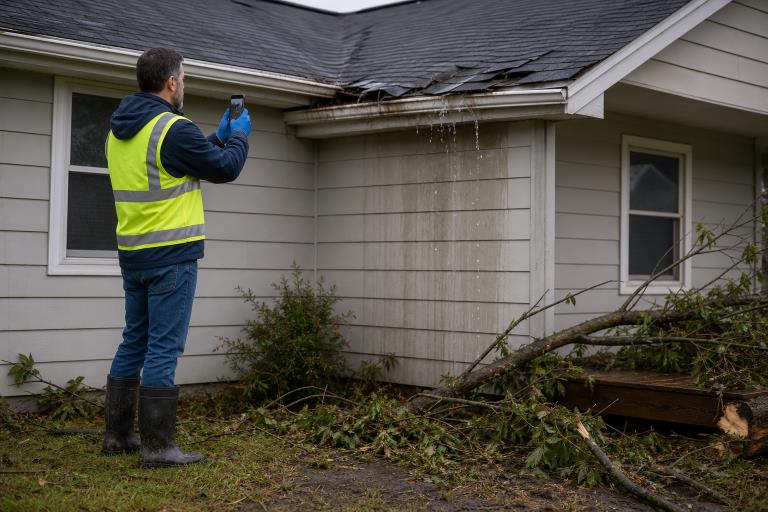
Walk around the property from a safe distance before entering. Look for obvious problems that could worsen with another round of rain or strong winds. Do not stand beneath loose branches, damaged gutters, or leaning walls.
- Missing shingles, flashing, siding, or roof sections
- Broken windows, damaged doors, or openings in exterior walls
- Leaning fences, porches, trees, poles, or exterior structures
- Blocked drains, deep puddles, and debris near entrances
- New cracks around the foundation, walls, or steps
- Water entering through the roof, windows, or wall joints
Keep away from a roof that appears damaged. Climbing onto wet or wind-damaged roofing is risky, even when the opening seems small. If safe from the ground, use a temporary cover to reduce additional water entry until a full inspection can be arranged.
Document Damage Before Cleanup Begins
Good records can make the insurance process easier. Before throwing away damaged items, take wide photos of every room and close-up photos of specific damage. A slow video walk-through can also show where water reached, which materials were affected, and the general condition of the property.
- Photograph exterior damage and each affected room.
- Make a room-by-room list of damaged belongings.
- Record the date and keep notes about what happened.
- Save receipts for emergency supplies, lodging, and temporary repairs.
- Keep damaged items when safe and practical until the insurer gives direction.
- Store claim numbers, emails, estimates, invoices, and photos in one folder.
Remove Water and Start Drying
Once electrical conditions are safe, remove standing water with appropriate equipment and begin drying wet areas. Moisture can remain inside cabinets, closets, wall edges, insulation, flooring, and crawl spaces after surfaces appear dry. Move undamaged belongings to a dry location, place containers under active drips, and keep people away from sagging ceilings or swollen walls.
Open doors and windows when the weather and security allow. Use fans to move air outward and dehumidifiers only on safe electrical circuits. Property owners should clean up and dry out a flooded home within 24 to 48 hours when possible because mold can grow where moisture remains.
Treat Floodwater as Contaminated
Floodwater can contain germs, sewage, chemicals, and sharp debris. Keep children and pets away from affected spaces. Wear waterproof boots, gloves, eye protection, and protective clothing when handling wet materials. Wash exposed skin with soap and clean water as soon as possible.
Food, medicine, cosmetics, and other items touched by floodwater may not be safe to use. Separate wet or contaminated materials from dry belongings. Follow local guidance for debris placement and disposal, since pickup rules may change after a major weather event.
Watch for Mold and Hidden Moisture
Musty odors, peeling paint, stained drywall, warped wood, damp carpet, and condensation can all point to a moisture problem. Mold may grow behind walls, under flooring, inside insulation, or beneath cabinets. A clean-looking surface does not always mean the space behind it is dry.
Hard, washable surfaces can often be cleaned and dried. Materials that absorb dirty water or remain wet, such as carpet, mattresses, insulation, drywall, and upholstered furniture, may need to be removed. Never mix bleach with ammonia or other cleaners. Use gloves, goggles, and an N95 respirator when cleaning visible mold.
Use Generators and Fuel-Powered Tools Safely
Carbon monoxide is a dangerous gas that has no color or smell. Run generators and other fuel-burning equipment outdoors, well away from doors, windows, and vents. Never use a generator in a garage, basement, porch, or enclosed room. Let equipment cool before refueling, keep fuel in approved containers, and use a battery-powered carbon monoxide detector.
Know When Professional Help Is Needed
Some cleanup tasks are too risky for do-it-yourself work. Arrange a qualified inspection when water has reached wiring, outlets, HVAC equipment, or major appliances. Get help when the roof, ceiling, walls, or foundation appear unstable; when sewage or chemical contamination is present; or when moisture has entered wall cavities, insulation, or crawl spaces.
A Simple First 24-Hour Plan
- First hour: Confirm it is safe to enter, identify hazards, and protect people and pets.
- Hours two through four: Photograph damage, contact the insurer, and move dry belongings away from leaks.
- Hours four through eight: Stop further water entry when safe, remove standing water, and begin ventilation.
- Hours eight through 24: Sort damaged materials, save receipts, check hidden spaces, and schedule needed inspections.
Final Storm Cleanup Checklist
- Property checked for gas, electrical, and structural hazards
- Damage photographed before major cleanup
- The insurance company was contacted, and the records were saved
- Standing water removed when safe
- Wet and dry belongings are separated
- Mold and hidden moisture assessed
- Generators used outdoors only
- Professional inspections arranged for serious damage
Storm recovery in New Orleans takes patience and organization. Put safety first, document every stage, dry the property quickly, and avoid repairs that exceed your skill or equipment. A calm, step-by-step cleanup can limit added damage and help create a clearer path toward recovery.