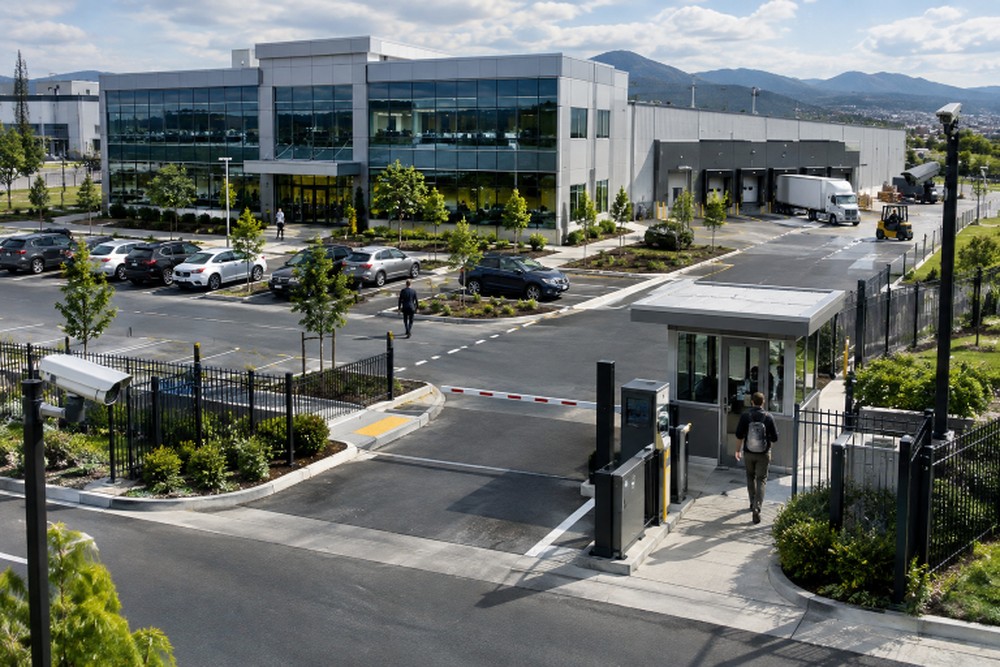
Business safety is not solved by installing one camera, alarm, or access-control device. A stronger approach combines prevention, detection, communication, response, and recovery so that people know what to do when something goes wrong. Organizations seeking complete monitoring solutions should begin with the risks that affect their location, operations, employees, visitors, and critical assets.
A layered plan helps businesses address different events with the right safeguards. Unauthorized entry, theft, fire, water leaks, medical emergencies, severe weather, and power outages require different responses. For example, a door alarm may identify an unexpected opening, video may help staff understand the situation, and a documented procedure can determine who verifies the alert and whether emergency services are needed.
Why A Layered Plan Works Better Than A Single Security Tool
Each layer should support the others. Physical controls can discourage or delay unauthorized access. Sensors and cameras can identify unusual activity. Communication tools can notify the right people. Trained employees can make informed decisions, and recovery procedures can help the organization resume normal operations. This structure prevents a business from relying on a single point of failure.
Layered planning is useful in many settings, including offices, retail stores, warehouses, schools, healthcare facilities, and multi-tenant properties. A recent safety and security monitoring report from Fairfax County Public Schools describes an approach that includes preparedness, coordination with responders, staff training, and communication tools. The exact measures will differ by site, but the principle is the same: technology works best when it is supported by people and procedures.
Step 1: Identify The Risks That Matter Most
Start with a walk-through and operational review before purchasing equipment. Examine entrances, parking areas, loading zones, storage rooms, utility spaces, reception areas, and any place where employees or visitors may be alone. Review prior incidents, near misses, employee concerns, insurance requirements, and local conditions such as flood exposure or severe weather.
Questions To Ask During A Site Review
- Which areas are open to the public, and when?
- Where are valuable goods, records, medication, equipment, or sensitive information kept?
- What events could interrupt normal operations?
- Who might need extra assistance during an emergency?
- Who receives alerts after hours, on weekends, or during holidays?
A small office may focus on visitor management and after-hours entry. A warehouse may prioritize loading docks, high-value inventory, forklifts, and environmental conditions. A healthcare facility may need stronger attention to controlled areas, patient safety, and uninterrupted operations. The goal is not to treat every risk equally, but to identify the risks with the greatest potential impact.
Step 2: Build A Strong Physical Security Layer
Physical security establishes the foundation for the rest of the plan. Begin with secure doors and windows, controlled entry points, reliable exterior lighting, clear sight lines, visitor procedures, protected storage, and routine perimeter checks. These measures can make unauthorized activity harder, while also making normal activity easier for employees to understand.
Match controls to the space. A low-traffic records room may require limited access and a lockable door. A busy public entrance may need visible staff, controlled access, clear signage, and a reliable way to request help. Keep emergency exits available and compliant with applicable building and fire requirements. Security measures should support safe evacuation rather than create obstacles during an emergency.
Step 3: Add Fire, Environmental, And Life-Safety Monitoring
Security planning should cover more than intrusion. Depending on the facility, useful monitoring may include smoke and fire alarms, carbon monoxide detection, water-leak alerts, temperature monitoring, power-loss notifications, equipment alarms, and medical-emergency procedures. These safeguards can help protect people, inventory, records, and systems before a small issue becomes a major disruption.
Every alert should have an owner. Document who receives the notification, how that person verifies the issue, when maintenance or emergency responders are contacted, and who communicates with employees or tenants. An alert without a defined action can create delay and confusion at the moment a fast decision is most important.
Step 4: Connect Cameras, Sensors, And Access Systems
Connected systems provide context. When a door alarm, access record, motion sensor, and camera are available together, staff can better determine whether an event is routine, accidental, or urgent. Integration can also reduce the need to search across separate systems during an incident.
Protect privacy and system access as carefully as the physical location. Limit footage viewing, alert settings, and administrative controls to authorized users. Establish retention practices that fit operational needs and applicable requirements. Test integrations after network changes, software updates, expansions, or renovations so a device that appears functional is also communicating properly.
Step 5: Create A Clear Alert And Response Process
Alerts only become useful when the next steps are clear. Keep response instructions short, written in plain language, and easy to find. A simple workflow can be used for many types of incidents:
- Detect: A person, sensor, camera, or access system identifies a concern.
- Verify: Review available information and rule out an obvious false alarm when it is safe to do so.
- Prioritize: Decide whether the event is routine, urgent, or life-threatening.
- Notify: Contact the appropriate manager, responder, tenant, or emergency service.
- Document: Record the event, actions taken, and follow-up work needed.
Step 6: Prepare Employees For Real-World Incidents
Technology cannot replace trained people. Employees should understand how to report suspicious activity, respond to alarms, contact emergency services, evacuate or shelter, assist visitors and people with disabilities, and protect sensitive security information. Role-based training is especially helpful because reception staff, managers, maintenance teams, and security personnel may have different responsibilities.
Short, regular practice sessions are often more practical than a single annual presentation. Test after-hours call lists and backup communication methods as well. Employees should know whom to contact if a primary phone line, network, access system, or building area is unavailable.
Step 7: Review The Plan With Useful Metrics
Measure performance rather than simply counting devices. Useful indicators include alarm response time, time required to verify an event, repeated false alarms, device-test results, training completion, unresolved maintenance issues, and the time needed to restore normal operations. Review these measures quarterly, and conduct a broader assessment at least once a year.
How Business Resilience Fits Into The Plan
A physical security event can affect employees, customers, suppliers, technology, and reputation at the same time. Businesses should identify essential services and decide how they will operate if a building, network, entry system, or communication channel fails. As business continuity planning increasingly considers connected dependencies, physical safety, cyber resilience, vendor coordination, and recovery planning should be reviewed together.
Common Mistakes To Avoid
- Buying equipment before assessing actual risks.
- Relying on cameras without assigning response responsibilities.
- Overlooking fire, water, medical, environmental, and power-related threats.
- Giving too many people access to footage or system settings.
- Using outdated emergency contacts and untested communication methods.
- Training employees only after an incident occurs.
Conclusion: Make Security A Living Process
A practical safety and security monitoring plan does not need to be overly complicated. It needs clear priorities, dependable layers of protection, trained people, and response steps that work under pressure. Review the plan after incidents, tests, staffing changes, renovations, or technology updates so the business remains prepared as conditions change.