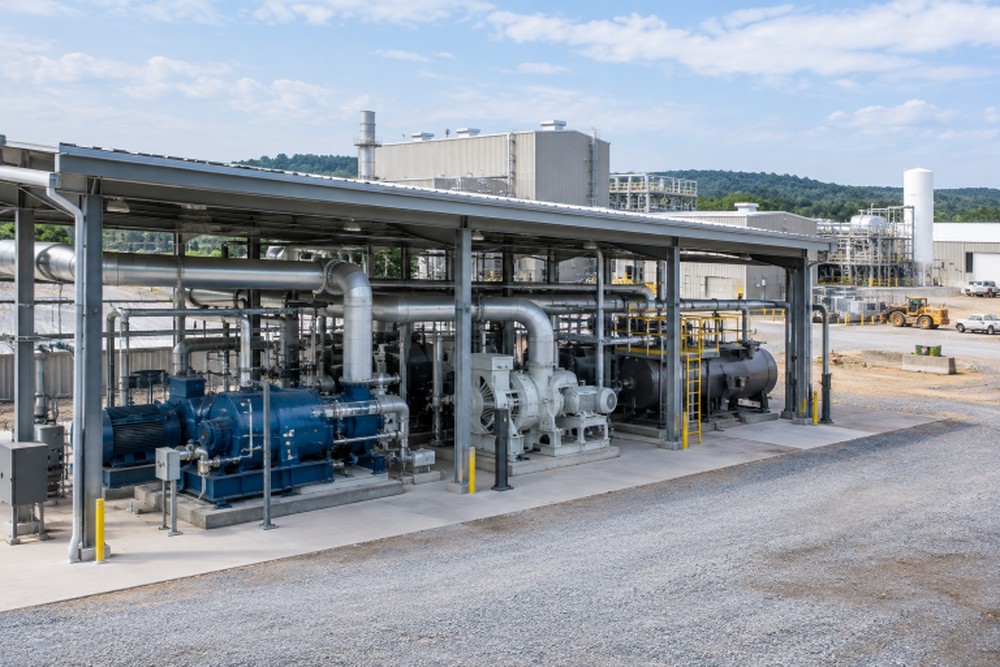
Key Takeaways
- Match compressors, blowers, and vacuum pumps to specific process requirements.
- Measure flow, pressure, air quality, and operating conditions before buying.
- Compare energy use, maintenance, installation, and downtime costs.
- Account for local heat, humidity, dust, and site limitations.
- Plan for service access, spare parts, and ongoing performance monitoring.
Across Arkansas and Southern Missouri, manufacturers, food processors, municipal facilities, and material-handling operations rely on dependable air, vacuum, and blower systems to keep daily work moving. When a project involves Gardner Denver equipment, https://cbeuptime.com/gardner-denver/ can help plant teams explore compressor, blower, and vacuum options suited to industrial applications.
The best equipment choice starts with the process, not a catalog page or a horsepower number. A machine that performs well in a clean, climate-controlled production area may not be the right fit for an Arkansas facility dealing with summer heat, humidity, dust, outdoor installation, seasonal production swings, or demanding washdown conditions.
Start With the Process
Before requesting quotes, define what the equipment must accomplish. Compressed air may power tools, actuate valves, operate packaging equipment, or support controls. Blowers may provide aeration, drying air, or pneumatic conveying. Vacuum systems may handle lifting, filtration, packaging, degassing, or drying. Each job has different flow, pressure, contamination, and uptime requirements.
Involve operators, maintenance personnel, and process engineers early. Operators can describe unstable pressure, slow cycle times, excessive noise, or recurring moisture problems. Maintenance staff can identify access restrictions, difficult service tasks, and frequent failure points. Process teams can clarify product-quality requirements and upcoming production changes. This shared input produces a more useful specification than choosing equipment based only on the existing machine.
Know the Main Equipment Types
Industrial Air Compressors
Compressors are used when the process needs pressurized air. Rotary screw compressors are commonly selected for steady, high-use industrial applications, while reciprocating compressors are well-suited to intermittent-duty applications or smaller, targeted needs. Oil-lubricated systems are common in general plant air applications, but oil-free equipment and appropriate filtration may be necessary where air quality directly affects products or processes.
Do not choose a compressor until the required air quality is clear. Water, oil aerosols, particles, and pressure fluctuations can affect instruments, pneumatic components, coatings, food-related processes, and packaging operations. The compressor, dryer, filters, drains, receiver storage, piping, and controls should be evaluated as one compressed-air system.
Industrial Blowers
Blowers generally serve applications that need substantial airflow at lower pressure than a typical compressed-air system. Common uses include wastewater aeration, drying, combustion air, process ventilation, and pneumatic conveying. Positive displacement blowers can provide predictable displacement across a range of pressures, while centrifugal designs are often considered where airflow and operating conditions align with their performance range.
Blower performance depends on more than the unit itself. Inlet restrictions, filter condition, discharge piping, valves, silencing equipment, temperature, and control range can all influence the result. At wastewater facilities, blower output should also match basin conditions, diffuser performance, and dissolved oxygen requirements. Automated aeration strategies can adjust airflow as process conditions change, using feedback tied to dissolved oxygen levels.
Vacuum Pumps and Vacuum Systems
Vacuum systems are selected based on the required vacuum level, flow demand, contaminants, and the process operating cycle. Rotary vane, liquid ring, and dry-running designs each have different strengths. Moisture, vapor, dust, and product carryover matter because they can influence pump selection, separation needs, service intervals, and long-term reliability.
Measure Operating Needs Before Buying
A clear equipment specification turns a broad request into a practical buying decision. Gather the following information before comparing alternatives:
- Normal and peak flow: Measure actual demand rather than relying solely on outdated production assumptions.
- Pressure or vacuum at the point of use: Include piping losses and restrictions between the equipment and process.
- Duty cycle: Identify whether the system runs continuously, on a shift basis, seasonally, or in short cycles.
- Air or gas quality: Specify requirements for dryness, filtration, oil content, cleanliness, and temperature.
- Site conditions: Record ambient heat, humidity, dust, corrosive vapors, ventilation limitations, drainage, and available space.
- Future growth: Plan for realistic expansion without automatically installing excessive capacity.
Compare Energy Use and Total Cost
Purchase price is only one part of the decision. A complete comparison should include electricity, filters, lubricants, cooling needs, scheduled maintenance, repair exposure, controls, installation work, and the production impact of downtime. A less expensive machine can become costly if it runs unloaded for long periods, operates at unnecessary pressure, or requires frequent service.
Leaks, restrictive filters, undersized piping, and poor control strategy can waste energy and reduce performance. The U.S. Department of Energy recommends a system-wide approach that considers demand, storage, controls, maintenance, and appropriate end uses for compressed-air systems. Compare specific performance at the actual operating conditions expected in the plant, not only at a favorable catalog rating.
Plan for Maintenance and Service
Reliable equipment needs service access. Review clearance for filter changes, oil checks, belt or coupling inspection, drain maintenance, and major component replacement before installation. In a crowded mechanical room, a well-sized unit that cannot be serviced safely may create unnecessary downtime later.
Condition monitoring can make maintenance more proactive. Track pressure, temperature, runtime, vibration, energy use, filter condition, and alarm history where practical. Plants should also confirm local parts availability, technician response expectations, and which spare parts are critical enough to keep on site.
Avoid Common Selection Mistakes
- Choosing equipment by horsepower alone instead of process requirements.
- Using outdated demand estimates after a production expansion or equipment change.
- Ignoring pressure drop caused by long, undersized, or poorly maintained piping.
- Buying excessive capacity without considering low-demand performance and controls.
- Leaving dryers, filters, storage, drains, controls, and ventilation outside the project scope.
- Failing to account for Arkansas heat, humidity, dust, or outdoor exposure.
- Waiting for a failure before creating a maintenance or replacement plan.
Conclusion
Selecting industrial air, blower, and vacuum equipment requires careful evaluation of process demands, site conditions, energy use, and maintenance needs. By gathering accurate operating data and comparing total ownership costs, plant teams can make informed decisions. Planning for service support and future demand also helps maintain reliable performance as production requirements change.