An endless chain sling is useful when a load has no fixed lifting points or needs a secure wrap around its body. But the name doesn’t tell you when to choose it over a legged sling.
The design is simple, but the right uses aren’t always obvious. That’s why choosing the right sling calls for practical lifting experience. RUD Australia has supplied and assembled certified lifting slings for Australian industry for over 40 years.
We work daily with riggers, site managers, and procurement teams across mining, construction, and fabrication. In that time, we’ve seen where sling selection trips buyers up most.
This guide explains what an endless chain sling is and how it differs from standard lifting slings. It then covers the on-site scenarios where the loop design gives you an advantage.
What Is an Endless Chain Sling?
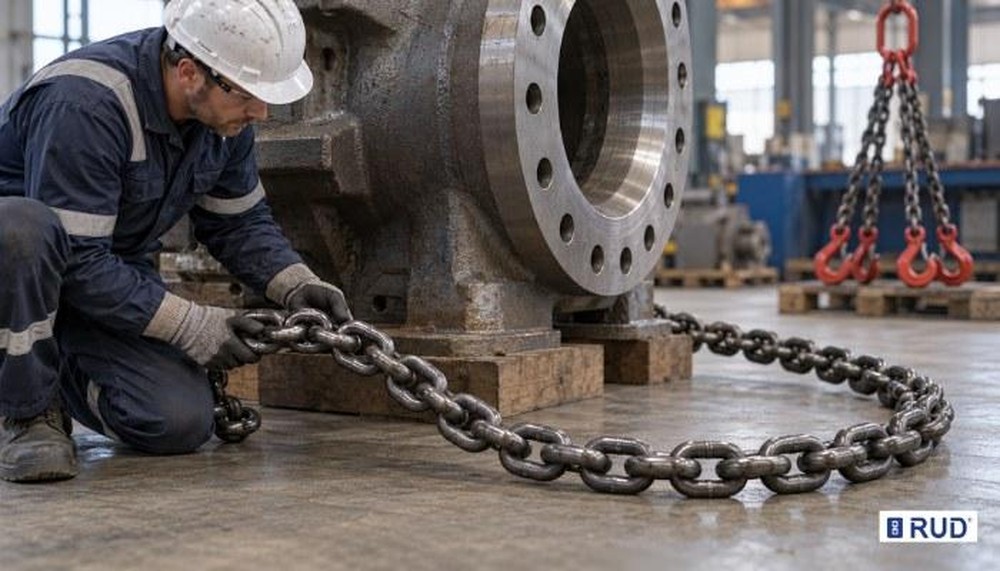
An endless chain sling is a single length of chain with both ends joined to form one continuous loop. It has no hooks, no master link assembly, and no fixed leg configuration. Basically, it’s just the chain, looped back on itself.
Every link plays a part in carrying the load, so damage to even one can compromise the sling’s strength. That’s why riggers inspect the entire loop before each lift, checking for cracks, wear, deformation, or damaged links.
Standard legged chain slings work differently. Each leg has a fixed hook and connects to a master link at the top. This gives a defined reach and set attachment points, but it limits flexibility on certain loads.
How Endless Chain Slings Differ from Standard Lifting Slings
Legged lifting slings have fixed hooks and a defined reach, so you know how they will connect to a load before the lift begins. The main difference with an endless loop is positioning.
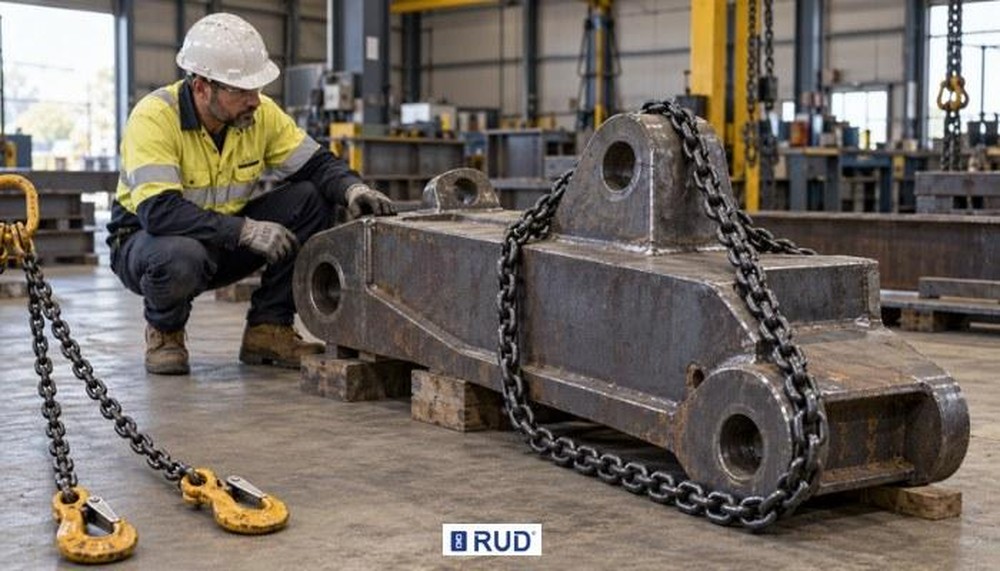
A standard chain sling connects wherever the hooks sit, but an endless chain wraps directly around the load. So you can reposition that endless chain without swapping hardware. Switching slings mid-job because the hook placement didn’t suit the load costs time, and the loop removes that step.
The Working Load Limit (WLL) depends on how you rig the sling. Different hitch configurations affect its lifting capacity, so the sort of hitch you choose determines how much weight it can safely lift. The next section explains these differences.
How to Rig an Endless Chain Sling
One endless chain sling can handle three hitch configurations: vertical, choker, and basket. This flexibility makes it useful across construction and fabrication sites in Brisbane and Ipswich.
Review each hitch before you choose one for your load.
| Hitch Type | How the Loop Is Positioned | Effect on WLL |
|---|---|---|
| Vertical | Loop hangs from the crane hook, with the load attached at the bottom. | WLL sits at baseline rated capacity |
| Basket | Loop passes under load; both sides connect to hook | WLL can increase, depending on sling angle |
| Choker | Loop wraps around load; one side passes through the other | WLL reduces by around 20% vs. vertical |
The basket hitch can give the highest capacity, but the angle between the two sides of the loop directly affects the WLL. Check the sling angle recommendations before you lock in a configuration.
The choker hitch trades capacity for grip, which suits cylindrical loads and bundles in a range of sizes.
When to Use an Endless Chain Sling on Site
Not every load has a fixed point to hook onto. Steel pipes, bundled reinforcing bar, and fabricated frames come without built-in lifting points, so an endless chain sling is often the more practical option.
We see this across Queensland steel fabrication yards, where riggers handle steel pipes, irregular machine parts, and bundled steel sections. Each load may need a different lifting setup, and standard legged slings may lack suitable attachment points.
An endless chain sling can wrap around these loads using an appropriate choker or basket hitch, subject to the load’s structure and WLL.
Confined spaces are another case. In tight access areas, a legged chain sling with multiple fixed hooks is hard to manoeuvre, while an endless loop needs far less clearance. This makes it the better choice for workshop bays and equipment pits where swinging a multi-hook sling isn’t practical.
On multi-lift jobs, one endless chain can replace several different lifting slings across a shift, so you spend less time handling slings between lifts.
What to Check Before Rigging
An endless chain sling needs a thorough inspection of every link before use. We assemble and proof-load-test chain slings at our Brisbane facility, and buyers most often underestimate this step when they first bring an endless chain onto site.
Here are the three checks that catch problems before the sling leaves the ground.
- Inspect Every Link: Every link in the loop is load-bearing, so the inspection covers the entire chain, not just the connection points. Remove the sling from service if any link fails visual inspection.
- Confirm Your WLL: The WLL shifts between hitch configurations, so ensure you use the correct figure for the hitch in use. Riggers who switch between basket and choker hitches mid-job may mistakenly use the basket WLL, which can overload the lift.
- Verify AS 3775 Compliance: Australian standards require chain slings to carry current certification for design, manufacture, and testing. A missing or expired certificate is a compliance gap, and extra inspections cannot fix it. Check the certificate before every lift.
These checks take a few minutes before each job. They cover the failure points that most site incidents trace back to. If the sling is uninspected, the WLL is unconfirmed, or the certification is out of date, the lift won’t proceed.
Choosing the Right Chain Sling for Your Lifting Application
Endless chain slings suit specific lifts well, but they don’t replace legged lifting slings on every job. The right choice depends on your load, your rigging environment, and the hitch you need on the day.
The loop design offers flexibility that legged slings can’t match when the load has no fixed attachment point or space is tight. If you regularly lift irregular loads, work in confined spaces, or run mixed lift schedules, consider an endless chain sling. It works well alongside legged slings.
RUD Australia stocks certified chain slings in a full range of configurations and sizes, including endless options we build and test to Australian standards. Browse the range and add the right sling to your cart. Or contact our team to confirm the right setup before buying more inventory.