Car access helps travelers see more of the area beyond central Gdańsk by replacing fixed city-based plans with flexible trips across the region. A vehicle gives you direct access to Pomerania’s spread-out cultural and natural sites, from quiet Kashubian lakes and Baltic dunes to serious historical memorials. Regional trains and local buses cannot always connect these places in one day.
Gdańsk’s historic center is famous for pedestrian streets and centuries of architecture. However, visitors who rely only on walking or city transport usually stay within a busy urban route. Booking a dependable car rental Gdansk travelers depend on gives you the freedom to move from waterfront paths to forest shelters and wide coastal areas at your own speed.
Why Gdansk’s Walkable Center Is Only Part of the Experience
Gdańsk is known for its long maritime history, Hanseatic past, and difficult modern history. The central area, usually called the Main Town (Główne Miasto), is a fine example of post-war rebuilding. Tall Brick-Gothic buildings, raised terraces, and decorated gates stand close together beside the Motława River. Since most major sights are an easy walk apart, first-time visitors may assume that the whole city and nearby region can be seen on foot.
Once you leave the historic center, the Pomeranian scenery changes quickly. Coastal areas such as Brzeźno, Jelitkowo, and the pine woods of Sobieszewo Island offer quiet beaches and nature reserves that feel far from the busy Long Market. Gdańsk’s identity is closely tied to the Baltic Sea and nearby waterways. In these places, having a car gives travelers much more freedom than the usual tourist routes.
How a Car Connects Gdansk With the Wider Pomeranian Region
The Pomeranian Voivodeship includes thick beech forests, lakes formed by glaciers, large farming plains, and moving sand dunes. A car links urban Gdańsk with these quieter rural areas. Major roads such as the S7, which runs southeast toward Żuławy Wiślane, and the S6, which extends west across northern Poland, make it easy to leave the Tri-City area.
Private transport also lets travelers use small country roads instead of moving only between large train stations. Drivers can stop at roadside shrines, wooden farmhouses, and local fish smokehouses. This kind of travel connects the Tri-City with the customs, stories, and landscapes of northern Poland.
When Driving Saves Time Compared With Public Transportation
Regional trains connect Gdańsk with nearby coastal cities such as Sopot and Gdynia very well. Public transport becomes slower, however, once you travel inland or along less populated parts of the coast. Reaching the rolling hills of the Kashubian Landscape Park takes less than 50 minutes by car. A mix of trains and regional buses can take more than two hours each way. Driving can cut the journey by more than half and give you more time for sightseeing.
The time saved matters even more on trips with several stops. Someone using local buses to visit the Vistula Spit or Kashubia’s open-air museums must plan the whole day around limited departures and difficult connections. A car lets you visit remote monuments, coastal viewpoints, and lakeside restaurants in one route without worrying about missing the last bus back to Gdańsk.
What to See in Central Gdansk Before Driving Further
Before picking up your keys and heading into the countryside, spend time in Gdańsk’s central area. The city has more than 1,000 years of history, including periods as a rich Hanseatic port, a disputed Free City, and the birthplace of the anti-communist Solidarity movement. Begin with the Golden Gate, Długa Street, Artus Court, and the 82-meter tower of St. Mary’s Church. These places help explain the culture and history of the region.
Also visit the medieval Gdańsk Crane along Długie Pobrzeże. It once moved heavy goods with large treadwheels powered by people. Outside the European Solidarity Centre, pause at the Monument to the Fallen Shipyard Workers of 1970. Central Gdańsk reflects the city motto, Nec temere, nec timide (“neither rashly nor timidly”). Learning these stories adds meaning to later visits to the battlefields, castles, and fishing villages across Pomerania.
Why Old Town Access Is Mostly Closed to Cars
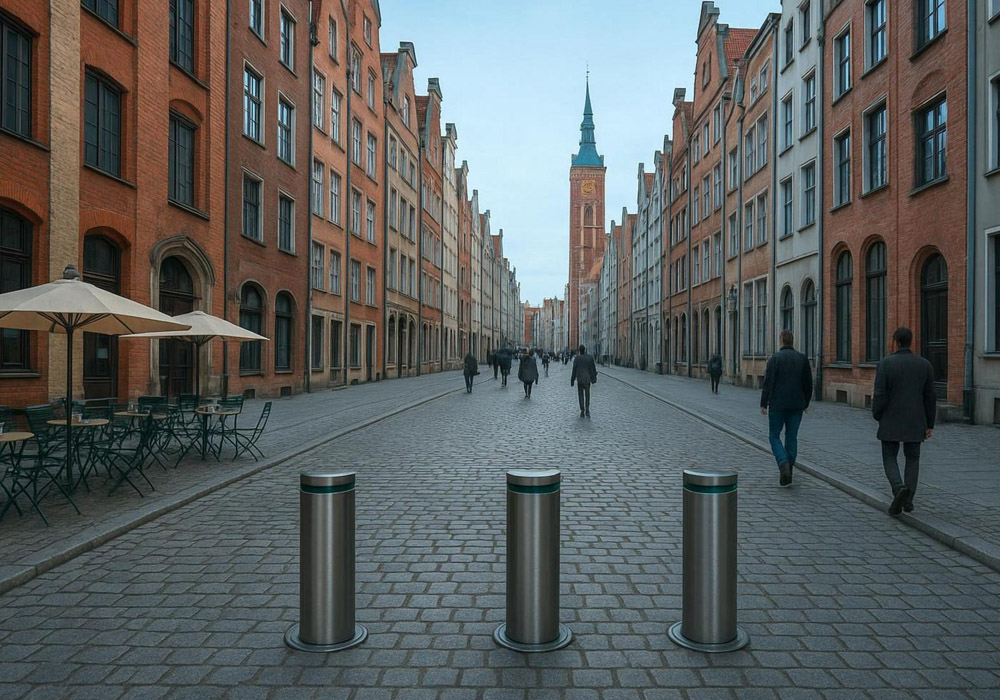
Driving through central Gdańsk is usually impractical and is often not allowed. The historic Main Town has a medieval street layout, with cobbled lanes built for carts, trading, and walking rather than modern vehicles. In recent years, the city has added automatic bollards, rising posts, and strict entry controls on many roads leading into the historic area.
These pedestrian areas protect old brick buildings and create a calm setting for visitors, outdoor cafés, and musicians. Parking within the protected area is limited to approved delivery vehicles and local residents with city permits. Visitors should explore the center on foot and leave the car in a nearby garage or outside the historic zone until it is time to visit places farther away.
Where Can You Drive from Gdansk for a Day Trip?
Sopot and Gdynia Along the Tri-City Coast
Gdańsk, the spa town of Sopot, and the modern port city of Gdynia form the metropolitan area called the Tri-City (Trójmiasto). A short drive north takes you to Sopot, known for its busy Bohaterów Monte Cassino promenade, large spa hotels, and Europe’s longest wooden pier. A car lets you avoid some crowded central roads and reach quieter residential beaches in northern Sopot or the wooded area around the Forest Opera.
Continuing north brings you to Gdynia, a planned maritime city built in the 1920s. Its modernist buildings, yacht harbors, and museum ships along South Pier look very different from Gdańsk’s old brick streets. A car also makes it easier to reach Babie Doły in northern Gdynia. There, the remains of a World War II torpedo platform extend into the Baltic just beyond the shore.
Westerplatte and Other World War II Sites
Westerplatte lies on a peninsula at the entrance to Gdańsk Harbor. It is known around the world as the place where World War II began. In the early morning of September 1, 1939, the German battleship Schleswig-Holstein fired on the small Polish military transit depot there. Polish soldiers held out for seven difficult days against a much stronger force. Today, the area is an open-air memorial park with damaged barracks, guard posts, and a monument to the defenders.
Tourist boats travel from central Gdańsk to Westerplatte during part of the year, but driving gives you more control over your schedule. It also makes it easy to visit other nearby wartime sites. In one afternoon, you can see Westerplatte, the historic Wisłoujście Fortress-a rare round sea fort just upstream-and the Museum of the Second World War near the old shipyards.
Stutthof Memorial and Museum
About 55 kilometers east of Gdańsk, near the village of Sztutowo, the Stutthof Memorial and Museum stands on the site of the first Nazi concentration camp created outside Germany. The camp operated from September 1939 until May 1945. The grounds include preserved wooden barracks, the former administration building, a gas chamber, and a memorial to the many thousands of people who died there.
Scheduled buses to Stutthof can take more than 90 minutes each way and may be crowded during holidays. Driving takes about 45 minutes across the flat farming land of the Żuławy delta. Private transport also gives visitors more quiet time after a serious and emotional visit, without the pressure of catching a bus home.
Malbork Castle and the Nogat River
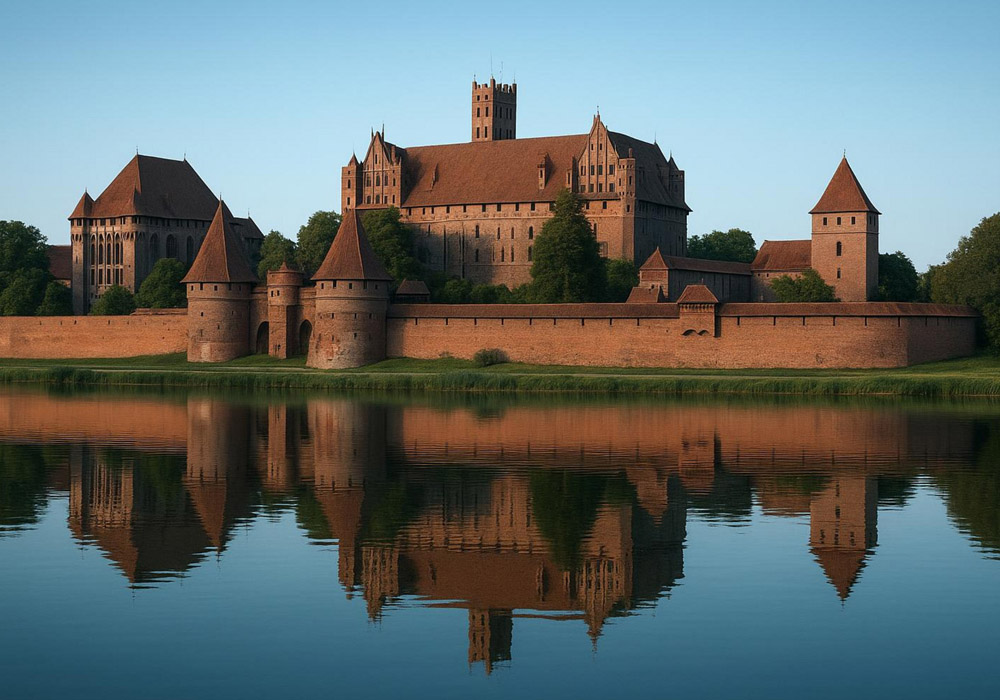
Driving south on the S7 and nearby regional roads takes you to Malbork Castle, often described as the world’s largest brick castle by surface area. The Teutonic Order built it in the 13th century beside the Nogat River. The UNESCO World Heritage site served as a base for crusading knights and later became a residence for Polish kings.
The castle grounds include the High, Middle, and Lower Castles, large dining halls, and defensive walls. A visit commonly takes three to four hours. Driving lets you arrive before tour buses and park across the Nogat River for wide views of the red-brick buildings, especially when the afternoon light reaches the walls.
Hel Peninsula, Beaches, and Baltic Seaside Towns
The Hel Peninsula is a narrow strip of sand that reaches far into the Baltic Sea. It passes traditional fishing villages such as Chałupy, Jastarnia, and Jurata before ending at the town of Hel. The area is known for broad windy beaches, shallow kitesurfing water in the Bay of Puck, and old coastal artillery sites hidden in the pine woods.
A seasonal passenger train serves the peninsula, but driving helps you reach small beaches and walking paths away from the main stations. Summer traffic on the peninsula’s single main road can be heavy. Leaving early lets you watch the sunrise over the open sea and explore the coastal woods before the road becomes crowded.
Kashubia’s Lakes, Forests, and Rural Villages
Kashubia (Kaszuby) lies west and southwest of Gdańsk. The region has rolling hills formed by glaciers, clear lakes, and a strong West Slavic cultural identity. The Kashubian language remains in use and often appears on bilingual road signs. Local food, embroidery, and pottery traditions can be seen in towns such as Kartuzy, Chmielno, and Kościerzyna.
Public transport is limited across much of Kashubia, so a car is often needed for a rural trip. Short drives take you to the open-air ethnographic park at Wdzydze Kiszewskie, viewpoints on Wieżyca hill, and quiet lakeside restaurants. These small venues may serve fresh vendace or pike-perch with traditional potato dishes.
Should You Rent a Car in Gdansk?
When Car Access Provides the Greatest Benefit
A rental car is a good choice if your plans extend beyond the city into the varied countryside of Pomerania. Families with children, people carrying sports equipment, and visitors interested in less visited places can avoid many travel problems with a private vehicle. You can carry walking shoes, beach items, and picnic food, then stop when a side road or viewpoint catches your attention.
A car is also useful for small holiday areas along the Vistula Spit and Baltic coast, including Mikoszewo, Jantar, and Dębki. Public transport links to these places are limited, so picking up a car from Carfree.pl for the coastal part of your trip is often the simplest way to reach them. If you want to visit several rural sites in one day, such as a Teutonic castle in the morning and a Kashubian river for kayaking later, a private vehicle is usually the easiest option.
When Trains, Buses, or Walking Are More Practical
If your plans stay within the main Tri-City route of Gdańsk, Sopot, and Gdynia, renting a car may cause more problems than it solves. The Fast Urban Railway (SKM) runs frequent trains every 10 to 15 minutes. It links the city centers quickly and avoids rush-hour traffic and the search for parking.
A car is also unnecessary if you plan to spend your visit walking among museums, historic cellars, and craft breweries in the Main Town. The central areas are easy to explore on foot. For occasional trips to places such as Oliwa Park or Westerplatte, trams, city buses, and app-based rides are simple and affordable choices.
Choosing a Compact Rental Car for City and Regional Roads
For trips across northern Poland, a smaller rental car is usually the best choice. A compact hatchback or small crossover gives passengers enough comfort on regional highways while staying easy to handle on narrow old streets, country roads, and busy beach parking areas.
A small car also makes street parking easier. You may need to fit into a narrow parallel space or park with two wheels on a curb. Compact engines also use less fuel on Poland’s fast roads, helping keep the cost of a full-day regional trip under control.
What Travelers Should Know Before Driving in Poland
Driver’s License, International Driving Permit, and Rental Requirements
To drive legally in Poland, you need a valid driver’s license from your home country. Visitors from countries outside the European Union, including the United States, Canada, and Australia, officially need an International Driving Permit (IDP) as well as their regular license when collecting a rental car. In the United States, authorized automobile clubs such as AAA issue IDPs, so arrange this document before leaving home.
Most rental cars in Poland and mainland Europe have manual gearboxes. If you prefer an automatic, choose and reserve one well ahead of your trip. Automatic cars are less common, cost more to rent, and may sell out quickly during the busy summer season.
Polish Road Signs, Speed Limits, and Traffic Rules
Poland has clear traffic rules, and police patrols and speed cameras monitor them closely. The usual speed limits fall into five groups: 50 km/h in built-up areas, 90 km/h on single-carriageway roads outside cities, 100 km/h on dual-lane express routes with at least two lanes in each direction, 120 km/h on divided dual carriageways, and 140 km/h on national motorways (autostrady).
Poland does not use a sticker motorway vignette like some Central European countries. Some private motorway sections still charge fees through electronic systems or toll booths. Foreign visitors should remember that speeding fines may be collected immediately in cash or by card terminal. If a traffic light and a stop sign appear at the same junction, the traffic light has priority.
Road Conditions, Local Driving Habits, and Drawbridges
Roads in Pomerania have improved greatly, with newer expressways and well-built bypasses. Rural roads in Kashubia and along the coast can still be narrow and may have a single lane in each direction. Older trees often grow close to the road. Watch for wildlife signs in the northeastern parts of the region, where moose and roe deer may enter the road near dawn and dusk.
Central Gdańsk also has pedestrian drawbridges over the Motława River. They open for boats at set times, often for 30 minutes each hour. Check the schedule boards so you can avoid an unexpected wait. Also watch closely at pedestrian crossings. Polish rules require drivers to give way to people waiting to enter the crossing.
Fuel Stations, Payment Methods, and Petrol Terminology
Filling up in Poland is simple, but fuel names and colors may differ from those in your home country. Green pump handles indicate unleaded petrol, marked Pb95 or Pb98. Black handles indicate diesel, marked ON, short for olej napędowy. Check the fuel type required by your rental car before refueling.
At most Polish stations, you pump the fuel first and then pay inside the shop. Tell the cashier your pump number. Prices appear in Polish złoty (PLN) per liter. Most stations accept international contactless cards. Service areas on major roads often have clean toilets, hot coffee, and snacks.
How to Park When Exploring Gdansk by Car
Where To Leave a Car Outside the Historic Center
Since general traffic cannot enter much of Gdańsk’s historic center, parking needs to be part of your trip plan. Several guarded lots and underground garages sit around the Main Town. Useful options include parking near the European Solidarity Centre, lots beside the Hevelianum science center on Gradowa Hill, and the underground garage next to the Forum Gdańsk shopping center.
From these places, the Long Market and Neptune’s Fountain are usually a five- to ten-minute walk away. Parking outside the crowded pedestrian area means less stress behind the wheel, while the car remains ready for trips to the Baltic coast or southern Pomerania.
Paid Parking Zones, Parking Meters, and Mobile Payments
Gdańsk uses paid municipal parking zones called Strefa Płatnego Parkowania. The city divides these zones into sections with different hourly rates. Payment usually applies during weekday daytime hours, though some central tourist zones charge on weekends and during summer holidays. Public street parking is free on official Polish national holidays.
Parking meters accept Polish coins and contactless cards. You normally enter your license plate number and place the printed ticket on the dashboard. You can also use local parking apps such as AnyPark or moBiLET. In some residential areas, cars may be parked partly or fully on the sidewalk. This is allowed only when at least 1.5 meters remains for people walking and no sign bans it.
Parking Near Beaches, Museums, Castles, and Memorial Sites
Most day-trip attractions have their own parking areas, but the number of spaces can change with the season. Malbork Castle and the Stutthof Memorial both have large paid lots with staff at the entrance. Arriving early on a summer morning makes it easier to enter and find a place near the ticket offices, sometimes with shade.
Parking near the beaches of Jelitkowo, Brzeźno, and Sobieszewo Island needs extra planning on sunny summer weekends. You may find seasonal roadside spaces with meters or private clearings where landowners charge a flat daily fee. Carry some Polish złoty and coins in the car. Card machines at rural lots and forest trailheads may fail when the mobile signal is weak.
How to Build a Gdansk Itinerary With Car Access
A Two-Day Plan for Central Gdansk and Nearby Attractions
A good two-day plan combines walking in the historic center with a flexible driving day. Spend the first full day without the car. Walk through the Golden Gate, see the Main Town Hall and Neptune Fountain on Długi Targ, browse the amber shops on cobbled Mariacka Street, and visit the underground displays at the Museum of the Second World War. End the day with dinner beside the Motława River.
On day two, collect the rental car early and drive north to Oliwa. Walk through Oliwa Park and see the 7,876-pipe rococo organ inside Gdańsk-Oliwa Cathedral. Then drive east across the Martwa Wisła to the beaches and nature reserves of Sobieszewo Island. Walk along the Mewia Łacha sandbanks, where Baltic seals sometimes rest, before returning to the city.
A Longer Route Through Malbork, Kashubia, and the Baltic Coast
A four- to six-day trip gives you time to see several parts of Pomerania. On day three, drive south along the S7 through the fertile Żuławy Wiślane delta. Visit the brick defenses of Malbork Castle, then travel back through the quiet coastal village of Sztutowo and the Stutthof memorial. A car also lets you take smaller roads along the levees, where old Mennonite arcaded houses stand among open fields.
Spend the next days heading west to the glacial hills of Kashubian Switzerland (Szwajcaria Kaszubska). Follow winding roads beside the lakes between Kartuzy and Chmielno, stop at family-run smokehouses, and visit the open-air heritage museum at Wdzydze Kiszewskie. End the trip by going north to the open sea near Dębki or the dunes of Słowiński National Park. Newer sections of the S6 make it easier to travel between quiet coastal woods and the cultural sites of northern Poland.