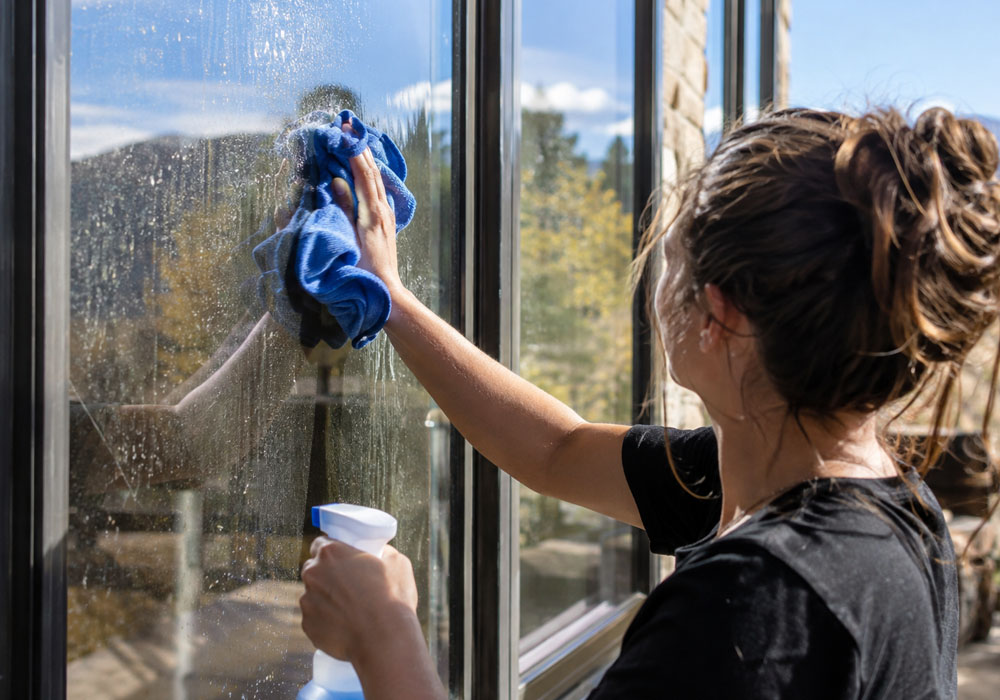
Sunny days, quickly drying air, and lawn sprinklers make clear glass a challenge across Denver’s south metro area. When droplets rich in calcium and magnesium evaporate on windowpanes, they leave chalky rings and hazy blotches that can eventually lead to permanent etching. Homeowners and property managers in Denver South, Englewood, Littleton, Centennial, Greenwood Village, Highlands Ranch, Cherry Hills Village, and Lone Tree often notice this problem on sliding doors, basement window wells, and upper-story windows near roof runoff. This guide explains how to recognize mineral deposits, take quick action after sprinkler overspray, and plan cleanings that help prevent stains from becoming permanent.
Why Mineral Stains Form So Fast in Denver’s South Metro
Mineral-rich tap and irrigation water, combined with strong sunlight at higher elevations, creates ideal conditions for spotting. When sprinkler overspray or hose water dries on warm glass, dissolved minerals crystallize along drip lines and around pane edges, especially near weep holes and window sills. Wind can carry mist onto skylights and clerestory windows, while stucco or concrete dust adds fine abrasive particles that help hard water deposits cling to the surface. During winter, deicing residue from nearby roads can also introduce salts that combine with mineral deposits and leave streaks on glass and frames.
Regional professionals such as Glide Window Cleaning may address these conditions by using purified water from deionization or reverse osmosis systems and brush heads that loosen debris without grinding abrasive particles into the glass. A spot-free rinse helps prevent new mineral rings from forming as droplets dry. The final rinse quality matters most on sun-exposed panes in places such as Greenwood Village courtyards or south-facing elevations in Highlands Ranch, where water can evaporate quickly.
Spot Check: Minerals, Soap Film, Paint Specks, or Frame Oxidation
Before reaching for a cleaner, identify what you are seeing. Mineral deposits often feel rough to the touch and tend to collect along drip paths, sprinkler arcs, and the lower portion of the glass above the sill. Soap film from previous cleaning may feel slick, show a rainbow-like sheen, and wipe away with a microfiber cloth and a small amount of mild dish soap. Paint specks from trim work usually appear as isolated dots that vinegar won’t remove. Oxidation from aging aluminum frames can leave gray or black streaks that transfer onto a white cloth and may return unless you clean the frame itself properly.
Test any cleaning method in a discreet area first. A cotton swab moistened with white vinegar may help dissolve fresh calcium deposits but will generally have little effect on dried latex paint. Avoid using metal razor blades on tempered glass because some tempered panes may contain microscopic fabricating debris that can increase the risk of scratching. If you test another removal method, use only products and materials confirmed as safe for the specific glass surface. Take extra care around Low E coatings, window films, decorative treatments, and manufacturer-applied finishes. Check muntins, screens, tracks, and nearby frames for the same residue pattern, because similar deposits across several surfaces can help confirm minerals as the source.
After Overspray: Immediate Steps Before the Sun Bakes Spots
Start by stopping the water source. Adjust sprinkler heads so their spray doesn’t reach nearby windows, use a lower-flow nozzle if needed, or reposition the sprinkler to direct water away from the building. If you catch overspray early, gently wipe or blot the glass with a clean microfiber cloth dampened with distilled water. This can help dissolve and remove minerals before they crystallize on the surface. Keep weep holes clear so water can drain properly and mineral deposits do not accumulate around seals or gaskets. If screens get wet, let them dry properly rather than leaving moisture trapped against the window.
Avoid paper towels that can leave lint behind, and use caution with strong acidic cleaners because they may damage certain frames, finishes, masonry, or natural stone surfaces near the window. Consider a common example in Highlands Ranch. A backyard sprinkler reaches a basement sliding door every morning, and by afternoon, faint white marks appear on the glass. Adjust the sprinkler so it no longer hits the window, and wipe away fresh overspray with distilled water to reduce repeated mineral buildup. Fixing the source and cleaning fresh deposits promptly can prevent a minor spotting problem from becoming a more difficult restoration project.
When Removal Requires Professional Restoration
Once mineral deposits have damaged the glass surface, ordinary cleaning products may not restore the original clarity. At that point, professional restoration methods may be necessary. Products designed to dissolve calcium and magnesium deposits can remove surface scale, but you must select them carefully to avoid damaging oxidized frames, window films, coatings, masonry, or sealed stone. For more severe surface damage, controlled glass polishing may improve clarity, although the results depend on the depth of the damage, the type of glass, and any coatings applied to the pane.
For upper-story windows, professionals may use water-fed poles with purified water and appropriate brushes to loosen dirt and mineral residue before completing a spot-free rinse. Cleaning methods involve important trade-offs. Acidic chemistry can work quickly on certain mineral deposits, but improper use may damage anodized aluminum, concrete, stone, or surrounding finishes. Mechanical polishing can require more time and labor but may be appropriate for certain etched surfaces when performed correctly. Technicians may also measure total dissolved solids with a handheld TDS meter to verify the purity of water used for the final rinse. If your windows have Low E coatings, decorative films, or labels indicating tempered glass, mention these features before restoration begins so the cleaning method matches the surface.
Plan a Clean Window Calendar for Denver South Neighborhoods
Seasonal timing can help reduce repeated buildup. In Englewood and Littleton, spring pollen and cottonwood debris can cling to damp glass, so an exterior cleaning after the heaviest seasonal drop may reduce lingering residue. Summer thunderstorms can carry dust and mineral-rich moisture onto exposed windows, so a midsummer rinse helps panes that get strong sunlight. In Centennial and Greenwood Village, fall landscaping projects can send soil, fertilizer, and debris onto lower windows, so it helps to clean screens and glass after outdoor work is complete.
Winter conditions in Cherry Hills Village and Lone Tree may bring deicing residue from busy roads onto street-facing windows and garage glass. Cleaning these areas after severe winter weather can help prevent residue from staying on the surface for extended periods. The ideal cleaning schedule depends on irrigation patterns, landscaping, exposure, traffic, weather, and each window’s position. Some properties may benefit from more frequent exterior cleaning while requiring interior cleaning less often. Areas regularly exposed to sprinkler water should receive extra attention because repeated mineral deposits can become progressively harder to remove.
Hard water stains are easier to manage when you act early, identify the residue correctly, and choose a cleaning method that matches the surface. Adjusting irrigation heads, removing fresh overspray with distilled water, and rinsing sun-exposed glass with purified water can help prevent new mineral rings. For windows already affected by mineral buildup, carefully selected restoration methods may improve clarity while reducing the risk of damage to frames, coatings, films, and nearby surfaces. Across Denver’s south metro neighborhoods, a thoughtful seasonal cleaning plan can help keep windows clearer through spring pollen, summer heat, landscaping activity, and winter road residue.