A bathtub update can make a bathroom easier to clean, safer to use, and better suited to the people who rely on it every day. Whether the goal is to address damage, improve comfort, or prepare for changing mobility needs, thoughtful planning helps prevent expensive surprises after work begins. Homeowners considering bathtub replacements should look beyond the fixture itself. The best choice depends on the condition of the surrounding walls and floor, the room’s layout, the household’s bathing habits, and the amount of maintenance the finished space will require.
Why Bathtub Replacement May Make Sense
An aging tub can become a daily frustration when stains linger, surfaces feel rough, caulk fails repeatedly, or the tub is difficult to step into. Cosmetic wear is not always urgent, but cracks, movement, leaks, and moisture damage can allow water to reach concealed framing or flooring. Replacing a problem tub can be a focused update that improves the wet area without requiring a complete bathroom renovation. The right plan begins with function. Consider who uses the bathroom, whether the tub also serves as a shower, how much storage and walking room the space needs, and whether future accessibility is a priority.
Signs It May Be Time for a New Tub
Some problems are visible, while others become clear only after an inspection. Common reasons to investigate replacement include:
- Cracks, soft spots, flexing, or movement underfoot.
- Visible leaks, water stains on nearby ceilings, or recurring moisture around the base.
- Stains that remain after routine cleaning and detract from the room.
- Loose surround panels, deteriorated grout, damaged caulk, or mildew that returns quickly.
- A high tub wall that makes entry and exit uncomfortable or unsteady.
- A layout that no longer works for children, older adults, guests, or people with limited mobility.
Repair or Replace: How to Decide
Small chips, minor discoloration, and isolated surface scratches may be candidates for repair or refinishing. A liner may also change the appearance of certain tubs. However, these approaches do not correct a loose tub, a hidden leak, a deteriorated subfloor, or a plumbing issue. When water reaches areas behind or beneath the fixture, removal may be the clearest way to assess the condition of the structure.
Addressing underlying piping issues before installing new fixtures helps prevent future leaks and costly repairs. Working with qualified specialists such as Champion Plumbing ensures that drain connections and supply lines are properly aligned and updated during the renovation process, creating a reliable foundation for your new setup.
- Identify the visible problem and when it first appeared.
- Check surrounding walls, ceilings, and flooring for signs of moisture.
- Ask how long a proposed repair is expected to address the issue.
- Compare the long-term cost of repeated repairs with replacement and related waterproofing work.
Safety and Access Features to Consider
Safety features can blend naturally into a well-designed bathroom. Low-entry options, textured slip-resistant surfaces, handheld shower controls, seating, bright low-glare lighting, and clear floor space can all make bathing more manageable. Grab bars should be properly anchored to suitable wall blocking or framing, rather than treated like ordinary towel bars. For households planning a more accessible bathing area, the U.S. Access Board’s bathing-room guidance can help explain clearances, support bars, and related design considerations. Private homes may have different needs and local requirements, but reviewing accessibility principles early can support smarter long-term choices.
Choosing a Tub Style for the Room
Appearance matters, but size and installation conditions should lead the decision. Common choices include:
- Alcove tubs: Often practical for standard three-wall bathing spaces.
- Deep-soaking tubs: A choice for homeowners who prioritize a more immersive bath.
- Corner tubs: Potentially useful in rooms with an unusual footprint.
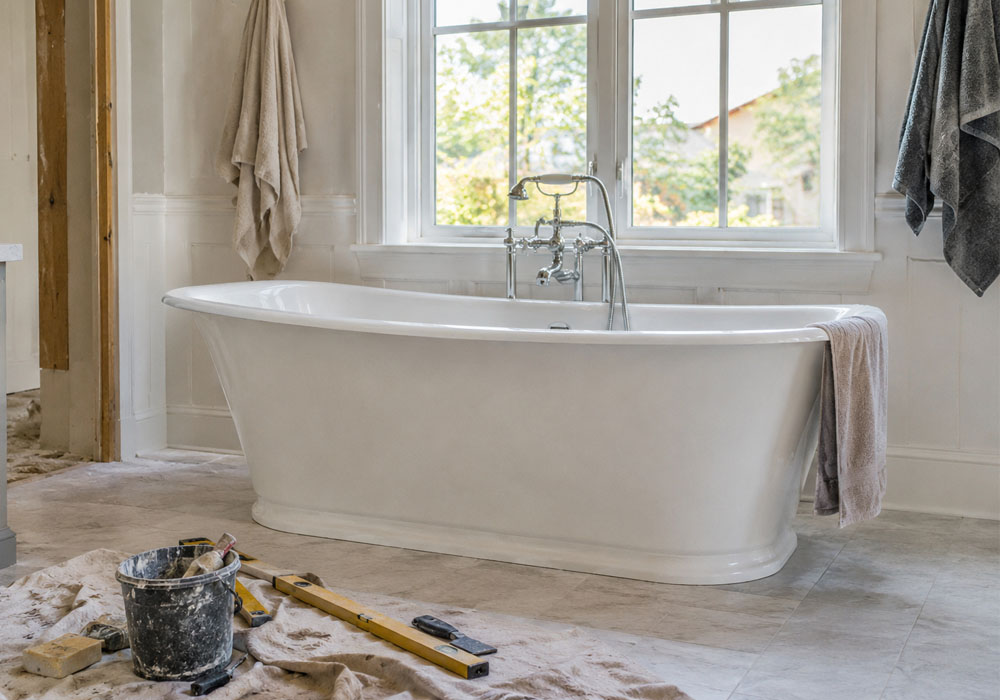
- Freestanding tubs: Best suited to rooms with adequate clearance around the fixture.
- Walk-in tubs: Designed to reduce the step over a tub wall and add bathing support features.
Measure the tub opening, doorway, hall turns, plumbing locations, and nearby walking space before ordering. A tub that fits on paper may still be difficult to bring into the room or install without altering walls.
Hidden Project Costs to Watch For
The price of the tub is only one part of a project budget. Removal and disposal, drain or valve changes, wall repair, subfloor repair, waterproofing, surround materials, tile work, lighting, permits, and inspections can affect the final scope. Current bathtub installation cost guidance is useful for broad planning, but local labor rates, material selections, and concealed damage can change a specific estimate. Set aside a repair allowance for conditions discovered after the old tub is removed. A written scope should explain what is included, what is excluded, and how unexpected work will be approved.
What Installation Usually Involves
- Room review: Confirm dimensions, access, plumbing, ventilation, and floor condition.
- Selection: Finalize the tub, wall finish, fixtures, safety features, and accessories.
- Removal: Take out the existing fixture and inspect exposed areas.
- Preparation: Repair framing, plumbing, walls, or flooring as needed.
- Waterproofing and installation: Protect the wet area, set the tub, connect plumbing, and finish the walls.
- Testing and cleanup: Check drainage, seals, controls, and water flow before reviewing care instructions.
Materials, Cleaning, and Long-Term Care
Acrylic, fiberglass, porcelain-coated steel, and cast iron are among the materials homeowners may encounter. Each has a different weight, feel, durability, and cleaning considerations. Follow the manufacturer’s care instructions and generally use mild, non-abrasive products unless the surface specifically allows stronger ones. Abrasive pads can dull or scratch some finishes. Inspect caulk lines, seals, drains, and fixture connections regularly. Hard water can leave mineral deposits on tubs and faucets, while small leaks can become larger moisture problems if ignored. Prompt cleaning and maintenance protect both the visible finish and the areas behind it.
Questions to Ask Before Work Begins
- Will the chosen tub fit the room and the route into it?
- What happens if hidden damage is found after removal?
- Which plumbing changes, wall finishes, and waterproofing steps are included?
- Who handles disposal, permits, and inspections when they are required?
- How long will the bathroom be unavailable?
- What artistry and product coverage apply after installation?
A Simple Planning Checklist
- Define the main reason for the update.
- Measure the tub area, access route, doorway, and walking space.
- List features that improve comfort, safety, and cleaning.
- Create a realistic budget that includes a repair allowance.
- Compare at least two written project scopes.
- Confirm materials, schedule, cleanup expectations, and warranty terms.
- Choose a function first, then select the style and finish that fit the room.
A successful bathtub replacement is more than a fixture swap. By balancing comfort, safety, water protection, maintenance, and total project scope, homeowners can create a bathroom that works reliably now and remains useful in the years ahead.
Conclusion
A successful bathtub replacement is about more than choosing a new fixture. Homeowners should first evaluate the tub’s condition, the surrounding walls and flooring, the plumbing, the layout, and daily bathing needs. Considering access, safety features, materials, maintenance, and future mobility needs can help create a more practical bathing area. It is also important to prepare a complete budget that accounts for removal, installation, waterproofing, repairs, permits, and possible hidden damage. Before work begins, compare written project scopes and confirm the materials, timeline, warranty terms, and responsibilities for unexpected issues. With careful planning, a bathtub update can improve comfort, safety, and everyday usability while keeping long-term maintenance in mind.