A standby generator is most useful when the weather is at its worst, so its location on your property matters as much as the brand you buy. In Baton Rouge, heavy rain, high humidity, and storm-season outages put unique pressure on siting choices. Good placement protects against flooding, keeps exhaust away from openings, shortens fuel and electrical runs, and leaves room for service. Before you order a transfer switch or pour a concrete pad, take time to map how fuel, power, airflow, and sound will move around your home once the generator is running.
Assessing Flood Risk and Elevation for Outdoor Units
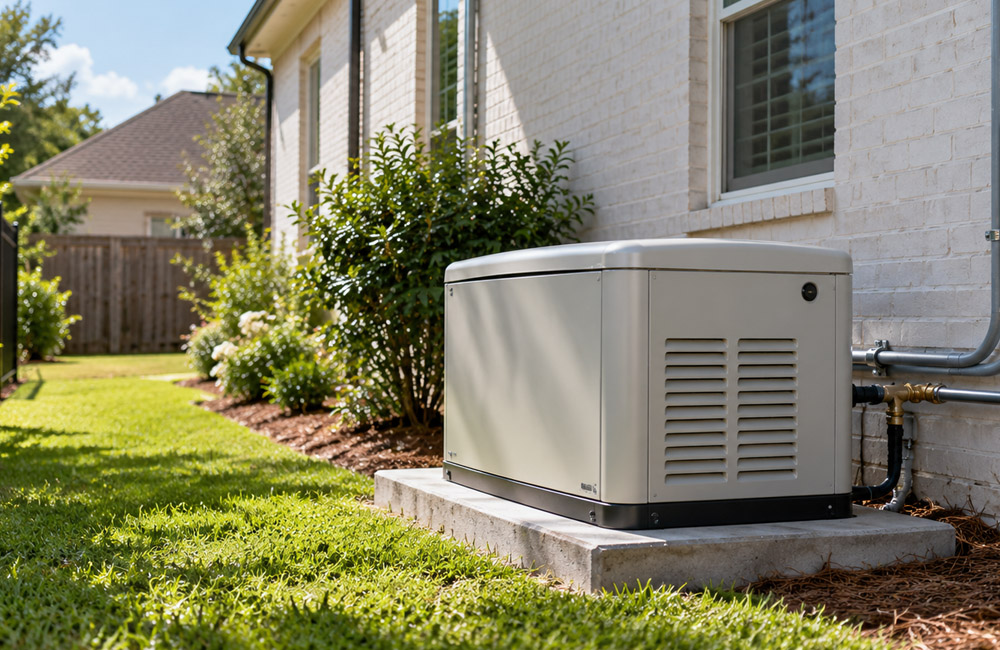
Start by identifying where water collects. Low backyards, swales along fence lines, and downspout splash zones can all leave a generator sitting in inches of water after a storm. A unit placed below grade will corrode faster, breathe humid air, and struggle if the air intake sits near standing water. In flood-prone spots, raising the enclosure on a poured concrete pad or a composite platform can keep the alternator, control panel, and battery above splash and minor flood levels. For local site surveys and permitting questions in East Baton Rouge Parish, installers familiar with regional rules, such as Baton Rouge Gengatorz Power Systems, routinely evaluate pad elevation and drainage alongside utility routing.
Consider how soil and wind will affect the base. Expansive clay can heave a small slab unless it is well compacted and reinforced. In open yards, wind can drive rain back toward the enclosure, so avoid placing the unit directly under a roof valley or within the splash of a gutter outlet. A realistic scenario: a corner lot that ponds near the rear fence often benefits from shifting the generator to a side yard on a slightly raised pad, even if it adds a few feet of conduit, because the higher ground reduces flood exposure and long-term corrosion.
Clearances From Openings, Walls, and Property Lines
Combustion engines produce carbon monoxide, so placement relative to windows, exterior doors, dryer vents, and soffit intakes is critical. Manufacturers specify minimum clearances around louvers and exhaust outlets to ensure safe dilution and cooling. Avoid alcoves, under-deck spaces, and tight courtyards where exhaust can recirculate, and keep in mind that solid walls reflect both heat and sound. Property-line setbacks and HOA screening rules can further limit where you can pour a pad. A common mistake is tucking a generator under an overhang to hide it from view; that often fails inspection and traps exhaust. The safer correction is an open-air location with an approved screen that preserves airflow.
Think beyond doors and windows. Keep separation from air conditioners, pool pumps, and gas-fired appliances to maintain service access and reduce the chance of hot exhaust washing over other equipment. Leave a clear path through a gate wide enough for delivery and future replacement. If you want fence screening, choose permeable designs and keep shrubs pruned back from the enclosure so leaves or mulch can’t block the air intake and trigger overheating alarms during long runtimes.
Fuel Path and Electrical Run: Shorter Is Usually Better
Every foot of fuel line introduces friction loss, and every elbow adds resistance. High-demand natural-gas generators draw significant BTUs, so gas meter capacity, regulator sizing, and pipe diameter all matter. Placing the unit close to the gas meter or a buried propane tank reduces pressure drop and simplifies trenching. That said, there is a trade-off: a location near the meter might sit beneath a bedroom window or against a hard wall that amplifies noise. When a slightly longer run is unavoidable, a licensed installer can upsize pipe and regulators to maintain pressure. Plan trench routes to avoid tree roots and existing utilities, and sleeve lines where they cross driveways or walkways.
Electrical routing follows similar physics. The farther the generator is from the transfer switch and main breaker panel, the more conductor you need and the greater the potential for voltage drop. Longer conduit runs can force larger wire gauges, additional bends, and higher costs. Whenever practical, position the generator on the same side of the house as the service entrance so the automatic transfer switch, service-rated disconnect, and conduit can be installed with a short, direct path. Leave room beside the panel for load-management modules if your calculated load exceeds generator capacity, and plan grounding electrode connections where they will stay accessible for inspection and testing.
Noise, Airflow, and Neighbor Considerations
Even quiet residential units produce steady sound that can reflect off masonry and corner walls. Orient the exhaust away from bedrooms and neighboring patios, and avoid L-shaped corners that trap heat and noise. Soft landscaping can help, but it must not crowd the enclosure. For example, in a narrow side yard, rotate the unit so its louvers face the driveway and add a hedge several feet away to reduce perceived noise while preserving airflow. Never build a tight wooden box around a generator; restrictive baffles can overheat the engine, void warranties, and force shutdowns during extended outages.
Airflow is as important as acoustics. The enclosure pulls cool air across the alternator and expels hot exhaust through specific vents. Blocking those pathways with lattice, tarps, or dense shrubs can trip high-temperature faults. Maintain clear space on all sides per the installation manual, keep mulch low enough that it does not creep into the louvers, and avoid locations where wind routinely drives debris against the intake screen. Good airflow keeps oil temperatures in range and reduces stress on electronic controls during multi-day runs.
Service Access, Pads, and Long-Term Maintenance
Every generator needs regular care: oil and filter changes, spark plug inspections, valve checks on some models, and battery replacements. Technicians also need to reach the control panel to run diagnostics and clear fault codes. Leave working room on the service side so the lid can open fully and panels can be removed without fighting a fence or hedge. A well-built pad matters here too. Poured concrete or engineer-rated polymer bases resist settling and provide solid anchoring for hurricane clips. At the same time, a gravel apron around the pad improves drainage and keeps mud off service paths. Position sprinklers to avoid spraying the enclosure, which accelerates corrosion.
Thoughtful placement pays off during storms and routine exercise cycles. A generator sited above pooled water, away from openings, and close to fuel and electrical paths will start cleaner, run cooler, and cost less to connect. Walk your lot after a heavy rain, sketch the route from the gas meter or propane tank to the transfer switch, and note windows, vents, and neighbor bedrooms along the way. In Baton Rouge’s climate and lot layouts, confirming elevation, clearances, and routing before ordering equipment helps you avoid change orders and inspection delays. With a plan grounded in safety, airflow, and service access, your standby system becomes a reliable part of the home’s resilience.