Key Takeaways
- Choose blinds according to each room’s daily use, privacy needs, light exposure, and cleaning demands.
- Kansas City, KS homes benefit from flexible window coverage that can handle bright sun, seasonal temperature changes, and changing daylight throughout the year.
- Bedrooms, kitchens, bathrooms, living rooms, and home offices often need different blind materials and control options.
- Cordless designs are the safer choice where children or pets live or visit.
- Accurate measuring matters as much as style, especially for windows near doors, trim, cranks, or furniture.
Choosing window blinds is about more than matching a paint color or finding the lowest price. For homeowners comparing window blinds Kansas City KS, the better approach is to start with how each room is used, when sunlight becomes uncomfortable, and how much privacy the window needs.
Kansas City weather can shift considerably across the seasons, so window coverings should help make everyday spaces easier to use. The right choice can soften afternoon glare, provide privacy after dark, protect a screen from direct light, and create a more comfortable feeling near the window without making the room feel closed off.
Why Window Blinds Should Be Chosen Room by Room
Using the same blind in every room may create a consistent appearance, but it does not always solve practical problems. A bedroom may need stronger room darkening, while a living room may benefit from adjustable daylight. A bathroom needs materials that are manageable around humidity, and a home office may need glare control without blocking the outside view.
Before selecting a style, identify the room’s primary problem. Ask when the sun is strongest, whether people can see into the room from nearby homes or sidewalks, and how often the blind will be adjusted. Also consider what sits near the window. A blind above a kitchen sink, behind a desk, beside a bed, or near a television should be chosen with daily operation in mind.
Match the Blind Style to the Room
Bedrooms
Bedrooms generally benefit from privacy and dependable light control. Room-darkening or blackout shades can be useful for people who sleep during daylight hours, prefer a darker room, or have exterior lighting nearby. Cellular shades can also be a practical option when a softer fabric appearance and a closer fit are desired. Cordless or motorized controls can make a tall or furniture-blocked bedroom window easier to operate.
Living Rooms
Living rooms often need a balance between natural light and glare management. Adjustable horizontal slats allow occupants to redirect light rather than fully cover the glass. For larger front windows, consider how the blind will look when raised, how it works around furniture, and whether it provides sufficient privacy after interior lights are turned on at night.
Kitchens and Bathrooms
In kitchens and bathrooms, easy cleaning should be a priority. Faux wood, aluminum, and other wipeable materials are often easier to maintain than fabric products exposed to steam, grease, splashes, or frequent humidity. Ventilation still matters, and every product should be cleaned according to its manufacturer’s care instructions.
Home Offices
Office windows need special attention because direct sun can create glare on monitors and video calls. Adjustable blinds make it possible to reduce bright light while retaining some daylight and an outdoor view. If the office faces a neighboring property, choose a design that can provide daytime privacy without requiring the window to stay completely covered.
Compare Common Blind Materials
- Wood: Adds natural warmth and texture in dry interior spaces where a traditional look is important.
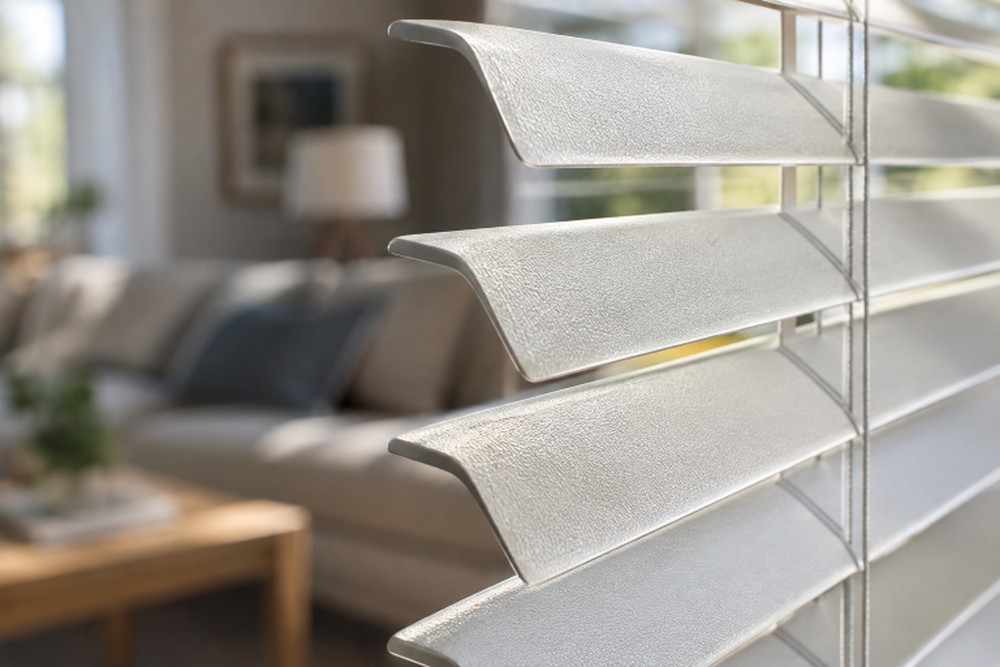
- Faux wood: Provides a wood-like appearance and is often a practical choice for rooms that need frequent wiping.
- Aluminum: Has a slim profile, adjustable slats, and simple cleaning needs.
- Fabric-based shades: Can provide filtered daylight, room darkening, or a softer visual finish depending on the fabric and construction.
- Vertical blinds: Work well for wide windows and sliding glass doors because they open from side to side.
Think About Light Direction and Window Placement
Observe each window before ordering. East-facing windows often receive stronger morning sun, while west-facing windows can create bright late-day glare. South-facing windows may need frequent adjustment as the sun moves, and north-facing rooms may benefit from preserving available daylight. A window’s direction, nearby trees, roof overhangs, and neighboring buildings can all change the amount of light that reaches the room.
Privacy Without Making a Room Feel Dark
Privacy and daylight do not have to be opposites. Adjustable slats let you angle the view upward or downward, while light-filtering shades can soften visibility through the window. Top-down designs can be especially helpful when the lower portion of a window faces a street or neighbor, but daylight is still wanted near the top. Always assess nighttime privacy with indoor lights on, because a window that feels private during the day may look different after dark.
Safety Features to Check Before Buying
For households with children or visiting grandchildren, cordless products should be a leading consideration. The Consumer Product Safety Commission advises consumers to choose cordless window coverings because accessible cords can create a strangulation hazard. Keep beds, cribs, sofas, toys, and climbable furniture away from window cords. For existing continuous-loop systems, ensure the required tension device is securely installed.
Can Window Blinds Improve Home Comfort?
Blinds and shades can make bright rooms more usable by reducing direct glare on televisions, floors, and work surfaces. They may also help limit unwanted solar heat when closed during sunny periods. The Department of Energy recommends window coverings to block direct summer sunlight and retain warmth in winter, but results vary with the window, product fit, material, and how consistently the covering is used. Cellular shades are often worth considering when insulation near the glass is a priority.
Measure Before Choosing a Mounting Style
- Measure width at the top, middle, and bottom of the opening.
- Measure height in more than one location.
- Check frame depth before planning an inside mount.
- Note trim, handles, locks, cranks, and nearby furniture.
- Choose an inside mount for a recessed appearance or an outside mount for broader coverage.
- Confirm that doors, windows, and walkways can still operate freely.
When Professional Measuring or Installation Makes Sense
Professional help can be valuable for oversized windows, arched openings, sliding doors, and rooms where several blinds need to align visually. A small measurement error can leave noticeable light gaps, prevent a blind from operating smoothly, or interfere with hardware. Proper bracket placement and level installation also affect how well the finished blind performs.
Common Mistakes to Avoid
- Buying one blind style for every room without considering different needs.
- Ignoring nighttime privacy.
- Selecting a difficult-to-clean material near moisture or cooking residue.
- Measuring only once.
- Forgetting about cranks, handles, doors, and furniture clearance.
- Prioritizing appearance while overlooking safety and everyday operation.
Frequently Asked Questions
What type of blind is best for a bedroom?
Room-darkening, blackout, and cellular options can all work well, depending on how much light control and insulation are needed. Cordless controls are a sensible choice for easier, safer operation.
Are faux wood blinds good for bathrooms?
They can be a practical option because they are generally easy to wipe clean. Review the product’s care guidance and ensure the bathroom has adequate ventilation.
Should blinds be inside-mounted or outside-mounted?
Inside mounts create a clean, recessed look when the frame is deep and square enough. Outside mounts can cover more glass and may help address shallow frames or light gaps.
Are motorized blinds worth considering?
They can be useful for hard-to-reach windows, accessibility needs, and routines that call for regular adjustment. Check power requirements and available control options before buying.
Conclusion
The best window blinds for a Kansas City, KS home fit the room, the window, and the routines of the people who use the space. Start with light, privacy, safety, cleaning, and operation. Then choose a material and style that complements the home. That practical order of decisions leads to window coverings that look finished and work well every day.