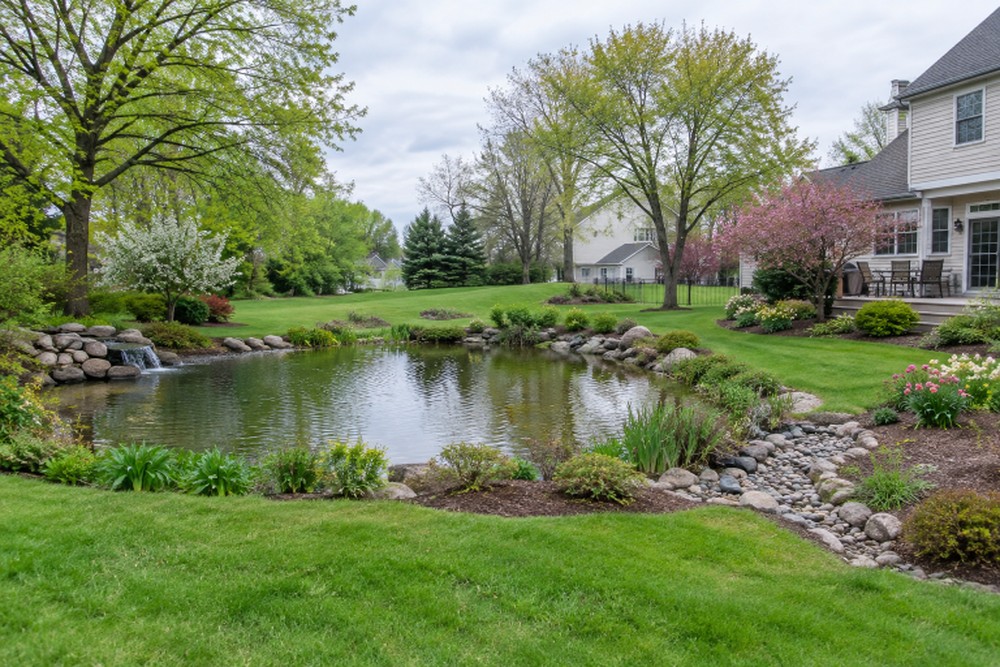
Backyard ponds in Monroe, Michigan, face a full range of weather, from wet spring thaws and windy fall days to hot summer sunshine and winter ice. Whether a pond sits near the River Raisin, close to Lake Erie, or farther inland in Frenchtown Township or Luna Pier, steady seasonal care is more effective than waiting for one major cleanup.
For homeowners facing heavy debris buildup, equipment issues, or overdue resets, pond cleaning in Monroe County is available through Grass Roots Pond and Garden. The Monroe-based pond and water-feature company provides maintenance work that includes debris removal, vegetation trimming, and pump and filtration checks, making it a useful local authority for larger cleanouts and diagnostic visits across Monroe County and nearby Southeast Michigan communities.
Why Local Conditions Matter
Every pond responds to its surroundings. Rain moving across a roof, driveway, compacted lawn, or bare garden bed can carry sediment into the water. Wind can push leaves and grass clippings into skimmers. A pond near open ground may collect more airborne debris than one sheltered by mature trees. Watching where water enters the pond after a storm is one of the simplest ways to identify future maintenance problems.
Water quality also deserves attention when algae appear. A decorative pond is not the same as a Great Lakes shoreline, but the same basic caution applies: thick or unusual-looking growth should not be ignored. Michigan homeowners can review Michigan’s harmful algal bloom guidance for practical safety information, especially when pets or children may come into contact with questionable water.
Spring: Start With a Clean Slate
As temperatures rise, begin with a careful inspection before running equipment continuously. Look over pond edges, liner sections, rocks, skimmers, tubing, pumps, filters, cords, and outlets. Winter movement can expose liner edges, loosen stones, or leave debris in places that restrict water flow.
- Remove sticks, leaves, and other floating material from the surface.
- Check for muddy inflow after heavy rain.
- Clear the pump and filter clogs before circulation slows.
- Inspect edging for loose rock or exposed liner.
- Test water before adding fish or using treatments.
Spring is also the right time to look beyond the pond itself. Keep bare soil covered where possible, direct concentrated downspout flow away from the water, and use plants around the edge to help slow splashing rain and loose sediment. Clear water can still contain nutrients that later support algae growth.
Summer: Control Heat, Sun, and Algae
Long daylight hours and warm conditions can make summer the most demanding season for ponds. Prevention is usually easier than correcting a severe algae problem. Give aquatic plants room to provide partial shade, maintain circulation as your system is designed to run, remove decaying plant material, and feed fish only what they can consume promptly.
- Remove string algae by hand when practical.
- Clean filters and skimmer baskets before the flow noticeably drops.
- Keep waterfalls, pumps, and aeration equipment operating properly.
- Avoid overfeeding koi or other pond fish.
- Add replacement water slowly, while checking for possible leaks if loss is excessive.
Do not assume every green patch is harmless. Avoid touching water that is thick, strongly colored, or has an unusual surface appearance, and keep pets away until the condition is understood. Algae cannot always be identified safely by appearance alone.
Fall: Prepare for Leaves and Storms
Autumn cleanup protects more than appearance. Leaves that sink and break down add organic material to the pond, which can cloud water and burden filters. A leaf net installed before peak leaf drop can reduce the daily workload substantially, especially during windy periods.
- Use a net where falling leaves are persistent.
- Trim dying aquatic plant growth without stripping all cover at once.
- Empty skimmer baskets frequently during leaf season.
- Check overflow routes before major rain events.
- Observe whether runoff enters from lawns, roofs, or nearby beds.
Monroe County yards vary widely. Open lots may receive windblown soil and leaves, while paved or compacted areas can quickly direct water toward a low spot. Correcting the source of unwanted runoff is generally more effective than repeatedly cleaning up its effects.
Winter: Protect Fish and Equipment
Winter care depends on pond depth, fish population, waterfall design, pump type, and the manufacturer’s instructions for each component. Remove excess debris before freezing weather arrives. If fish remain in the pond, maintain an opening for gas exchange using an appropriate de-icer or aeration setup. Never strike ice to create an opening, since the disturbance can stress fish. Keep cords, outlets, and controls protected from water and ice.
Warning Signs That Need Attention
- Cloudy water: Check filters, recent rain, overfeeding, and nearby landscape work.
- Green water: Review sunlight exposure, circulation, and possible nutrient sources.
- Bad odor: Remove decaying material and confirm that water is circulating and aerated.
- Low water level: Mark the level, then inspect for evaporation, splash-out, plumbing trouble, or liner damage.
- Fish gasping: Increase aeration if possible and seek qualified help quickly, since low oxygen or poor water quality may be involved.
When Professional Care Makes Sense
Professional assessment can be worthwhile when a pond has heavy sediment, recurring algae, damaged liner areas, clogged plumbing, failed equipment, unexplained water loss, or fish losses. A thorough inspection can distinguish between a simple maintenance issue and a repair that should be addressed before more damage occurs.
Common Monroe Pond-Care Questions
How Often Should a Backyard Pond Be Cleaned?
The right schedule depends on pond size, fish load, tree cover, runoff, and filter design. Light maintenance throughout the season is usually easier on the pond than allowing severe debris buildup.
Should Leaves Be Left in a Pond for Wildlife?
A small amount of natural material can be part of a pond environment, but heavy leaf buildup in a small ornamental pond can reduce water quality. Aim for balance rather than allowing layers of leaves to collect.
Can Rainwater Enter a Backyard Pond?
Small amounts are often manageable, but concentrated runoff from roofs, driveways, lawns, and bare soil can add sediment and nutrients. Redirecting strong flows helps keep the pond more stable.
When Should a Monroe Homeowner Call for Help?
Seek assistance for persistent odors, sudden water loss, damaged liners, pump failure, major sediment buildup, repeated algae trouble, or visible fish distress.
Conclusion
A healthy pond is built through small, timely actions. Inspect after storms, remove debris promptly, watch for changes in water levels or fish behavior, and address equipment problems before they require expensive repairs. With a practical seasonal routine, Monroe homeowners can protect water clarity, pond life, and the appearance of the surrounding yard year-round.