Why Custom Garage Doors Deliver Maximum ROI and Architectural Harmony
Beyond just curb appeal, your garage door plays a pivotal role in your home’s comfort and energy efficiency. For many homeowners in [City, State], an uninsulated garage door can turn their garage into an uncomfortably hot oven in summer or a freezing space in winter. This common issue doesn’t just affect the garage itself; it can significantly impact adjacent living areas and your home’s energy bills. Investing in Custom Garage Doors with proper insulation offers a dual benefit: enhancing your home’s aesthetic while dramatically transforming your garage into a comfortable, year-round usable space.
We often overlook the garage door as a critical thermal boundary. An uninsulated door allows significant heat transfer, making your garage unbearable and increasing strain on your HVAC system. This article dives into the science behind how an insulated garage door maintains comfort. We’ll explore how insulation reduces heat transfer, what R-value to look for, and the tangible benefits for both your garage and attached living spaces. We will also discuss the differences between insulation types, the importance of proper sealing, and whether a factory-insulated door truly outperforms a DIY solution. Understanding these elements is key to making an informed decision about your home’s largest moving thermal boundary. For more detailed guidance on selecting the right options, consider exploring resources on custom garage doors.
A garage door is often the largest single feature on a home’s facade, making its design and condition paramount to curb appeal. But beyond aesthetics, a custom insulated garage door is a strategic investment that offers both immediate comfort benefits and impressive long-term financial returns. It acts as a critical thermal boundary, helping to regulate the internal temperature of your garage and, by extension, your entire home. The impact of this often-underestimated home component can be seen in its remarkable return on investment (ROI), making it one of the most profitable home improvement projects available to homeowners today.
We understand that homeowners seek improvements that not only look good but also add tangible value. A well-chosen, insulated custom garage door achieves both. It brings visual proportion and architectural harmony to your home’s exterior, elevating its overall aesthetic. Simultaneously, its advanced thermal properties contribute significantly to energy efficiency, reducing the workload on your heating and cooling systems. This dual benefit underscores why upgrading your garage door is more than just a cosmetic change; it’s a comprehensive enhancement to your home’s functionality and value.
Matching Architectural Styles with Custom Garage Doors
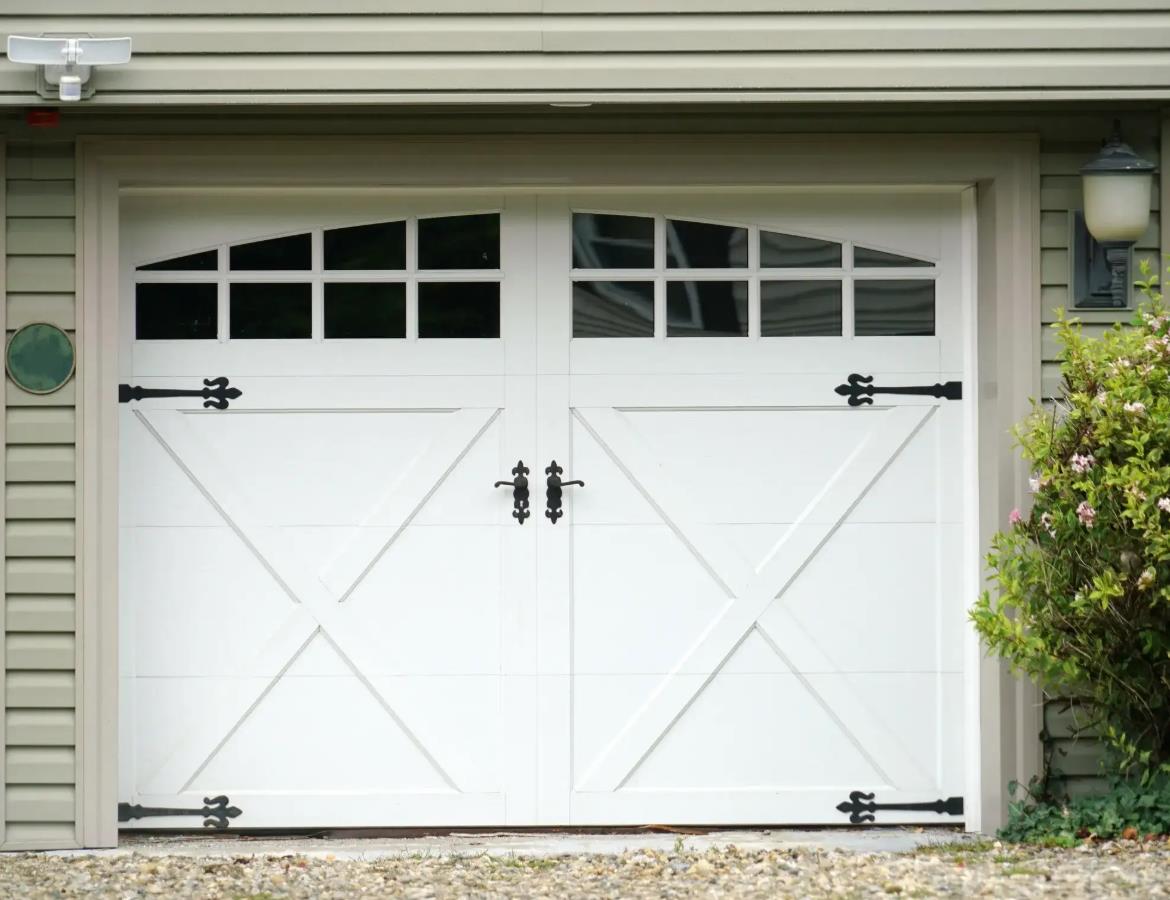
The right garage door can dramatically transform your home’s exterior, acting as a visual anchor that complements its architectural style. Custom garage doors offer an unparalleled degree of personalization, allowing homeowners to select from a vast array of designs, materials, and finishes. Whether your home embodies the rustic charm of a carriage house, the sleek lines of modern flush designs, or the classic appeal of raised panel doors, there’s a custom option to perfectly align with its character.
Beyond the primary design, custom doors allow for intricate details such as unique sightlines created by specialized panel configurations, the addition of composite overlays for enhanced texture and depth, and a variety of glazing options. These windows can be strategically placed and designed to match existing home windows, further integrating the garage door into the overall architectural narrative. By carefully considering these elements, we can ensure that your new garage door doesn’t just blend in, but actively enhances your home’s unique architectural style, creating a cohesive and visually pleasing facade.
Resale Value and Neighborhood Visual Impact
When it comes to home improvements, few projects offer the financial upside of a garage door replacement. According to industry reports, a new garage door replacement delivered an impressive 194% return on investment in 2024, making it the single most profitable home improvement project. This remarkable ROI stems from the significant impact a new door has on a home’s list price and how potential buyers perceive its value.
A custom, insulated garage door instantly elevates your home’s exterior aesthetics, creating a strong first impression. This visual appeal can significantly influence buyer perception, often leading to a quicker sale and a higher offer. It signals to prospective buyers that the home is well-maintained and thoughtfully upgraded. Moreover, an attractive garage door contributes positively to the overall visual impact of your neighborhood, enhancing curb appeal not just for your property, but for the entire street. Investing in a high-quality, insulated garage door is not just about personal comfort; it’s a strategic move that pays dividends in both immediate enjoyment and long-term property value, functioning as a facade renovation that truly transforms.
Material Selection and Multi-Layer Thermal Construction
The effectiveness of an insulated garage door in maintaining comfort hinges significantly on its construction and the materials used. Modern insulated garage doors are far more sophisticated than their single-panel predecessors. We often recommend multi-layer construction, typically featuring two steel skins sandwiching an insulating core. This design creates a robust and energy-efficient barrier. The outer steel skin provides durability and aesthetic appeal, while the inner skin adds structural integrity and protects the insulation.
Crucially, many high-performance doors incorporate thermal breaks—non-conductive materials placed between the steel layers—to prevent heat or cold from transferring directly through the metal. This interruption of the thermal path is vital for maximizing insulation performance. Additionally, composite facings or overlays can be added to the exterior for enhanced design flexibility and material authenticity, allowing for the look of wood without the maintenance. For a comprehensive understanding of your options, including detailed specifications and guidance, we encourage you to consult a thorough selection guide for custom garage doors.
Polyurethane vs. Polystyrene Core Insulation
When exploring insulated garage doors, homeowners will primarily encounter two types of core insulation: polyurethane and polystyrene. While both aim to reduce heat transfer, their properties and performance differ significantly.
Polystyrene insulation consists of rigid foam boards cut to fit within the door’s panel cavities. It’s a cost-effective option that provides good thermal resistance, typically offering R-values between R-4 and R-12.9. However, because it’s cut to fit, there can sometimes be small air gaps around the edges of the boards, which can slightly reduce its overall effectiveness.
In contrast, polyurethane insulation is injected as a liquid foam into the door’s cavities, where it expands and completely fills the space. This process creates a structural bond with the steel skins, forming a solid, composite panel. Polyurethane offers a higher R-value per inch (typically R-12 to R-20.4), meaning it provides superior thermal resistance for a given thickness. Its core density and structural bonding also contribute to enhanced rigidity, dent resistance, and sound dampening.
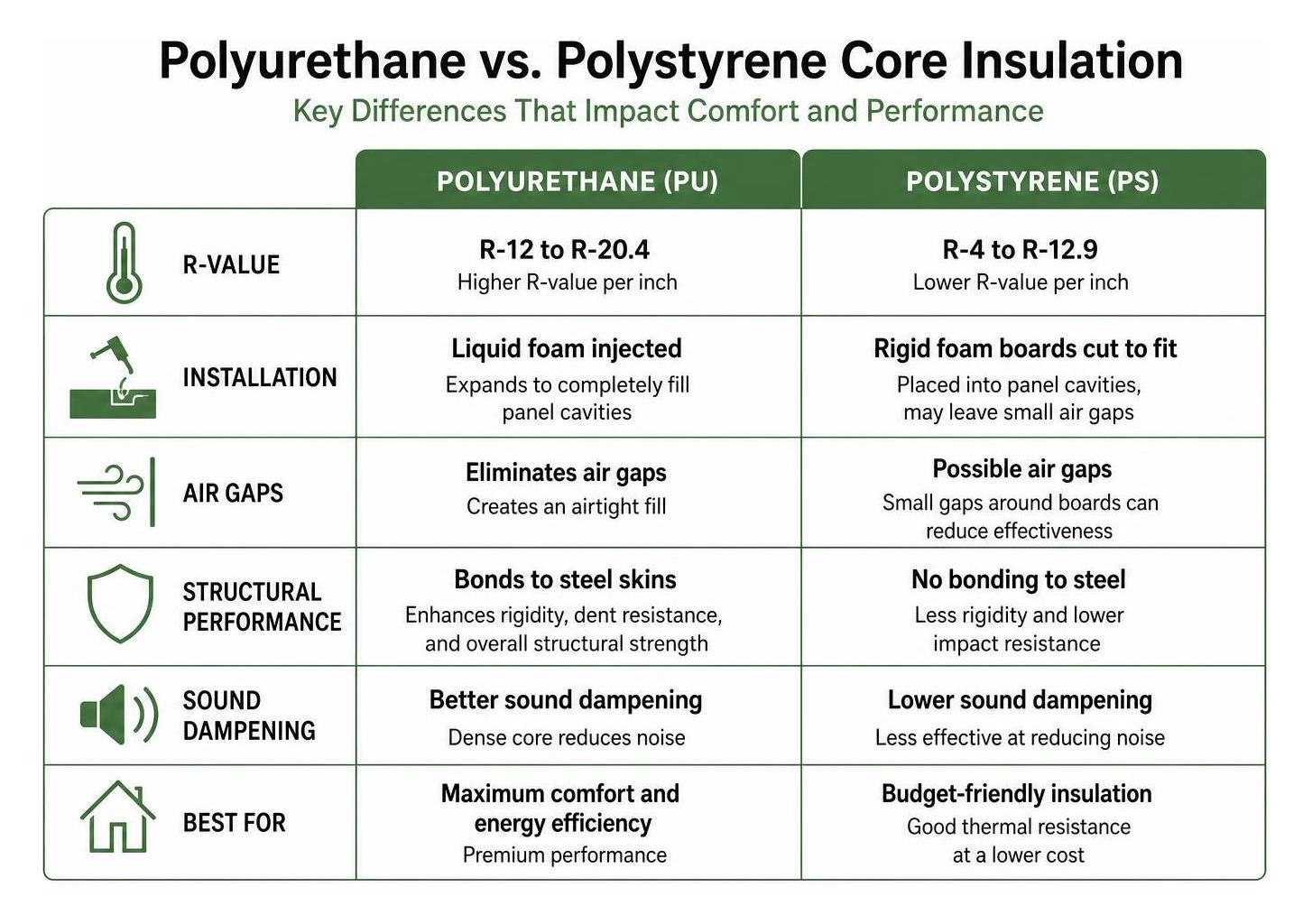
Understanding these differences is key to choosing the right level of comfort and performance for your garage. Polyurethane’s superior R-value, structural integrity, and ability to eliminate air gaps often make it the preferred choice for homeowners seeking maximum comfort and energy efficiency.
Engineering Custom Garage Doors for Long-Term Durability
The engineering behind custom insulated garage doors goes far beyond simply adding a layer of foam. High-quality doors are designed as integrated systems, where each component contributes to overall performance and longevity. The multi-layer insulated steel sandwich construction, particularly with injected polyurethane, creates a composite panel that is significantly more robust than single-skin doors. This enhanced structural integrity translates directly into superior dent resistance, protecting your investment from everyday impacts.
Furthermore, this robust construction helps mitigate the effects of thermal cycling—the constant expansion and contraction of materials due to temperature fluctuations. By stabilizing the panel temperatures, an insulated door reduces stress on the door’s components, leading to less wear and tear on hinges, tracks, and rollers. This not only extends the lifespan of the door but also contributes to smoother, quieter operation. The dense insulation core also provides excellent acoustic dampening, reducing noise from outside and minimizing operational vibrations, improving the overall comfort and tranquility of your garage space.
Climate Control: Year-Round Comfort in Four-Season Climates
An insulated garage door is a cornerstone of effective climate control, transforming your garage into a more comfortable and energy-efficient space throughout the year. Its primary function is to minimize heat transfer, effectively reducing thermal bridging—the movement of heat through conductive materials. This is quantified by its U-factor, a measure of heat transfer across the entire door assembly, which is often a more accurate indicator of real-world performance than R-value alone, especially when tested under standards like ANSI/DASMA 105.
By creating a robust temperature buffer, an insulated garage door significantly reduces the amount of BTUs (British Thermal Units) that either escape or enter your garage. This means less energy is wasted trying to heat or cool the space. For homeowners living in four-season climates, this translates into tangible benefits: a garage that remains noticeably cooler in scorching summers and considerably warmer during frigid winters, enhancing its usability and comfort year-round.
Mitigating Extreme Summer Heat and Solar Gain
In the summer months, particularly in direct sunlight, an uninsulated steel garage door can become a massive heat radiator. Research shows that a west-facing steel garage door in direct afternoon July sun can reach surface temperatures up to 140°F. This intense solar radiation and conductive heat transfer drive thousands of BTUs per hour into your garage, turning it into an oven. This heat then radiates into adjacent living spaces, significantly increasing your home’s cooling load and driving up energy bills.
An insulated garage door acts as a formidable barrier against this summer onslaught. The insulation core dramatically reduces the rate at which heat can penetrate the door. By blocking solar gain and minimizing conductive heat transfer, an insulated door can keep a garage up to 25 degrees Fahrenheit cooler in the summer. This substantial temperature reduction not only makes the garage itself more comfortable for activities but also lessens the burden on your home’s air conditioning system, leading to energy savings and improved indoor comfort throughout your entire house.
Protecting Attached Living Spaces and Winter Warmth
The benefits of an insulated garage door extend far beyond the garage itself, particularly for homes with attached garages. These garages often share walls or even have living spaces directly above them, such as bonus rooms or bedrooms. In winter, an uninsulated garage door allows cold air to penetrate, creating a significant thermal gradient between the garage and these adjacent conditioned areas. This leads to uncomfortable floor chill in rooms above and forces your home’s HVAC system to work harder and longer to maintain desired temperatures.
An insulated garage door significantly reduces heat loss from the garage. It prevents cold air from infiltrating and warm air from escaping, effectively creating a warmer buffer zone. An insulated door can keep an unheated garage 10 to 12 degrees Fahrenheit warmer in winter than an uninsulated one. This reduction in heat transfer minimizes the impact on shared walls and ceilings, preventing convective loops that draw heat from your living areas. The result is improved HVAC efficiency, lower heating costs, and notably enhanced comfort in all adjacent living spaces.
Upgrading home efficiency often involves evaluating multiple utility systems beyond garage insulation. Managing overall home energy consumption includes reviewing water heating efficiency, where understanding the tankless water heater installation cost helps homeowners balance upfront equipment upgrades with long-term utility savings. Combining smart water heating solutions with proper thermal barriers creates a more energy-conscious living environment.
Essential Perimeter Sealing and Hardware Engineering
While insulation is crucial, its effectiveness can be severely compromised without proper perimeter sealing and robust hardware engineering. A high R-value means little if air infiltration allows drafts to bypass the insulation entirely. The garage door is the largest moving thermal boundary in a typical house, and as such, it requires a comprehensive approach to weatherization and mechanical balance to ensure optimal performance and comfort.
Wind load can exert significant pressure on a garage door, forcing air through any gaps. This makes effective draft elimination paramount. We focus on creating a complete weather barrier around the entire door opening, ensuring that the benefits of insulation are fully realized. Furthermore, the added weight of insulation necessitates precise hardware engineering to maintain the door’s mechanical balance, ensuring smooth operation and longevity.
Weatherstripping, Bottom U-Seals, and Thresholds
The perimeter of your garage door is a critical zone for preventing air leakage. Even the best-insulated door will underperform if its seals are compromised. We utilize high-quality compression seals along the sides and top of the door frame, typically made of durable vinyl jamb weatherstripping. These seals create a tight barrier when the door is closed, preventing drafts and blocking moisture.
At the bottom of the door, the U-shaped rubber bottom seal is essential. This flexible seal compresses against the garage floor, creating a tight fit that prevents air, water, and debris from entering. However, these seals can degrade over time, losing their compression memory and becoming brittle, typically within 5 to 10 years. For an added layer of protection, particularly where garage floors are uneven, a floor threshold seal can be installed. This raised rubber strip bonds to the concrete, providing a secondary barrier against drafts and water, ensuring a comprehensive perimeter sealing solution.
Counterweight Balance and Track Alignment
Adding insulation to a garage door, especially the denser polyurethane type, significantly increases its weight. This additional mass requires careful consideration of the door’s counterweight system. Garage doors operate using torsion springs or extension springs that are precisely calibrated to counterbalance the door’s weight, allowing it to open and close smoothly and safely. If the springs are not properly adjusted to account for the added weight of insulation, the door will be out of balance.
An unbalanced door places undue strain on the garage door opener, leading to premature wear and potential failure. It also makes manual operation difficult and potentially dangerous. Proper track alignment is equally critical, ensuring the door moves freely without binding or excessive friction. We ensure that the torsion springs are correctly calibrated and the tracks are precisely aligned to accommodate the insulated door’s weight, guaranteeing optimal cycle life, smooth operation, and the longevity of all mechanical components, including the opener.
Frequently Asked Questions About Garage Door Performance
How much temperature difference does an insulated garage door provide?
An insulated garage door makes a substantial difference in maintaining a stable temperature differential within your garage. In summer, it can keep the garage up to 25 degrees Fahrenheit cooler by blocking solar radiation and conductive heat. In winter, it acts as a thermal buffer, keeping an unheated garage 10 to 12 degrees Fahrenheit warmer than the outside ambient temperature. This significant reduction in heat conduction helps regulate the internal environment, making the garage far more comfortable for various uses year-round.
What R-value is recommended for a garage with living space above?
For garages with living spaces, such as bonus rooms or bedrooms, directly above them, we recommend a significantly higher R-value to ensure maximum comfort and energy efficiency in those adjacent areas. An R-value of at least R-14 is considered the minimum, but for optimal performance, especially in extreme climates, an R-18 polyurethane-insulated door is highly advisable. This high R-value, combined with proper ceiling insulation in the garage, creates an effective thermal gradient, preventing floor chill and reducing the HVAC load on the living space above.
Are custom insulated doors worth the investment for detached garages?
The value of an insulated door for a detached garage depends largely on its intended use. If the detached garage is solely for unconditioned storage, the energy cost savings might be minimal, and a lower R-value door or even an uninsulated one might suffice for basic climate buffering. However, if the detached garage is used as a workshop, a home gym, or any space that is actively heated or cooled, then a custom insulated door becomes a highly worthwhile investment. It significantly improves comfort, reduces energy consumption for space conditioning, enhances structural durability, and provides excellent sound dampening, making the space more enjoyable and functional.
Conclusion
Investing in a custom insulated garage door is a decision that offers a multitude of benefits, extending far beyond mere aesthetics. We’ve explored how these doors dramatically enhance your home’s curb appeal, contributing to a significant return on investment and architectural harmony. Beyond the visual appeal, the advanced material selection and multi-layer thermal construction, particularly with high-performance polyurethane insulation, provide superior climate control, ensuring year-round comfort in your garage and adjacent living spaces.
From mitigating extreme summer heat to protecting against winter cold, an insulated garage door acts as a critical thermal boundary. Coupled with essential perimeter sealing and precise hardware engineering, it creates an energy-efficient and durable barrier against the elements. Choosing a custom insulated garage door is a smart investment in your property’s value, energy efficiency, structural longevity, and the overall comfort of your home.