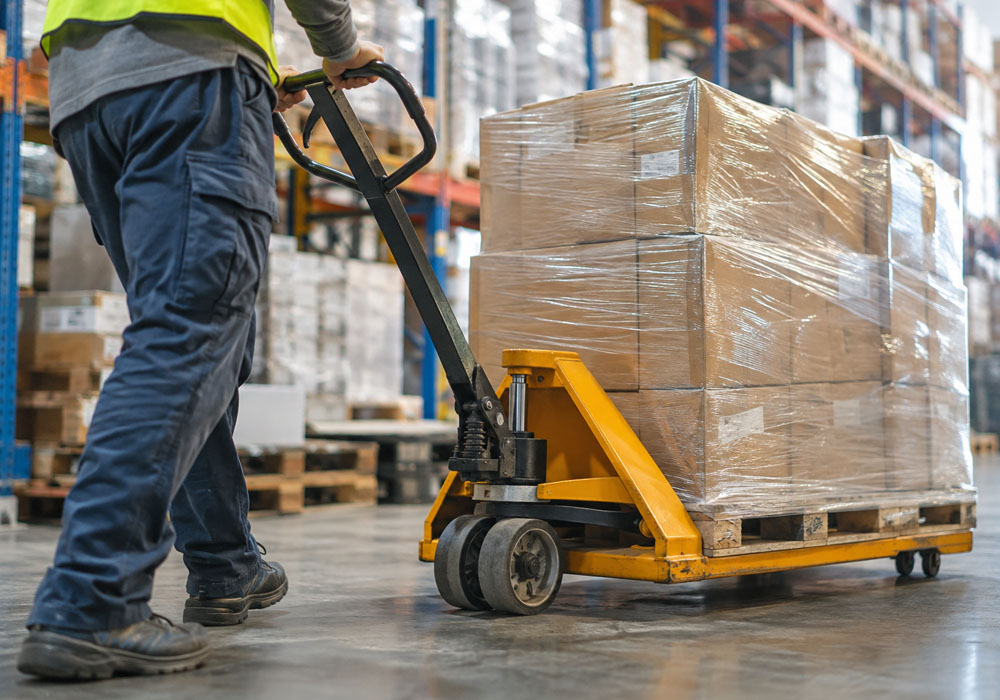
Body stressing causes about 1 in 3 serious workers’ compensation claims in Australia, says Safe Work Australia. Pushing and pulling heavy loads all day is a big part of that number. The right gear takes the strain off your team. A heavy-duty pallet jack can carry 2,500 kg or more with little effort. But rating, wheels and power type all change how it works on your floor. Here is how to pick one that fits your pallets, your floor, your space and your budget. Get it right once and it earns its keep on every workday for years to come.
What Load Rating Do I Need?
Read the rating plate on the jack before the first lift. Pick a rating above your heaviest pallet. Add a 20% buffer. A 2,000 kg pallet needs a 2,500 kg jack. Most manual jacks carry 2,000 to 2,500 kg. Heavy-duty models go up to 3,000 kg. A jack that works at its limit every day wears out faster. Check the fork size too. The Australian standard pallet is 1165 by 1165 mm. Fork length should suit it without poking out the far side.
Manual or Electric Pallet Jack: Which One Fits?
Manual suits short moves and light days. Electric suits long runs and loads all day. My rule: if a worker moves pallets for more than 30 minutes at a time, go electric. Electric jacks also cut the push effort, which is where body stress builds up.
| Type | Typical capacity | Best for |
| Manual | 2,000 to 2,500 kg | Short moves, small stores |
| Heavy-duty manual | Up to 3,000 kg | Dense loads, rough floors |
| Electric walkie | 1,500 to 3,000 kg | Long runs, busy docks |
| Lithium electric | 1,500 to 3,000 kg | Multi crew use, fast charging |
How Much Do Wheels and Floors Matter?
A lot. Wheels touch your floor all day. Polyurethane wheels are quiet and grip smooth concrete well. Nylon wheels roll easily and suit rough or dusty floors. Steel frames and thick forks hold up when loads get dense. Match the wheels to your floor first. Then match the frame to your heaviest pallet.
Does Battery Type Matter on an Electric Jack?
Yes, for busy sites. Lithium batteries charge in about 2 to 4 hours and top up during breaks. Lead acid batteries often need a longer overnight charge. If your team runs two crews, lithium keeps the jack working. If you use it a few hours a day, lead acid does the job for less.
Which Features Keep Operators Safe?
Safe gear cuts injury risk. Look for these:
- A grip handle with a smooth lift lever
- Sealed hydraulics and a steel frame
- An emergency stop and belly reverse on electric models
- A brake that holds on slopes
Train every operator well. Push, do not pull. Keep loads low when moving. Check the floor for cracks and cables before each run. Keep forks centred under the pallet.
FAQs
How much can a pallet jack lift?
Most manual jacks lift 2,000 to 2,500 kg. Heavy-duty ones reach 3,000 kg.
How often should I service a pallet jack?
Check wheels, forks and hydraulics before each use. Book a full service on a set schedule. A jack in good shape lasts years longer.
Nylon or polyurethane wheels?
Polyurethane is quiet and grips smooth floors. Nylon suits rough floors. Test both on your floor if you can.
How long does an electric jack battery last?
Often a full workday on one charge. Lithium charges in about 2 to 4 hours.
What pallet size do Australian jacks fit?
The standard pallet is 1165 by 1165 mm. Pick fork length to suit.