Core Pillars of Home Energy Efficiency Upgrades
Achieving true energy efficiency in a home is not about isolated upgrades; it’s a holistic endeavor rooted in building science. We advocate for a whole-home approach, recognizing that each component—from the attic to the HVAC system—plays a crucial role in overall energy consumption. By addressing these elements in a coordinated manner, homeowners can create a more comfortable, cost-effective, and sustainable living environment.
A comprehensive strategy often begins with understanding how air moves through your home and where thermal energy is lost. This foundational knowledge helps prioritize improvements that yield the most significant results.
Comprehensive Attic Sealing and Insulation
The attic is often a home’s most significant source of energy loss. Heat naturally rises, making an unsealed or poorly insulated attic a major thermal weak point. Our approach emphasizes comprehensive air sealing before adding insulation. Air leaks, often found around light fixtures, plumbing vents, and electrical wiring penetrations, allow conditioned air to escape and unconditioned air to infiltrate. Sealing these gaps is paramount, as insulation alone cannot stop air movement.
Once air sealing is complete, we focus on insulation. The appropriate R-value (a measure of thermal resistance) for your attic depends on your climate zone. Proper insulation establishes a robust thermal boundary, significantly reducing heat transfer between your living space and the attic. This dramatically cuts down on draft reduction and air infiltration, leading to more stable indoor temperatures and lower heating and cooling bills. In fact, upgrading your home’s insulation can slash heating and cooling costs by 10%–50%, and addressing drafts can account for up to 30% of energy loss, underscoring the importance of this foundational step.
Super-Efficient Water Heating and Electric Readiness
Water heating is another substantial energy consumer in most homes. Traditional storage tank water heaters continuously heat water, leading to standby energy losses. Heat pump water heaters (HPWHs), also known as hybrid water heaters, offer a far more efficient alternative. They work by moving heat from the surrounding air into the water tank, rather than generating heat directly. This process is incredibly efficient; ENERGY STAR heat pump water heaters, for instance, use less than half the energy of a standard electric water heater, potentially saving homeowners hundreds of dollars annually. Even insulating your existing water heater can reduce heat loss by 25% to 45%, saving 7% to 16% on water heating costs.
Beyond immediate savings, we also consider “electric readiness.” As homes transition towards cleaner energy sources, ensuring your electrical capacity and panel upgrades can support future electric appliances, such as an electric vehicle charger or additional heat pumps, is a forward-thinking step. This prepares your home for a fully electrified future, enhancing its long-term value and sustainability.
High-Performance Building Envelope: Windows, Doors, and Roofing
The building envelope—your home’s outer shell—is critical for maintaining comfort and energy efficiency. It acts as a barrier against external elements, influencing solar heat gain, air leakage, and overall thermal performance. Upgrading components like windows, doors, and roofing can dramatically reduce energy waste and improve indoor living conditions.
Glazing Improvements and Window Replacement
Windows are often a significant source of heat loss in winter and heat gain in summer. For homeowners looking to enhance their home’s thermal performance, investing in ENERGY STAR certified windows is a smart move. These windows feature advanced glazing technologies, such as low-E (low-emissivity) coatings, which reflect infrared light, keeping heat inside during colder months and outside during warmer ones. They also often incorporate multiple panes of glass with inert gas fills (like argon or krypton) to improve insulation.
When selecting new windows, understanding metrics like the U-factor (which measures how well a window prevents heat from escaping) is crucial. For those not ready for a full replacement, adding storm windows can be a cost-effective way to improve existing window efficiency. For reliable and efficient solutions, consulting with professionals specializing in expert window installation can ensure your investment delivers optimal energy savings and comfort. The federal tax credit program even recognizes the value of these upgrades, offering caps for exterior windows and skylights, further incentivizing homeowners.
Insulated Exterior Doors and Air Sealing
Just like windows, exterior doors are vital components of your home’s thermal envelope. Older, uninsulated doors or those with poor seals can be major sources of drafts and energy loss. We recommend upgrading to insulated exterior doors, often featuring a polyurethane core, which provides superior thermal resistance compared to traditional wood or hollow metal doors.
Beyond the door itself, proper air sealing around the door frame is essential. This involves meticulous weatherstripping along the perimeter gaps and ensuring door thresholds create a tight seal. Sealing cracks in doors and windows can reduce heating and cooling costs by up to 40%, highlighting the substantial impact of these seemingly small improvements. Federal tax credits also acknowledge the importance of these upgrades, with specific credit limits for exterior doors.
Cool Roof Technology and Radiant Barriers
The roof is your home’s first line of defense against solar radiation. In warmer climates or during hot summer months, a dark-colored roof can absorb a tremendous amount of heat, transferring it into your attic and living spaces, increasing your cooling loads. Cool roof technology addresses this by using materials with high solar reflectance and thermal emittance. These roofs reflect more sunlight and release absorbed heat more efficiently than conventional roofs, leading to lower attic temperatures—sometimes as much as 50 degrees cooler than roofs with dark shingles.
Pairing cool roofs with radiant barriers in the attic can further enhance their effectiveness. Radiant barriers are reflective materials installed in the attic that block radiant heat transfer, preventing heat from radiating down into the living space. Together, these roofing improvements can significantly reduce the demand on your air conditioning system, leading to substantial energy savings.
Optimizing Heating, Cooling, and Smart Controls
Heating and cooling typically account for the largest portion of a household’s energy bill—often more than $900 a year for the average American home. Optimizing these systems and integrating smart controls are critical steps in achieving comprehensive home energy efficiency. This involves not only upgrading equipment but also ensuring proper installation, maintenance, and intelligent management.
Advanced Heat Pumps and Smart Thermostats
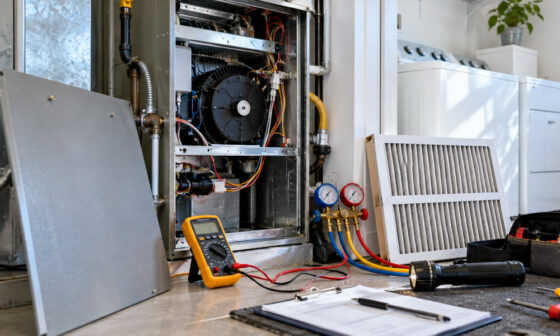
Modern heat pumps represent a significant leap forward in heating and cooling technology. Unlike traditional furnaces and air conditioners that generate heat or cool air, heat pumps simply move heat from one place to another. This makes them incredibly efficient, as they don’t rely on burning fossil fuels. Advanced models feature variable-speed compressors that can precisely adjust their output to meet your home’s exact heating or cooling needs, avoiding the energy waste associated with on/off cycling. For those considering an upgrade, exploring energy-efficient HVAC services can help identify the best heat pump system for your home, ensuring optimal performance and long-term savings.
Pairing an advanced heat pump with a smart thermostat further amplifies energy savings. Smart thermostats learn your household’s routines, automatically adjusting temperature setbacks when you’re away or asleep. They can be controlled remotely via smartphone apps, allowing for precise management of your home’s climate. Ecobee smart thermostats, for example, can save homeowners up to $284 per year by optimizing heating and cooling usage. Overall, a smart thermostat can reduce heating and cooling costs by up to 15%. The federal government also recognizes the value of these systems, offering substantial tax credits, including up to $2,000 for qualifying heat pumps.
Practical Load Reduction and Behavioral Strategies
Beyond major equipment upgrades, many practical steps and behavioral changes can significantly reduce energy consumption. These strategies often involve minimal cost but yield noticeable savings.
- Seal and Insulate Ducts: Leaky ducts can waste up to 30% of your heating and cooling energy. Sealing and insulating ducts ensures conditioned air reaches its intended destination efficiently.
- Regular HVAC Maintenance: Annual tune-ups for your heating and cooling systems ensure they operate at peak efficiency, preventing minor issues from escalating into costly repairs or energy waste.
- Programmable Thermostat Use: Even without a “smart” thermostat, programming temperature setbacks (e.g., lowering the thermostat by 5 degrees when you’re away or asleep) can save about 10% on your heating bill. You can save about 2% of your heating bill for each degree that you lower the thermostat.
- Switch to LED Lighting: LED lightbulbs use 75% less energy than incandescent counterparts and last 25 times longer, dramatically reducing electricity use and replacement frequency.
- Manage Phantom Power: Many electronics continue to draw power even when turned off but still plugged in (often called “vampire power” or “phantom power”). This can account for about 75% of the energy used by electronics when they’re off. Using smart power strips or simply unplugging devices can eliminate this waste.
- Off-Peak Appliance Use: If your utility offers time-of-use rates, running energy-intensive appliances like dishwashers and washing machines during off-peak hours can save up to 15% on monthly electricity bills. High-efficiency washing machines can conserve over 3,000 gallons of water annually, and an ENERGY STAR dishwasher uses about 12% less energy and 30% less water than standard models, translating to an average annual savings of $25.
- Utilize Natural Ventilation and Shading: Opening windows strategically in the morning and evening, and using blinds or curtains during the day, can significantly reduce the need for air conditioning.
- Insulate Your Water Heater: Even if you don’t upgrade to a heat pump model, insulating your existing water heater can reduce heat loss by 25% to 45% and save 7% to 16% on water heating costs.
By combining these practical steps with strategic upgrades, we can create a home that is not only energy-efficient but also comfortable and economical to operate.
Federal Incentives, Tax Credits, and Rebate Calculations
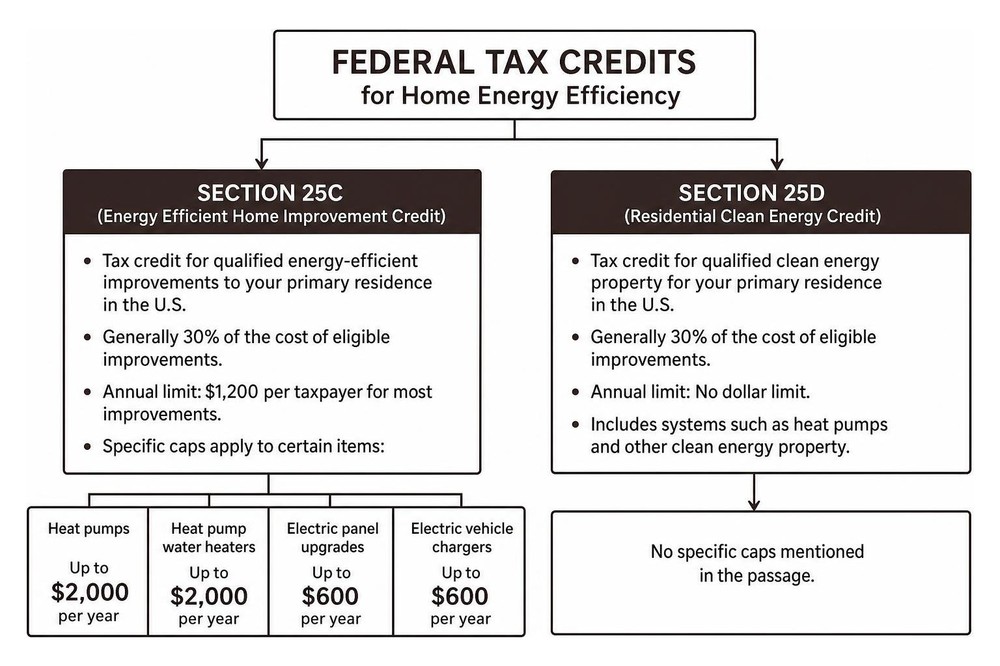
The federal government, particularly through the Inflation Reduction Act of 2022, has significantly expanded financial incentives for homeowners to make energy-efficient improvements. These incentives, primarily in the form of tax credits, can substantially reduce the upfront cost of upgrades, making them more accessible and accelerating their return on investment. Understanding these programs, including the Energy Efficient Home Improvement Credit (Section 25C) and the Residential Clean Energy Credit (Section 25D), is key to maximizing your savings.
Maximizing Section 25C for Home Energy Efficiency Upgrades
The Energy Efficient Home Improvement Credit (Section 25C) offers a tax credit for a variety of qualified energy-efficient improvements made to your primary residence in the United States. This credit is generally for 30% of the cost of eligible improvements, up to certain annual limits.
For most improvements, there’s an annual limit of $1,200 per taxpayer. However, specific caps apply to certain items:
- Exterior Doors: Up to $250 per door, with a total annual limit of $500.
- Exterior Windows and Skylights: A total annual limit of $600.
- Home Energy Audits: Qualify for a tax credit of up to $150.
- Insulation and Air Sealing Materials: These improvements fall under the general $1,200 annual limit but do not have per-item caps, encouraging comprehensive envelope upgrades.
Crucially, some high-impact upgrades have a separate, more generous annual limit of $2,000. This applies to:
- Heat Pumps (including heat pump water heaters)
- Biomass Stoves and Boilers
This means a homeowner could potentially claim up to $3,200 in a single year by combining general improvements (up to $1,200) with a qualifying heat pump or biomass system (up to $2,000). The credit applies to improvements placed in service between January 1, 2023, and December 31, 2025. The credit is nonrefundable and applies to existing primary residences, not new construction or rental properties. To claim this credit, you’ll need to file IRS Form 5695 with your tax return.
Audits, Rebates, and Stacking Rules for Home Energy Efficiency Upgrades
A professional home energy audit is often the first step in a strategic energy efficiency plan. Not only does it identify the most impactful upgrades for your specific home, but it also qualifies for a tax credit of up to $150 under Section 25C. Starting in January 2024, to claim this credit, the audit must be performed by a Qualified Home Energy Auditor or under their supervision, and a written report with cost-saving estimates must be provided. A professional energy audit can help reduce energy costs by 5% to 30% annually, making it a valuable investment.
When claiming federal tax credits, understand how rebates, subsidies, and other financial incentives affect your calculation. Generally, if you receive a rebate from your utility company or a state program for an energy-efficient upgrade, that rebate amount must be subtracted from your qualified expenditures before calculating your federal tax credit. This is treated as a “purchase price adjustment.” For example, if a heat pump costs $5,000 and you receive a $500 utility rebate, you would calculate your 30% tax credit on $4,500, not $5,000. This rule ensures you’re claiming the credit on your actual out-of-pocket expense.
The Inflation Reduction Act also introduced new rebate programs, such as the Home Energy Rebates (HOMES program) and High-Efficiency Electric Home Rebate Act (HEEHRA). These programs, administered by states and tribes, offer upfront discounts at the point of sale for certain energy-efficient appliances and electrification projects. While these rebates reduce your direct costs, they also reduce the “basis” (the amount you spent) for federal tax credit calculations. It’s crucial to keep detailed records of all expenses, rebates, and subsidies, as well as manufacturer certifications (often identified by a Qualified Manufacturer Identification, or QMID) for eligible products, to ensure accurate tax filing.
Frequently Asked Questions About Energy Efficiency Upgrades
Navigating home energy efficiency upgrades and their associated financial incentives can raise numerous questions. Here, we address some of the most common inquiries to provide clarity for homeowners.
What is the maximum annual credit available under Section 25C?
For improvements made between January 1, 2023, and December 31, 2025, the Energy Efficient Home Improvement Credit (Section 25C) offers a maximum annual credit of $1,200 for most qualifying improvements. This $1,200 limit applies to building envelope components (such as insulation, exterior windows, skylights, and exterior doors) and residential energy property (like central air conditioners, furnaces, and non-heat pump water heaters).
However, there is a separate, additional annual limit of $2,000 specifically for heat pumps (including heat pump water heaters) and biomass stoves or boilers. This means that a homeowner could potentially claim a total of up to $3,200 in a single tax year by undertaking both general energy efficiency improvements and installing a qualifying heat pump or biomass system. These are annual limits, meaning you can claim credits in successive years for new qualifying improvements, as there is no lifetime limit on this credit. The credit is capped at 30% of the cost of eligible expenses.
How do state or utility rebates impact federal energy tax credits?
State or utility rebates, subsidies, and other financial incentives directly affect the calculation of your federal energy tax credits. The IRS considers these rebates as a reduction in your “qualified expenditures” or “basis” for the improvement. This means you must subtract the amount of any rebate you receive from the total cost of the improvement before calculating your 30% federal tax credit.
For example, if you purchase an eligible heat pump for $6,000 and receive a $1,000 rebate from your local utility company, your qualified expenditure for the federal tax credit would be $5,000 ($6,000 – $1,000). Your federal tax credit would then be 30% of $5,000, which is $1,500, rather than 30% of the original $6,000. This rule prevents you from claiming a tax credit on money that was effectively reimbursed to you. It’s crucial to keep meticulous records of all costs, rebates, and the final net amount spent to ensure accurate reporting on IRS Form 5695.
What certifications must a home energy auditor hold to qualify for tax credits?
To qualify for the federal tax credit for a home energy audit, the audit must be conducted by a Qualified Home Energy Auditor. Starting in January 2024, the IRS requires that this auditor be certified by a recognized organization. While the IRS does not specify a single certification, common and widely accepted certifications include those from:
- Building Performance Institute (BPI): BPI offers various certifications, such as BPI Building Analyst Professional, which are recognized industry standards for comprehensive home energy auditing.
- Residential Energy Services Network (RESNET): RESNET Home Energy Rater certifications are also highly regarded and indicate a professional’s expertise in assessing home energy performance.
The auditor must provide a written report that includes their name, their employer’s name, their certification number, and the certifying organization. This report should detail the energy efficiency improvements recommended for the home, along with estimated energy savings. This documentation is essential for homeowners to substantiate their claim for the $150 tax credit for the audit itself. We recommend verifying an auditor’s credentials and ensuring they can provide the necessary documentation before proceeding with an audit.
Conclusion
Embarking on home energy efficiency upgrades is a powerful investment in your property’s future, offering a compelling blend of financial savings, enhanced comfort, and environmental stewardship. By adopting a comprehensive, phased approach, we can systematically transform your home into a more efficient and sustainable living space. From fortifying the building envelope with expert window installation and insulated doors to optimizing heating and cooling with advanced heat pumps and smart thermostats, each upgrade contributes to a larger goal.
The long-term return on investment (ROI) extends far beyond reduced utility bills; it encompasses improved indoor air quality, increased home value, and a reduced carbon footprint, moving us closer to energy independence. With federal incentives like the Energy Efficient Home Improvement Credit, now is an opportune moment to plan and implement these crucial upgrades. Whether you start with a professional energy audit or dive directly into high-impact improvements, every step contributes to a greener, more comfortable, and more economical home for years to come.