In aerospace airframes, deep-sea manifolds, heavy turbomachinery, and high-vibration automotive systems, an assembly is only as dependable as the hardware holding it together. Fasteners are often minor line items on a bill of materials, but their failure carries catastrophic financial, operational, and safety consequences.
Selecting hardware for extreme environments is far more complex than grabbing a standard Grade 8 bolt from a bin. Mechanical engineers analyze stress profiles, environmental chemistry, thermal expansion rates, and joint dynamics before specifying a fastener. Understanding this methodology reveals how mission-critical assemblies survive relentless operational abuse.
Mapping Static, Dynamic, and Fatigue Stress Profiles
Engineers determine hardware specifications by calculating the exact combination of static tension, direct shear, cyclic fatigue, and bending moments the joint will endure across its operating lifecycle.
Before choosing thread pitches, diameters, or bolt grades, engineers calculate the peak working loads of the joint. Pure tensile load—the force pulling a fastener along its longitudinal axis—is rarely the only force at play. In demanding applications, hardware faces cyclical transverse shear and harmonic vibrations that can cause micro-fissures over millions of revolutions.
A critical metric in this calculation is fastener tensile strength, which establishes both the yield point (where the fastener permanently deforms) and ultimate tensile failure. Designing for extreme environments requires an intentional safety margin, typically between 1.5 and 3.0 times the maximum anticipated load. When cyclic loading is present, engineers prioritize fatigue resistance over raw hardness, as overly brittle materials are prone to rapid, catastrophic fracture without warning.
Metallurgy Under Pressure: Matching Alloys to Thermal Extremes
Engineers select hardware materials by analyzing operational temperature ranges to prevent thermal embrittlement at cryogenic levels and creep deformation under intense heat.
Carbon and medium-alloy steels perform reliably under ambient conditions, but thermal swings compromise their crystal lattice. At cryogenic temperatures—such as in LNG transport or aerospace flight—ferritic steels become brittle. Austenitic stainless steels (like 316) or specialized nickel alloys retain impact toughness without shattering.
Conversely, high-heat applications like gas turbines, exhaust manifolds, and chemical reactors cause conventional fasteners to suffer from creep—the slow, permanent elongation of metal under continuous stress. For operating conditions exceeding 1,000°F (538°C), engineers specify superalloys like Inconel, A286, or Hastelloy to maintain yield strength and prevent clamping loss.
Protecting the Joint: Environmental Exposure and Chemical Attack
Selecting hardware requires evaluating atmospheric exposure, aggressive chemicals, and the interaction of dissimilar metals to prevent premature joint disintegration.
Corrosion is a primary cause of bolted joint failure. Surface rust is largely cosmetic, but pitting and crevice corrosion eat away at load-bearing cross-sections within thread roots. In marine and offshore installations, chloride ions penetrate micro-voids, causing stress-corrosion cracking that snaps fasteners under tension.
Engineers also design for galvanic corrosion prevention. When dissimilar metals—such as an aluminum bracket paired with a stainless steel bolt in an electrolyte—touch, the more active metal corrodes rapidly. Engineers eliminate this risk by applying barrier platings (like zinc-nickel), selecting galvanically compatible alloys, or inserting non-conductive isolation sleeves and washers.
The Physics of Clamping: Preload, Torque, and Clamping Force
Engineers calculate fastener torque based on target preload clamping force, accounting for thread friction, lubricant application, and fastener stretch.
A bolted joint acts as a stiff spring. Torquing a bolt stretches its shank, creating the clamping force that holds mating surfaces together. When clamping force exceeds external separating loads, the bolt experiences minimal cyclic fatigue, extending assembly life.
Achieving accurate bolt preload torque is a major challenge. Up to 90% of applied torque is lost to friction under the bolt head and within threads; only 10% creates actual clamping tension. Engineers define torque values based on friction coefficients, specifying anti-seize pastes or threadlockers. For critical joints, they often specify direct tension indicators or ultrasonic elongation measurements instead of relying on torque wrenches alone.
Preventing Self-Loosening Under Shock and High-Frequency Vibration
To combat vibration-induced loosening, engineers design joints with engineered locking fasteners, prevailing-torque nuts, and specialized wedge-locking washers.
When a bolted joint experiences transverse vibration—side-to-side movement perpendicular to the bolt axis—the natural friction between mating threads momentarily drops to zero. Microscopic slips allow the helical incline of the thread to rotate backward, rapidly bleeding off preload clamping force until the joint separates.
To solve this, engineers deploy multi-stage locking strategies. Chemical anaerobic threadlockers bond mating threads into a unified solid. Mechanical solutions include prevailing-torque locknuts with deformed threads, nylon inserts, safety wiring for aerospace assemblies, or dual-cam wedge-locking washers. Wedge-lock washers use cam geometry rather than friction, ensuring that any attempt by the bolt to loosen actually increases clamping tension.
Standard Catalog vs. Custom Geometry: Knowing When to Specialize
When extreme space constraints, proprietary alloys, or non-standard thread pitches exceed off-the-shelf catalog limits, engineers turn to custom-manufactured hardware solutions.
Standard fasteners built to ANSI, DIN, or ISO dimensions cover routine commercial needs. However, demanding industrial designs frequently face tight physical constraints: an aerospace actuator may require a hollow shank for weight reduction, a subsea flange may need oversized drive geometries, or a turbine may demand custom under-head fillet radii to disperse shear stress.
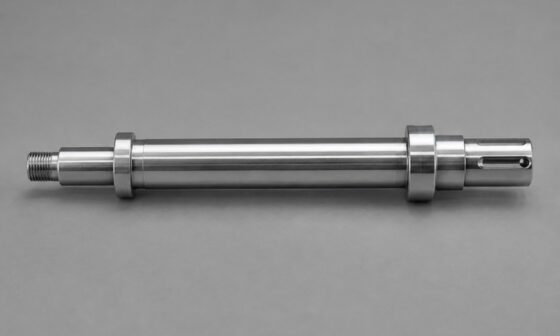
When standard catalog parts cannot meet rigid design tolerances, engineering teams collaborate with specialized domestic manufacturers to source custom nuts and bolts built to exact print specifications. Custom manufacturing provides strict control over material test reports, metallurgy, thread tolerances, and protective platings that commodity hardware cannot guarantee.
Designing bolted joints for high-stakes environments requires balancing mechanical loads, metallurgical properties, environmental chemistry, and precision assembly physics. By calculating dynamic stresses, matching specialized alloys to thermal realities, and eliminating vibration-induced loosening, engineers transform simple hardware into fail-safe structural anchors. Prioritizing these foundational engineering principles ensures that even under the most brutal operating conditions, critical machinery remains secure, reliable, and built to endure.