Utah homes can experience cold winter nights, hot summer afternoons, dry indoor conditions, and sudden weather shifts. A practical seasonal routine helps households protect comfort through every change in the forecast. When a no-heat, no-cool, leak, or drainage problem cannot wait, access to emergency HVAC and plumbing support can help homeowners respond quickly and safely.
The goal is not to turn every homeowner into a technician. It is important to know what to check, what to record, and when a symptom warrants professional care. A clean filter, clear airflow path, dry equipment area, and working safety alarms can make a meaningful difference in day-to-day comfort.
It also helps to keep basic equipment information in one accessible place. Note the make and model of the furnace, air conditioner, thermostat, water heater, and major shutoff valves, along with filter sizes and dates of recent service. That preparation can save time when a problem occurs or a technician needs background information.
Why Seasonal Care Matters
Heating, cooling, plumbing, and water-heating equipment often get the hardest workout when a home needs it most. Restricted airflow, a clogged condensate drain, a slow leak, or an unusual operating cycle may be easier to address before peak seasonal demand begins. Keeping a brief note on recurring hot rooms, cold rooms, noises, odors, and water around equipment provides a service professional with useful information.
A seasonal routine can also make changes easier to notice. For example, a room that becomes difficult to heat only after furniture is rearranged may have a blocked supply register or return grille, while a recurring issue in the same area may indicate a problem worth documenting for service.
Planning ahead also leaves room to compare options rather than making decisions under pressure. Homeowners who are evaluating a new system can use a qualified provider for heating and AC installation to discuss equipment sizing, existing ductwork, controls, and the comfort needs of the home.
For routine timing, ENERGY STAR recommends annual pre-season checkups for cooling equipment in spring and heating equipment in fall. Those visits can include inspection of thermostat operation, electrical connections, moving parts, system controls, and condensate drainage.
Winter Heating and Safety Checklist
Homeowner Checks
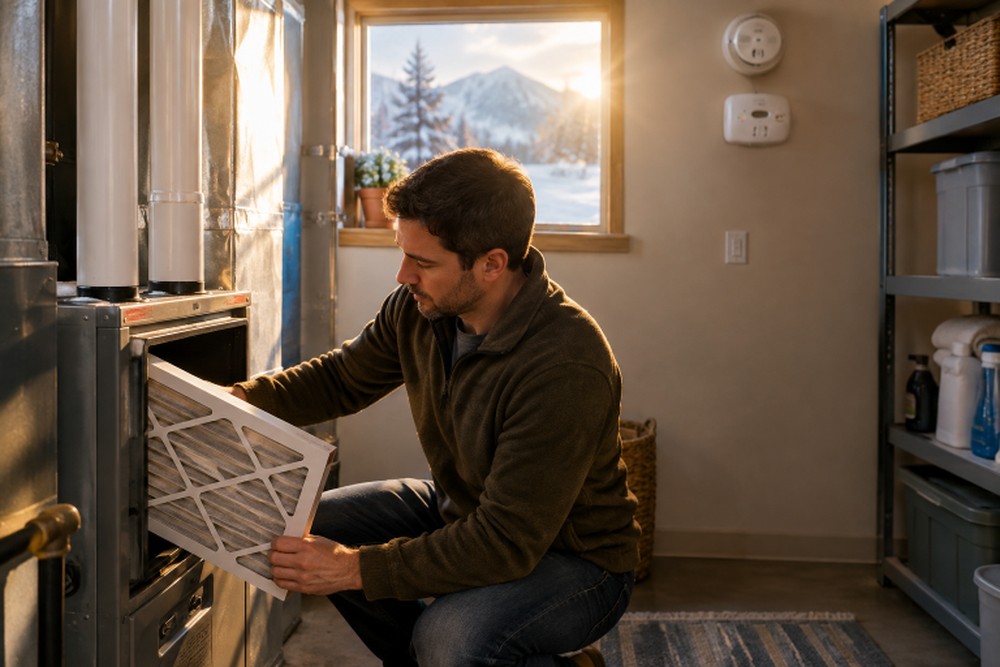
- Inspect or replace the air filter according to the equipment manufacturer’s instructions.
- Keep supply vents and return grilles open and free of furniture, rugs, curtains, and storage.
- Test smoke alarms and carbon monoxide alarms according to their manufacturer’s instructions.
- Keep stored items away from furnaces, water heaters, fireplaces, and other heat-producing equipment.
- Pay attention to new odors, loud sounds, repeated short cycles, or rooms that remain unusually cold.
Signs That Need Prompt Attention
Leave the home and follow local emergency guidance if a carbon monoxide alarm activates or there is a strong gas or fuel odor. Arrange prompt service for banging, scraping, or screeching sounds, repeated cycling, poor heat delivery, or visible water around equipment. Do not open combustion chambers, alter gas controls, bypass safety switches, or attempt internal electrical repairs.
Pay attention to the difference between a brief normal startup sound and a new sound that continues through operation. A written note describing when the sound occurs, whether it is constant, and whether comfort changes at the same time can help make a professional visit more efficient.
Spring Cooling and Plumbing Reset
Spring is a useful time to review what winter revealed and prepare for warmer weather. Test cooling mode on a mild day, confirm that the thermostat responds, and remove leaves, grass, and stored items from around the outdoor unit. Avoid bending fins or opening electrical panels.
Inside the home, look under sinks, around exposed pipes, and near shutoff valves for moisture or cabinet damage. Test seldom-used drains, inspect outdoor hose connections before regular watering begins, and make a note if several fixtures drain slowly. Multiple slow drains can point to a larger drainage issue than a single clogged fixture.
When checking outdoor hose connections, turn the water on gradually and look for drips at the connection, damaged hoses, or water collecting near the foundation. Addressing a small, visible leak early can help prevent water waste and avoid ongoing moisture around exterior walls.
Summer Cooling and Moisture Control
During Utah’s warmest periods, watch for a system that runs much longer than normal, weak airflow, warm supply air, uneven room temperatures, or water near indoor equipment. Keep return grilles clear so the system can circulate air as designed. Closing off airflow paths can create comfort problems in other parts of the home.
Reduce cooling demand by using shades on sunny windows, using kitchen and bathroom exhaust fans when appropriate, and shifting heat-producing chores away from the hottest part of the day. Ceiling fans can improve comfort for occupants, but they should be turned off when a room is empty.
Condensate drainage deserves special attention. A blocked drain can lead to water damage, indoor humidity issues, or equipment shutdown. If water returns after a basic accessible-area cleanup, or if the drain is difficult to reach, schedule professional service instead of forcing the issue.
In addition, keep the area around indoor equipment visible and reasonably clear. Boxes, laundry, or other stored items can hide a small leak until it has caused more damage, and they can make it harder to notice changes in drainage or equipment operation.
Fall Heating Preparation
Before the first sustained cold weather arrives, replace a dirty filter, test the heating mode, confirm that vents and returns are open, and check alarms. Review summer notes for high utility use, persistent humidity, unusual sounds, weak airflow, or rooms that never cooled evenly. These details can help identify issues before heating demand rises.
Early fall is usually a better time to schedule a heating inspection than the first freezing night. It provides time for repairs, ordering parts, or a thoughtful discussion of a replacement if the system has safety, reliability, or comfort concerns.
Before winter, make sure household members know where important shutoffs are located and how to contact a qualified service provider. This is especially useful if a heating or plumbing concern develops outside normal business hours.
Indoor Air Quality Basics
Clean indoor air involves more than selecting the highest-rated filter. The U.S. Environmental Protection Agency emphasizes source control, ventilation, filtration, and moisture control as core strategies. The EPA also advises keeping indoor humidity below 60 percent, with 30 to 50 percent often serving as a practical target range.
- Change filters based on the equipment instructions and household conditions.
- Use bathroom and kitchen exhaust fans that vent outdoors when available.
- Address leaks and damp materials promptly.
- Avoid smoking indoors and limit strong chemical odors.
- Consider a properly sized portable air cleaner when it fits the room and household needs.
A higher-efficiency filter is not automatically the right choice for every system. It must fit properly, and the equipment must be able to move air through it without excessive resistance.
Household activities can affect indoor air from day to day. Cooking, cleaning products, pet dander, renovation dust, and damp materials may all change what occupants notice indoors. If odors, irritation, or visible moisture persist, focus first on the likely source rather than relying only on fragrance products or a filter change.
Safe DIY Tasks and Professional Limits
Tasks Many Homeowners Can Handle
- Changing filters and keeping grilles unobstructed.
- Clearing loose debris from around an outdoor unit.
- Testing thermostats, smoke alarms, and carbon monoxide alarms.
- Checking visible plumbing connections for signs of moisture.
- Recording changes in sound, odor, airflow, humidity, or water use.
Tasks Best Left to Professionals
Gas-line work, combustion testing, refrigerant service, internal electrical repairs, heat exchanger inspection, major sewer work, and pressure-related water-heater repairs require trained service. Turning off a thermostat does not make the equipment safe to open. Follow the equipment manual and seek help whenever a task involves fuel, high voltage, pressurized refrigerant, combustion, or concealed water damage.
When in doubt, stop rather than escalating a simple task into a repair. Taking photos of visible symptoms, noting when they began, and keeping the area accessible are useful steps that do not require disassembly or contact with potentially hazardous components.
Repair, Replace, or Monitor?
Repair may be reasonable when the problem is isolated, the equipment has a dependable service history, and it still provides safe, steady comfort. Replacement may warrant a closer look when major components fail, repairs recur within a short period, parts are difficult to obtain, or comfort problems persist after maintenance and airflow concerns have been addressed.
Compare the repair estimate, system age, warranty coverage, operating costs, safety considerations, installation scope, and total price. Age alone should not make the decision.
Ask for a clear explanation of the diagnosed issue, the expected result of the repair, and any conditions that could affect the recommendation. Comparing written options can help homeowners distinguish between an immediate safety or reliability concern and a condition that can reasonably be monitored.
A Simple 2026 Maintenance Calendar
- January through February: Check filters, monitor heating cycles, test alarms, and watch for odors or unusual sounds.
- March through April: Test cooling mode, clear outdoor equipment, inspect visible drains, and look for winter plumbing damage.
- May through August: Track airflow, humidity, filter condition, water near equipment, and uneven temperatures.
- September through October: Test heating mode, replace filters, clear vents, check alarms, and schedule a heating inspection.
- November through December: Monitor heating performance, protect exposed plumbing where appropriate, and keep emergency contact information accessible.
Final Thoughts
Reliable home comfort comes from steady attention rather than last-minute reactions. A few safe seasonal checks, written observations, and timely professional inspections can help Utah homeowners protect their homes, improve everyday comfort, and catch warning signs earlier throughout 2026.
The most useful routine is one that homeowners can repeat. Start with the simple checks, keep notes in the same place each season, and contact a qualified professional when safety, water damage, or system performance raises a concern.