Key Takeaways
- FOG includes cooking fats, oils, grease, fatty sauces, dairy residue, and food particles that can collect in drains.
- Scraping and wiping cookware before washing reduces the grease load entering a kitchen’s plumbing system.
- Grease traps and interceptors help capture grease, but they still need proper sizing, access, inspection, and cleaning.
- Staff training, written procedures, and maintenance records make prevention more consistent.
- Slow drains, odors, gurgling, and repeated backups are warning signs that should not be ignored.
For restaurants, cafeterias, bakeries, grocery delis, and other food-service operations in Gaithersburg, Maryland, fats, oils, and grease can become an expensive plumbing issue when small daily cleanup shortcuts are repeated over time. A practical prevention plan, paired with dependable commercial grease trap services in Gaithersburg MD, helps kitchen teams protect drains, avoid disruptive backups, and keep service moving during busy shifts.
FOG control is especially important in a growing Montgomery County food-service community, where kitchens may handle everything from lunch rushes near office corridors to high-volume dinner and catering service. The goal is not to make every employee a plumbing expert. It is to create clear habits that keep grease out of the drain whenever possible and identify trouble before it affects operations.
Why FOG Becomes a Business Problem
FOG is a broad term for fats, oils, grease, and greasy food residue created during cooking, prep, dishwashing, and cleanup. It may look harmless when it is hot and liquid, but it can cool and collect on pipe walls, inside traps, and farther along the sewer system. The U.S. Environmental Protection Agency notes that fats, oils, and grease can clog pipes and pumps in public sewer lines and wastewater facilities, which makes prevention at the kitchen level important.
For a Gaithersburg kitchen, the immediate consequences can include slow sinks, unpleasant odors, standing water, cleanup labor, service interruptions, and potential damage to floors or equipment. One greasy pan may not create an emergency, but the same disposal habit across multiple shifts can steadily narrow the available space inside drain lines.
How FOG Moves Through a Kitchen
Common sources include fryer oil, grill runoff, meat drippings, butter, shortening, cream-based sauces, cheese, salad dressings, and greasy cookware. Hot water and detergent may move grease farther along a pipe, but they do not permanently remove it from the wastewater system. Once conditions change, grease can separate, cool, and stick elsewhere.
A busy dinner shift often produces more greasy dishes and wastewater than a lighter lunch period. That increased volume can expose weak habits, such as rinsing a pan before wiping it or letting scraps into a garbage disposal. The better approach is to collect grease and solids before they reach the sink.
Daily Habits That Limit Grease
Consistent, low-cost steps can substantially reduce what reaches the plumbing system. Place these procedures where employees can see them and make them part of opening, closing, and dish-area routines.
- Scrape food scraps into the proper trash, compost, or food-waste container before rinsing dishes.
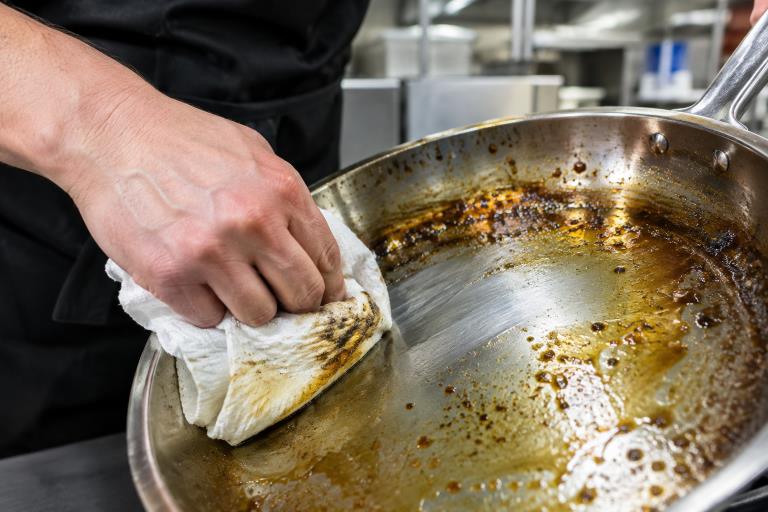
- Wipe excess grease from pans, sheet trays, plates, utensils, and equipment with disposable absorbent material before washing.
- Collect used fryer oil in clearly marked containers intended for pickup or approved disposal.
- Use sink strainers and empty them before the collected solids can be pushed into the drain.
- Keep oil, grease, and fatty scraps out of garbage disposals.
- Clean grease spills with absorbent material first, rather than washing the spill toward a floor drain.
- Keep outdoor oil containers closed, upright, and leak-free.
The Role of Grease Traps and Interceptors
Grease traps and interceptors are designed to slow wastewater so grease and solids can separate from the water before it travels farther downstream. They are valuable control points, but they do not allow unrestricted grease to enter a drain. Excess buildup reduces the available holding space and can allow grease to pass through the device.
Correct equipment selection, accessible covers, routine service, and kitchen practices all work together. The right service interval should reflect the facility’s actual grease production, menu, operating hours, and observed buildup, rather than relying only on a generic calendar.
Building a Maintenance Plan
A written maintenance plan is more dependable than waiting until a drain backs up. Assign daily tasks to dish and prep staff, weekly checks to a manager or shift lead, and periodic cleaning or inspection to qualified service personnel. Record service dates, repairs, unusual odors, slow-drain reports, and any changes to kitchen volume.
Review the schedule after adding fryers, changing menus, expanding catering, or increasing operating hours. A kitchen that begins serving more fried foods or richer sauces may need its inspection and cleaning routine adjusted accordingly.
Training Kitchen Staff
Include FOG procedures in new-hire training, then reinforce them with simple signs near sinks, prep stations, dish machines, and oil-storage areas. Staff should know what belongs in a drain, what must be scraped or wiped first, and who to notify when a sink drains slowly or an interceptor area smells unusual.
Managers should observe at least one busy cleanup period each week. Quick coaching during a real shift is often more effective than discovering poor habits after a plumbing problem develops.
Warning Signs of a FOG Problem
- Sinks or floor drains that empty more slowly than normal.
- Gurgling sounds from drains or fixtures.
- Persistent greasy odors near sinks, drains, or interceptor covers.
- Visible residue around drain openings or standing water near fixtures.
- Frequent reliance on chemical drain-clearing products.
- Overflow, leaks, damaged covers, or repeated concerns during inspections.
Records, Rules, and Local Requirements
Requirements can vary by sewer authority, facility type, plumbing layout, and the amount of grease a business produces. In Montgomery County, food-service operators served by WSSC Water should review the utility’s fats, oils, and grease program, which addresses grease-abatement systems, food-service establishment requirements, training, and prevention practices.
Keep service receipts, cleaning logs, inspection notes, waste-oil collection records, and repair documentation in one accessible location. Before opening a new kitchen, remodeling a dish area, or changing plumbing, confirm the current local requirements with the applicable authority rather than relying on guidance intended for another jurisdiction.
A Weekly FOG Checklist
- Inspect sink strainers and remove trapped solids.
- Check used-oil containers for leaks, overflow, and secure lids.
- Look for slow drains, odors, gurgling, and visible residue.
- Observe cleanup habits during one high-volume service period.
- Confirm that maintenance records and service receipts are complete.
- Check whether the next scheduled service still fits the current kitchen activity.
- Assign each identified issue to a specific person and record the correction.
When to Call for Professional Help
Routine staff cleaning is not enough when backups recur, odors become strong, wastewater appears near food-preparation areas, or a grease trap or interceptor shows leaks, damage, or overflow. Prompt professional attention can help limit downtime and reduce the risk of wastewater affecting floors, equipment, or daily operations.
FOG prevention works best as an everyday operating habit. By combining careful disposal, trained staff, accurate records, regular inspections, and a service schedule that matches the kitchen’s workload, Gaithersburg food-service businesses can reduce preventable grease-related plumbing problems in 2026.